

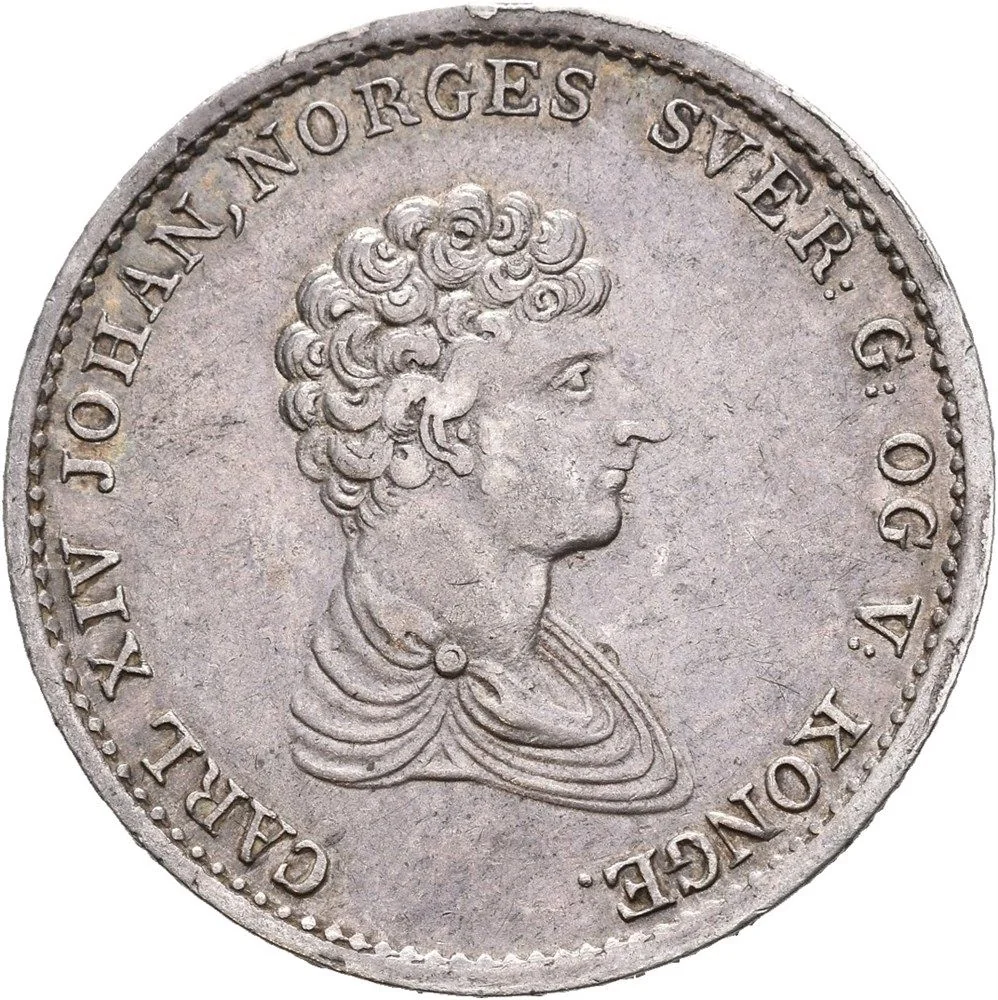
½ speciedaler – Norway
Add to wishlist
Norway
Context
Years: 1827–1836
Issuer: Norway
Ruler: Charles III John
Currency:
(1816—1875)
Demonetized: Yes
Total mintage: 120,300
Material
References
KM: #
Numista: #82383
Value
Bullion value: $31.52
Obverse
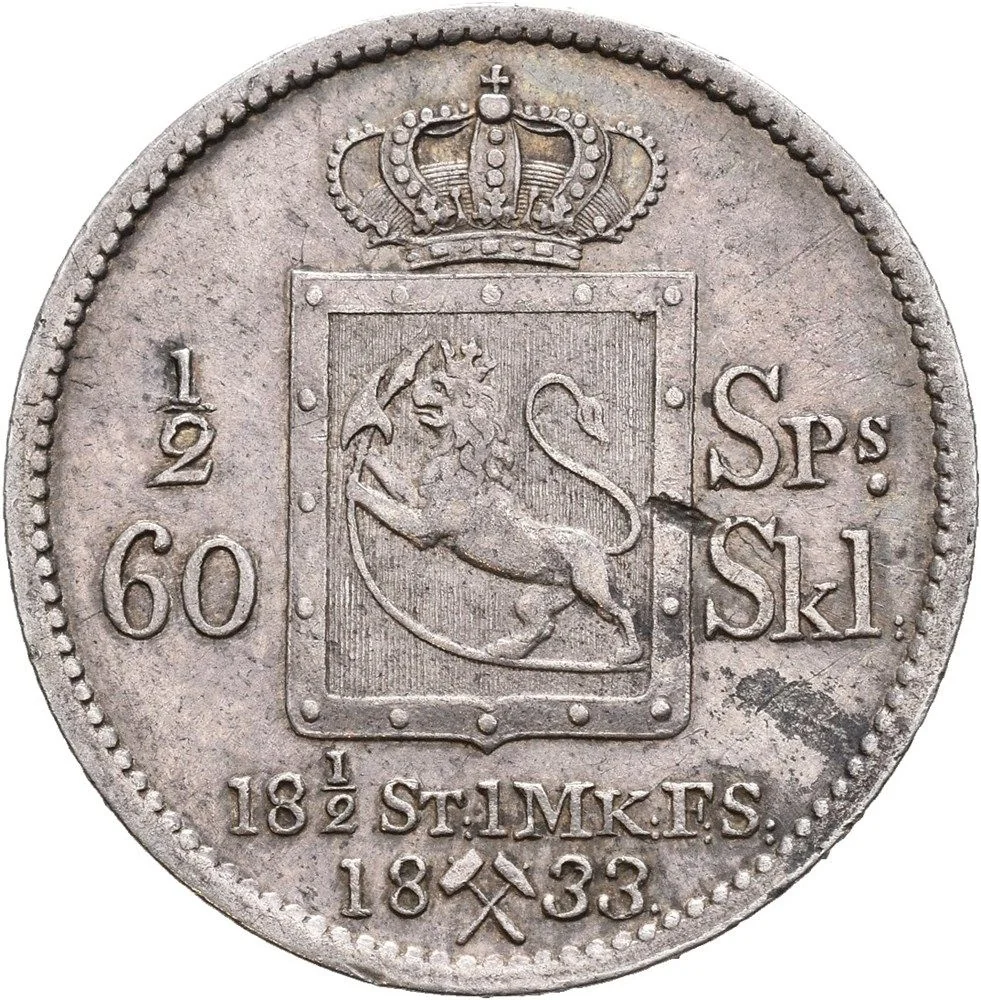
Reverse
Description:
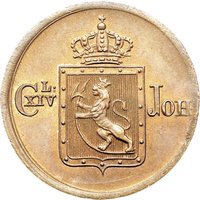
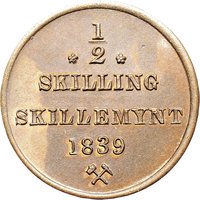
Crowned rectangular shield with beaded border, containing a crowned Norwegian lion holding a halberd left on a lined field. Value flanking shield; description and date (split by mintmark) below. Beaded rim.
Inscription:
½ | SPs.
60 | Skl:
18 ½ ST: 1 MK: F: S:
18 ⚒ 33.
60 | Skl:
18 ½ ST: 1 MK: F: S:
18 ⚒ 33.
Script: Latin
Edge
Mints
| Name | Mark |
|---|---|
| Norwegian Mint | — |
Mintings
| Year | Mint Mark | Mintage | Quality | Collection |
|---|---|---|---|---|
| 1827 | — | 70,200 | ||
| 1829 | — | 5,100 | ||
| 1830 | — | 8,000 | ||
| 1831 | — | 9,000 | ||
| 1832 | — | 4,700 | ||
| 1833 | — | 1,500 | ||
| 1834 | — | 17,800 | ||
| 1835 | — | — | ||
| 1836 | — | 4,000 |
Historical background
In 1827, Norway found itself in a complex monetary situation, a legacy of its union with Denmark (until 1814) and its subsequent forced union with Sweden. The circulating currency was a chaotic mix of Danish and Norwegian riksdaler and skilling coins, alongside a substantial volume of foreign coins and private banknotes. The foundational unit was the riksdaler specie, a silver-based currency, but its value in relation to the smaller skilling units varied across different systems (specie, courant, and bank), creating confusion and inefficiency in daily trade and commerce.
This disorder was actively being addressed by the Norwegian state. The pivotal event came in 1816 with the establishment of Norges Bank and the introduction of a new national currency, the spesidaler, divided into 120 skilling. However, the transition was slow and challenging. By 1827, the new banknotes and coins were in circulation but coexisted with the older monetary systems. A key task for Norges Bank was to build public trust in paper money, which was still a novel concept for many, and to manage the money supply carefully to maintain its value against silver.
Therefore, 1827 represents a year of transition within a prolonged monetary reform. The country was moving away from the fragmented past toward a unified, state-controlled currency, yet the process was incomplete. The success of this reform was crucial for Norway's economic modernization, aiming to provide a stable and reliable financial system to support national sovereignty and growing commercial activity. The final step would come a decade later, in 1842, when the older systems were officially abolished, leaving the spesidaler as the sole legal tender.
This disorder was actively being addressed by the Norwegian state. The pivotal event came in 1816 with the establishment of Norges Bank and the introduction of a new national currency, the spesidaler, divided into 120 skilling. However, the transition was slow and challenging. By 1827, the new banknotes and coins were in circulation but coexisted with the older monetary systems. A key task for Norges Bank was to build public trust in paper money, which was still a novel concept for many, and to manage the money supply carefully to maintain its value against silver.
Therefore, 1827 represents a year of transition within a prolonged monetary reform. The country was moving away from the fragmented past toward a unified, state-controlled currency, yet the process was incomplete. The success of this reform was crucial for Norway's economic modernization, aiming to provide a stable and reliable financial system to support national sovereignty and growing commercial activity. The final step would come a decade later, in 1842, when the older systems were officially abolished, leaving the spesidaler as the sole legal tender.
✨ Legendary