

½ skilling – Norway
Add to wishlist
Norway
Context
Years: 1839–1841
Issuer: Norway
Ruler: Charles III John
Currency:
(1816—1875)
Demonetized: Yes
Total mintage: 3,170,800
Material
References
KM: #
Numista: #25124
Obverse
Description:
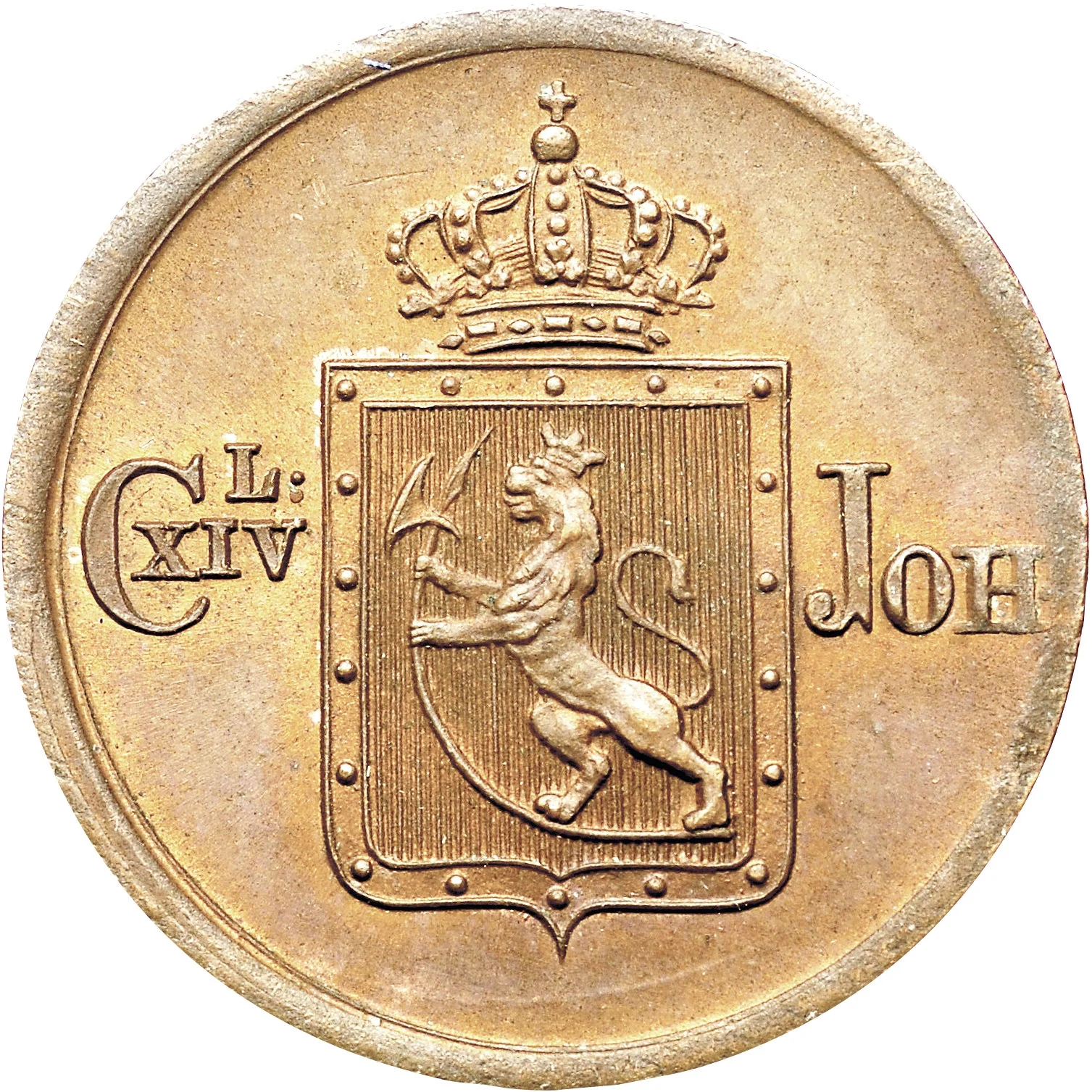
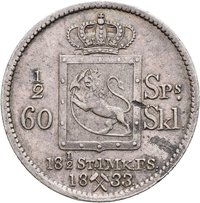
Crowned rectangular shield with beaded border, containing a crowned Norwegian lion facing left and holding a halberd on a vertically lined field. Inscription flanking the shield. Solid ring on rim.
Inscription:
CL: XIV | JOH:
Translation:
By the Grace of God, John, King of England, France, and Lord of Ireland.
Script: Latin
Language: Latin
Reverse
Description:
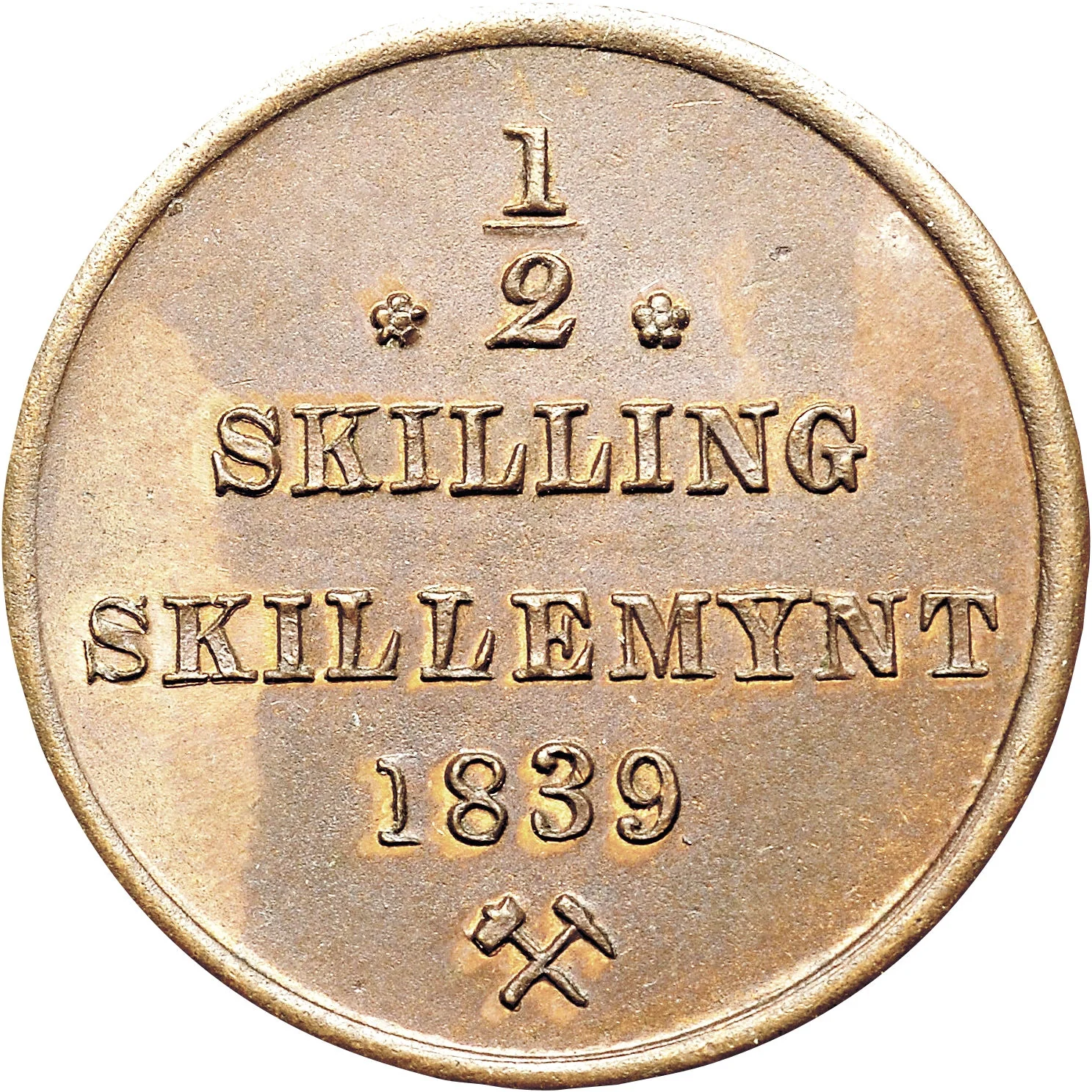
Value and date stacked.
Mintmark under date.
Solid rim ring.
Mintmark under date.
Solid rim ring.
Inscription:
🏵½🏵
SKILLING
SKILLEMYNT
1839
⚒
SKILLING
SKILLEMYNT
1839
⚒
Script: Latin
Edge
Plain
Mints
| Name | Mark |
|---|---|
| Norwegian Mint | — |
Mintings
| Year | Mint Mark | Mintage | Quality | Collection |
|---|---|---|---|---|
| 1839 | — | 612,400 | ||
| 1840 | — | 2,558,400 | ||
| 1841 | — | — |
Historical background
In 1839, Norway's currency system was in a state of transition and complexity, operating under a silver standard within a wider Scandinavian context. Following the dissolution of the union with Denmark in 1814 and the subsequent union with Sweden, Norway had established its own central bank, Norges Bank, in 1816. The foundational monetary unit was the speciedaler, divided into 120 skilling, and it was explicitly defined by law to contain a specific quantity of fine silver. This commitment to a silver standard aimed to provide stability, but the system was often strained in practice.
The period was marked by a chronic shortage of small, everyday coinage (skilling coins), which hampered commerce and led to widespread use of inconvenient and unreliable private tokens issued by merchants and factories. Furthermore, while the speciedaler was the official unit, a parallel system of "bank money" existed, where Norges Bank issued notes that were nominally convertible to silver. However, due to past economic difficulties and a lack of sufficient silver reserves, these notes often traded at a discount against full-bodied silver coin, creating a de facto two-tier system that confused transactions and undermined public confidence.
Internationally, Norway was part of the Scandinavian Monetary Union in spirit but not yet in law (the formal union would be established in 1873). Discussions about monetary reform were ongoing, influenced by global trends and the practical problems at home. Thus, the currency situation in 1839 was one of official silver standard ideals clashing with the realities of insufficient specie, a fragmented circulating medium, and growing pressure for a more modern and unified system that would eventually lead Norway to adopt the gold standard alongside its Scandinavian neighbors later in the century.
The period was marked by a chronic shortage of small, everyday coinage (skilling coins), which hampered commerce and led to widespread use of inconvenient and unreliable private tokens issued by merchants and factories. Furthermore, while the speciedaler was the official unit, a parallel system of "bank money" existed, where Norges Bank issued notes that were nominally convertible to silver. However, due to past economic difficulties and a lack of sufficient silver reserves, these notes often traded at a discount against full-bodied silver coin, creating a de facto two-tier system that confused transactions and undermined public confidence.
Internationally, Norway was part of the Scandinavian Monetary Union in spirit but not yet in law (the formal union would be established in 1873). Discussions about monetary reform were ongoing, influenced by global trends and the practical problems at home. Thus, the currency situation in 1839 was one of official silver standard ideals clashing with the realities of insufficient specie, a fragmented circulating medium, and growing pressure for a more modern and unified system that would eventually lead Norway to adopt the gold standard alongside its Scandinavian neighbors later in the century.
🌱 Fairly Common