

8 escudos – Bolivia
Add to wishlist
Bolivia
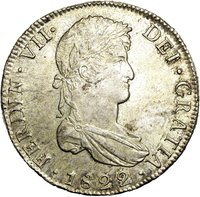
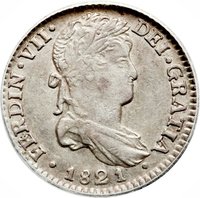
Obverse
Inscription:
FERDIN·VII·D·G·HISP·ET IND·R·
Translation:
FERDINAND VII, BY THE GRACE OF GOD, KING OF SPAIN AND THE INDIES.
Language: Latin
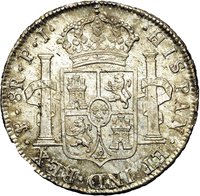
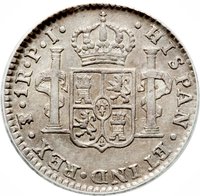
Reverse
Edge
Mintings
| Year | Mint Mark | Mintage | Quality | Collection |
|---|---|---|---|---|
| 1809 | PTS | — |
Historical background
In 1809, the currency situation in the Royal Audiencia of Charcas (modern-day Bolivia) was a complex reflection of its colonial economy and mounting political instability. The region, a vital part of the Spanish Viceroyalty of the Río de la Plata, primarily relied on silver coinage minted at the legendary Potosí mint, the Casa de la Moneda. The famous "Potosí peso" or "piece of eight" remained the dominant and internationally recognized currency, backed by the immense silver output of the Cerro Rico mountain. However, the system was strained by centuries of Spanish mercantilist policies that drained wealth to Europe, leading to a chronic shortage of circulating coinage for everyday transactions within the colony itself.
This scarcity was exacerbated by the broader crises of the Spanish Empire during the Napoleonic Wars. With the Spanish crown in disarray after the abdication of King Ferdinand VII in 1808, legal and economic ties to the metropolis were severed. The flow of official coinage and goods was disrupted, deepening liquidity problems. In response, local authorities and merchants increasingly relied on a chaotic mix of lower-denomination macuquina (crudely cut and hammered coins), token currencies, and barter to facilitate local trade. The monetary system was becoming fragmented even before the outbreak of the first independence uprisings in Chuquisaca and La Paz in mid-1809.
Thus, on the eve of the revolutionary movements of 1809, Bolivia's currency landscape was in a precarious state of transition. While the symbolic and economic power of Potosí silver remained unquestioned, the practical reality was one of scarcity and improvisation. This financial instability both mirrored and contributed to the political ferment, as control over the Potosí mint and its silver would become a paramount strategic objective for both royalist and patriot forces in the long War of Independence that followed.
This scarcity was exacerbated by the broader crises of the Spanish Empire during the Napoleonic Wars. With the Spanish crown in disarray after the abdication of King Ferdinand VII in 1808, legal and economic ties to the metropolis were severed. The flow of official coinage and goods was disrupted, deepening liquidity problems. In response, local authorities and merchants increasingly relied on a chaotic mix of lower-denomination macuquina (crudely cut and hammered coins), token currencies, and barter to facilitate local trade. The monetary system was becoming fragmented even before the outbreak of the first independence uprisings in Chuquisaca and La Paz in mid-1809.
Thus, on the eve of the revolutionary movements of 1809, Bolivia's currency landscape was in a precarious state of transition. While the symbolic and economic power of Potosí silver remained unquestioned, the practical reality was one of scarcity and improvisation. This financial instability both mirrored and contributed to the political ferment, as control over the Potosí mint and its silver would become a paramount strategic objective for both royalist and patriot forces in the long War of Independence that followed.
✨ Legendary