

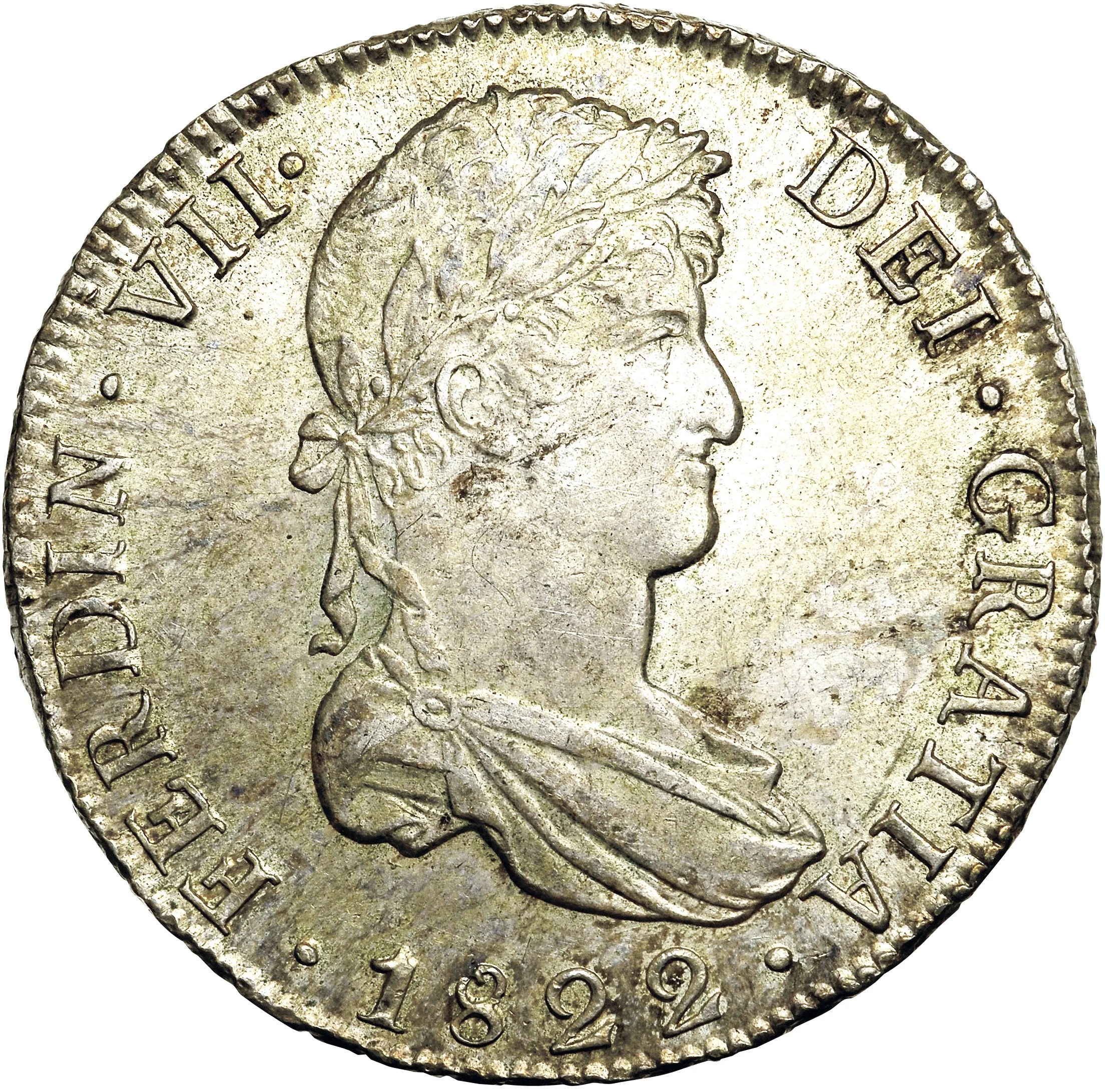
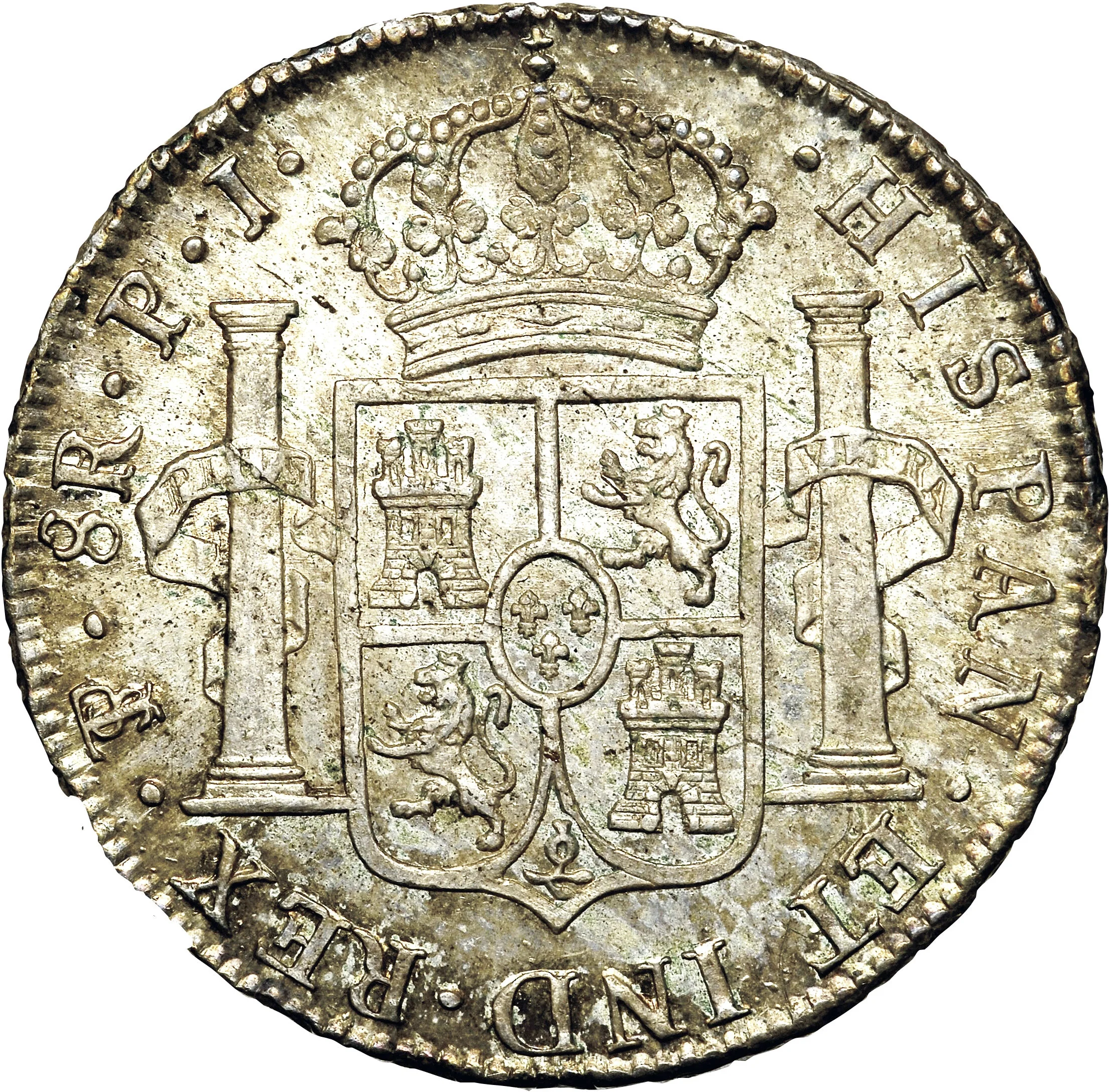
8 Reales – Bolivia
Bolivia
Context
Years: 1808–1825
Issuer: Bolivia 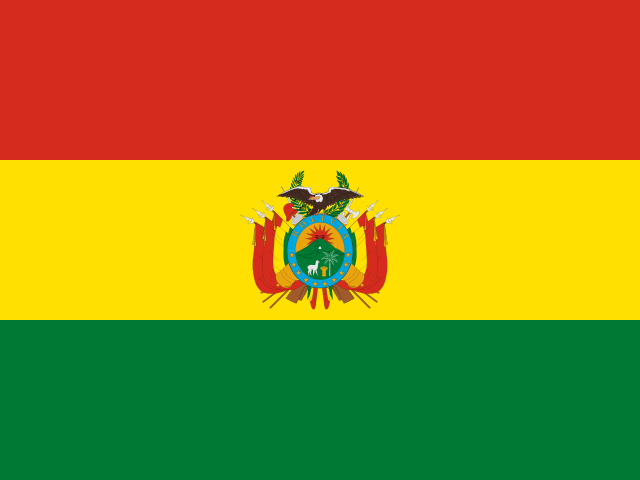
Ruler: Ferdinand VII
Currency:
(1574—1825)
Demonetized: Yes
Total mintage: 5,432,000
Material
References
KM: #Click to copy to clipboard84
Numista: #26230
Value
Bullion value: $67.99
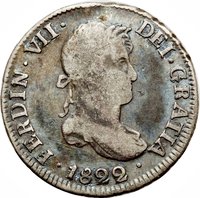
Obverse
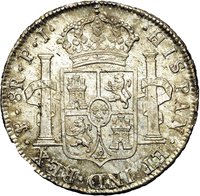
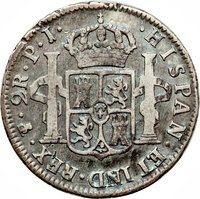
Reverse
Description:
Spanish Coat of Arms
Inscription:
HISPAN . ET IND . REX . PTS . 8R . P . J .
Script: Latin
Edge
Mints
| Name | Mark |
|---|---|
| Potosi | PTS |
Mintings
Historical background
In 1808, Bolivia, then known as the colonial Audiencia of Charcas or Upper Peru, operated within the complex monetary system of the Spanish Empire. The official currency was the Spanish silver real, with the peso of 8 reales being the dominant unit for larger transactions. This silver was not merely administrative; it was physically extracted from the region's rich mines, particularly the legendary Cerro Rico of Potosí, which for centuries had been a pillar of the global silver supply. The mint in Potosí (the Casa de la Moneda) continued to coin vast quantities of silver pesos, making the region a focal point of imperial wealth and fiscal policy.
However, the currency situation was fraught with challenges. A chronic shortage of small-denomination coinage (vellón) for everyday commerce plagued the local economy, leading to inefficiency and the use of makeshift substitutes. More critically, the period was one of profound monetary instability for the Spanish Empire as a whole. The costs of the Napoleonic Wars in Europe and the disruption caused by the Peninsular War (beginning in 1808) strained royal finances to the breaking point. In response, the Spanish Crown began authorizing the issuance of paper money, or vales reales, which quickly depreciated due to lack of public confidence and insufficient silver backing.
These imperial crises reverberated directly in Upper Peru. While Potosí silver remained a tangible asset, the authority and credibility of the colonial government were weakening. The economic distress, combined with the political vacuum created by the captivity of King Ferdinand VII, fueled growing unrest among local elites and the populace. Thus, in 1808, the currency situation mirrored the broader colonial condition: it was a system still physically rich in silver but increasingly unstable, undermined by imperial mismanagement and beginning to feel the tremors that would soon lead to the independence wars of the 1810s.
However, the currency situation was fraught with challenges. A chronic shortage of small-denomination coinage (vellón) for everyday commerce plagued the local economy, leading to inefficiency and the use of makeshift substitutes. More critically, the period was one of profound monetary instability for the Spanish Empire as a whole. The costs of the Napoleonic Wars in Europe and the disruption caused by the Peninsular War (beginning in 1808) strained royal finances to the breaking point. In response, the Spanish Crown began authorizing the issuance of paper money, or vales reales, which quickly depreciated due to lack of public confidence and insufficient silver backing.
These imperial crises reverberated directly in Upper Peru. While Potosí silver remained a tangible asset, the authority and credibility of the colonial government were weakening. The economic distress, combined with the political vacuum created by the captivity of King Ferdinand VII, fueled growing unrest among local elites and the populace. Thus, in 1808, the currency situation mirrored the broader colonial condition: it was a system still physically rich in silver but increasingly unstable, undermined by imperial mismanagement and beginning to feel the tremors that would soon lead to the independence wars of the 1810s.

🌱 Fairly Common