

1 Real – Bolivia
Bolivia
Context
Years: 1813–1825
Issuer: Bolivia 
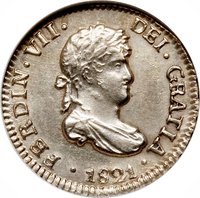
Ruler: Ferdinand VII
Currency:
(1574—1825)
Demonetization: 1825
Total mintage: 140,000
Material
References
KM: #Click to copy to clipboard87
Numista: #41661
Value
Bullion value: $8.49
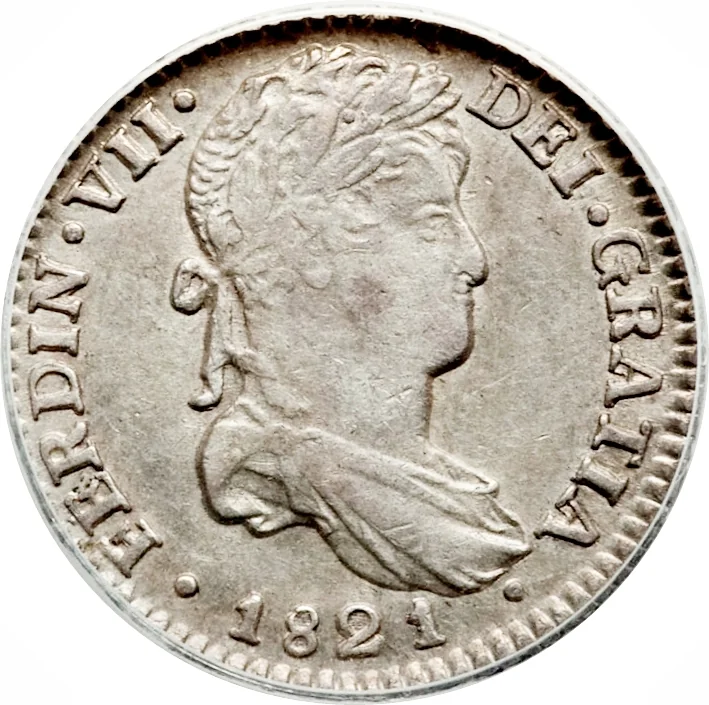
Obverse
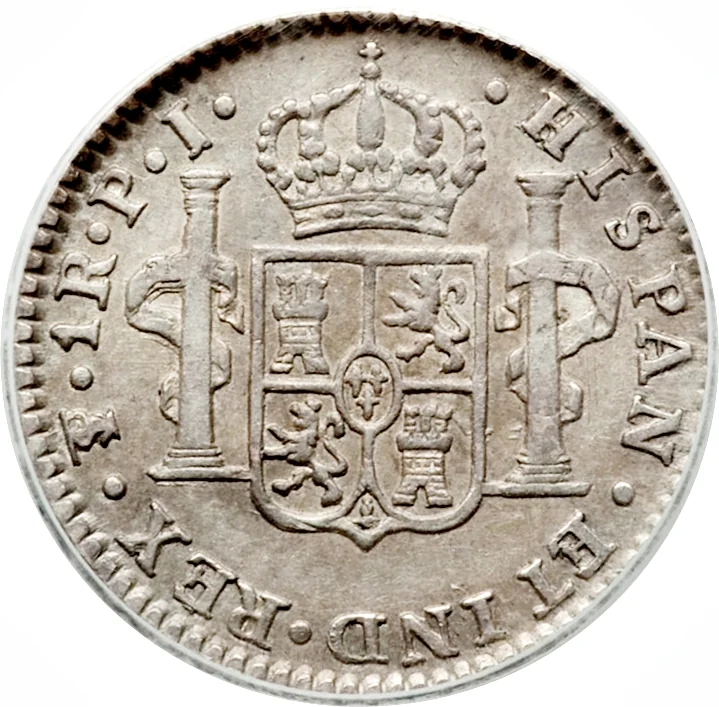
Reverse
Description:
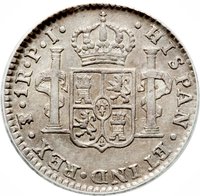
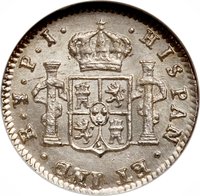
Crowned Arms flanked by pillars.
Inscription:
·HISPAN·ET IND·REX·PTS·1R·P·J·
Script: Latin
Edge
Chained
Mintings
| Year | Mint Mark | Mintage | Quality | Collection |
|---|---|---|---|---|
| 1813 | PTS | — | ||
| 1816 | PTS | 38,000 | ||
| 1817 | PTS | 46,000 | ||
| 1818 | PTS | 56,000 | ||
| 1819 | PTS | — | ||
| 1820 | PTS | — | ||
| 1821 | PTS | — | ||
| 1822 | PTS | — | ||
| 1823 | PTS | — | ||
| 1824 | PTS | — | ||
| 1825 | PTS | — |
Historical background
In 1813, Bolivia—then known as Upper Peru—was a fractured and volatile theater within the broader Spanish American wars of independence. The region was caught between royalist forces loyal to the Spanish Crown and patriot armies, primarily from the United Provinces of the Río de la Plata (Argentina), which had launched the ill-fated "Second Auxiliary Expedition" into the territory. This constant military conflict devastated the local economy, which had historically relied on silver mining from centers like Potosí. The disruption of mining, coupled with the requisition of resources by competing armies, severely contracted the money supply and crippled formal economic activity, pushing many toward barter and subsistence.
The currency situation itself was one of profound scarcity and confusion. The official circulating medium was still the Spanish colonial silver real and peso, but the production of new coins at the Potosí mint had been severely interrupted by the fighting. Furthermore, the patriot forces, in a bid to fund their campaign and assert sovereignty, issued their own provisional copper coinage. These crude, emergency coins (known as "moneda de la patria" or "moneda de cochabamba") were of low intrinsic value and faced deep public distrust. Their forced circulation and rapid depreciation led to inflation in areas under patriot control, as people hoarded the older, more reliable silver coins.
Thus, the monetary landscape of 1813 was characterized by a dual crisis: a severe shortage of trustworthy hard currency due to economic collapse, and a clash of competing currencies that mirrored the political struggle. The simultaneous existence of scarce Spanish silver, depreciating patriot copper, and widespread barter created a chaotic environment for commerce. This instability reflected the broader reality of a region whose fate was still undecided, with its economic foundations crumbling amid the fierce battle for political control.
The currency situation itself was one of profound scarcity and confusion. The official circulating medium was still the Spanish colonial silver real and peso, but the production of new coins at the Potosí mint had been severely interrupted by the fighting. Furthermore, the patriot forces, in a bid to fund their campaign and assert sovereignty, issued their own provisional copper coinage. These crude, emergency coins (known as "moneda de la patria" or "moneda de cochabamba") were of low intrinsic value and faced deep public distrust. Their forced circulation and rapid depreciation led to inflation in areas under patriot control, as people hoarded the older, more reliable silver coins.
Thus, the monetary landscape of 1813 was characterized by a dual crisis: a severe shortage of trustworthy hard currency due to economic collapse, and a clash of competing currencies that mirrored the political struggle. The simultaneous existence of scarce Spanish silver, depreciating patriot copper, and widespread barter created a chaotic environment for commerce. This instability reflected the broader reality of a region whose fate was still undecided, with its economic foundations crumbling amid the fierce battle for political control.

⭐ Rare