

50 francs cfa – Central African States
Add to wishlist
Context
Years: 1961–1963
Issuer: Central African States
Issuing organization: Central Bank of Equatorial African States and Cameroon
Currency:
(1961—1973)
Demonetized: Yes
Total mintage: 10,000,000
Material
References
KM: #
Numista: #8192
Value
Exchange value: 50 FCFA
Obverse
Description:
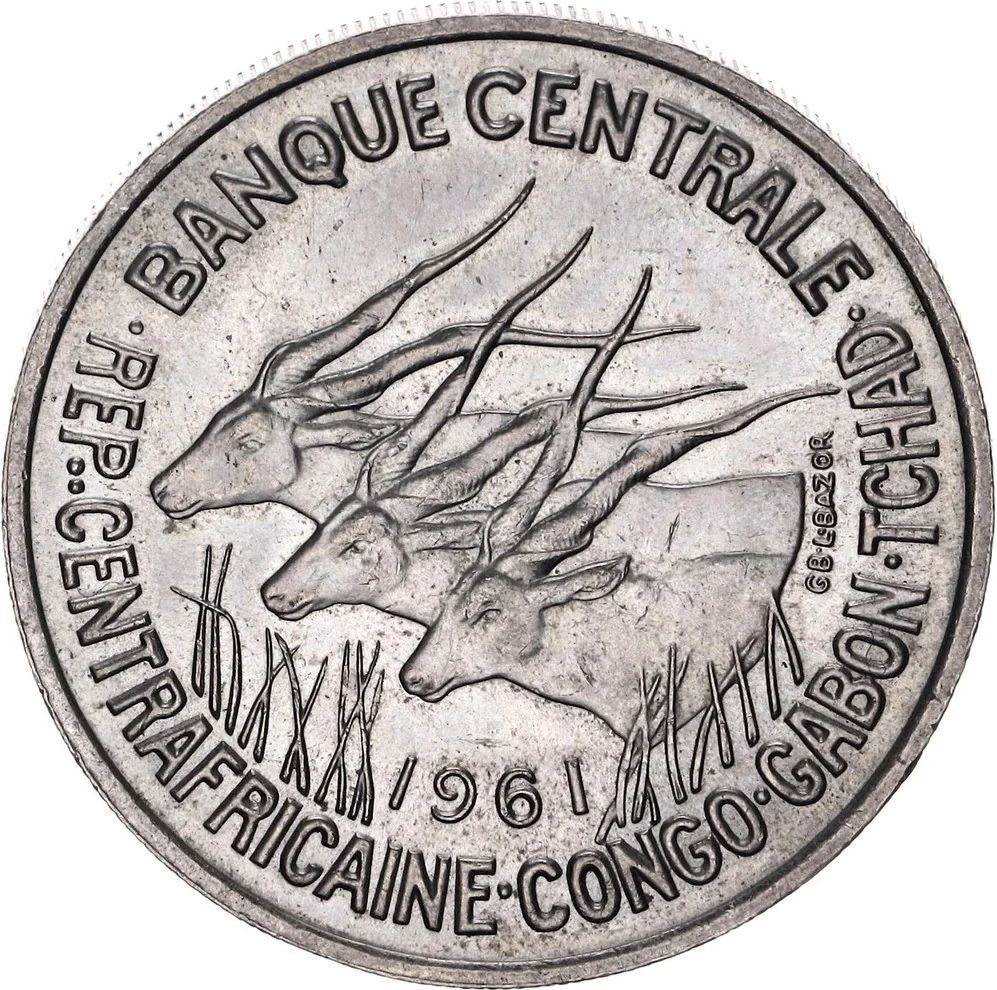
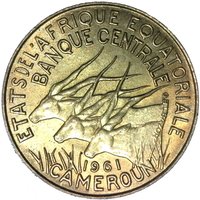
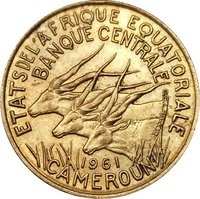
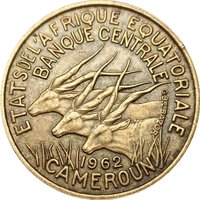
Three giant elands remain.
Inscription:
BANQUE CENTRALE
GB·L·BAZOR
1961
REP.·CENTRAFRICAIN·CONGO·GABON·TCHAD
GB·L·BAZOR
1961
REP.·CENTRAFRICAIN·CONGO·GABON·TCHAD
Translation:
CENTRAL BANK
GB·L·BAZOR
1961
CENTRAL AFRICAN REPUBLIC·CONGO·GABON·CHAD
GB·L·BAZOR
1961
CENTRAL AFRICAN REPUBLIC·CONGO·GABON·CHAD
Script: Latin
Language: French
Engravers: Gabriel Bernard, Lucien Georges Bazor
Reverse
Description:
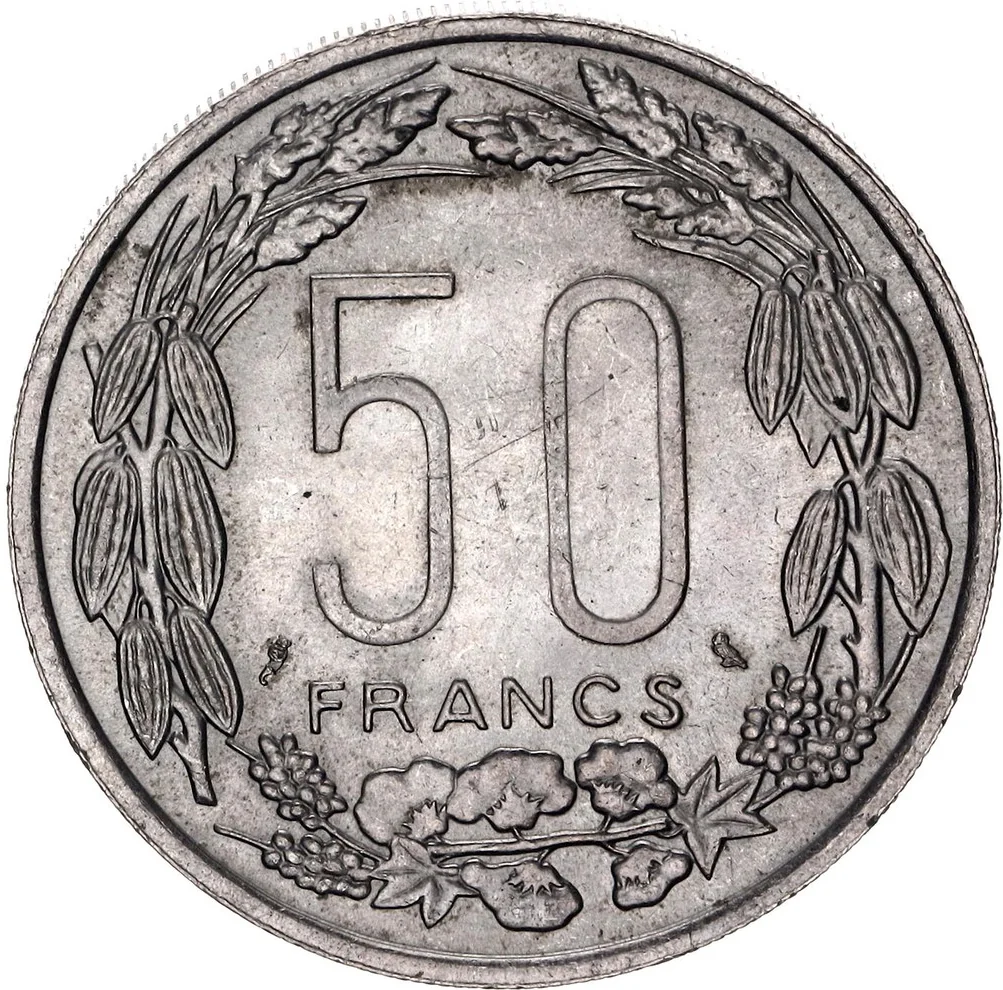
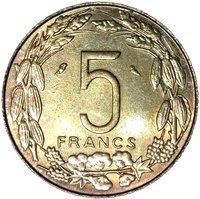
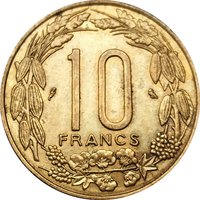
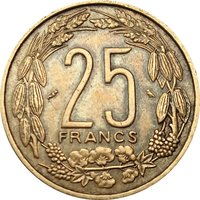
Wreath of major Cameroonian crops: cotton, coffee, cocoa, and grains.
Inscription:
50
FRANCS
FRANCS
Script: Latin
Engravers: Gabriel Bernard, Lucien Georges Bazor
Edge
Reeded
Categories
| Agriculture |
| Symbol> Wreath |
Mints
| Name | Mark |
|---|---|
| Monnaie de Paris | — |
Mintings
| Year | Mint Mark | Mintage | Quality | Collection |
|---|---|---|---|---|
| 1961 | — | 5,000,000 | ||
| 1963 | — | 5,000,000 |
Historical background
In 1961, the currency situation in the Central African States was defined by the newly established CFA franc, a system inherited from the French colonial era but reconfigured for independence. That year, the Central Bank of the States of Equatorial Africa and Cameroon (Banque Centrale des États de l'Afrique Équatoriale et du Cameroun, BCEAEC) began operations, issuing the CFA franc for the four members of the Equatorial African Customs Union (UDEAC): Chad, the Central African Republic, Congo (Brazzaville), and Gabon, along with Cameroon. This currency, distinct from the West African CFA franc, was pegged at a fixed rate to the French franc (CFA 50 = FF 1), guaranteeing its convertibility and stability through an operations account held at the French Treasury.
This monetary arrangement was a cornerstone of the post-independence cooperation framework with France, providing crucial financial stability for the fledgling nations. For the French government, it maintained economic influence and a guaranteed zone for trade and investment. For the Central African states, it offered a shield against inflation and currency volatility, which were seen as significant risks to their fragile economies. However, this system also meant the delegation of key monetary policy sovereignty to the BCEAEC and, by extension, to France, limiting the member states' independent control over their money supply and exchange rates.
Thus, the 1961 currency situation represented a pragmatic compromise between full monetary independence and the desire for economic stability. It embedded the region firmly within the Franc Zone, ensuring predictable exchange conditions for exporters of key commodities like timber, cotton, and minerals. This stability came at the cost of a deeply integrated, externally anchored monetary policy, a structure that would define the region's economic trajectory for decades to come.
This monetary arrangement was a cornerstone of the post-independence cooperation framework with France, providing crucial financial stability for the fledgling nations. For the French government, it maintained economic influence and a guaranteed zone for trade and investment. For the Central African states, it offered a shield against inflation and currency volatility, which were seen as significant risks to their fragile economies. However, this system also meant the delegation of key monetary policy sovereignty to the BCEAEC and, by extension, to France, limiting the member states' independent control over their money supply and exchange rates.
Thus, the 1961 currency situation represented a pragmatic compromise between full monetary independence and the desire for economic stability. It embedded the region firmly within the Franc Zone, ensuring predictable exchange conditions for exporters of key commodities like timber, cotton, and minerals. This stability came at the cost of a deeply integrated, externally anchored monetary policy, a structure that would define the region's economic trajectory for decades to come.
🌱 Common