

25 Francs CFA – Central African States
Context
Year: 1962
Issuer: Central African States
Issuing organization: Central Bank of Equatorial African States and Cameroon
Currency:
(1961—1973)
Total mintage: 6,000,000
Material
References
KM: #Click to copy to clipboard4
Numista: #11610
Value
Exchange value: 25 FCFA
Obverse
Description:
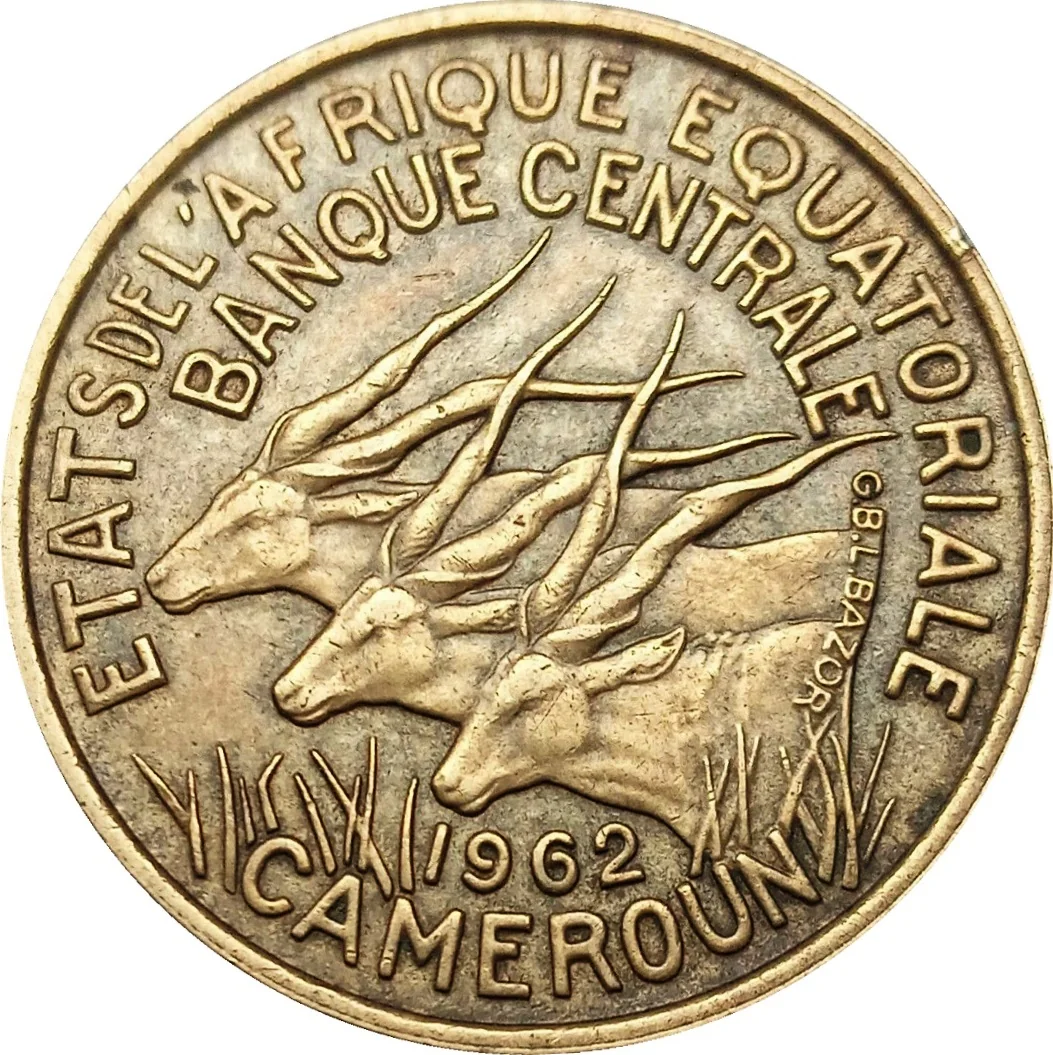
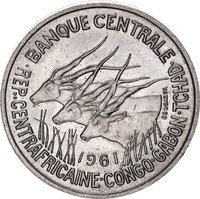
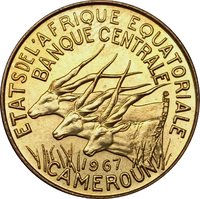
Three giant elands remain.
Inscription:
ETATS DE L'AFRIQUE EQUATORIALE
BANQUE CENTRALE
G.B.L.BAZOR
1962
CAMEROUN
BANQUE CENTRALE
G.B.L.BAZOR
1962
CAMEROUN
Translation:
STATES OF EQUATORIAL AFRICA
CENTRAL BANK
G.B.L.BAZOR
1962
CAMEROON
CENTRAL BANK
G.B.L.BAZOR
1962
CAMEROON
Script: Latin
Language: French
Engravers: Gabriel Bernard, Lucien Bazor
Reverse
Description:
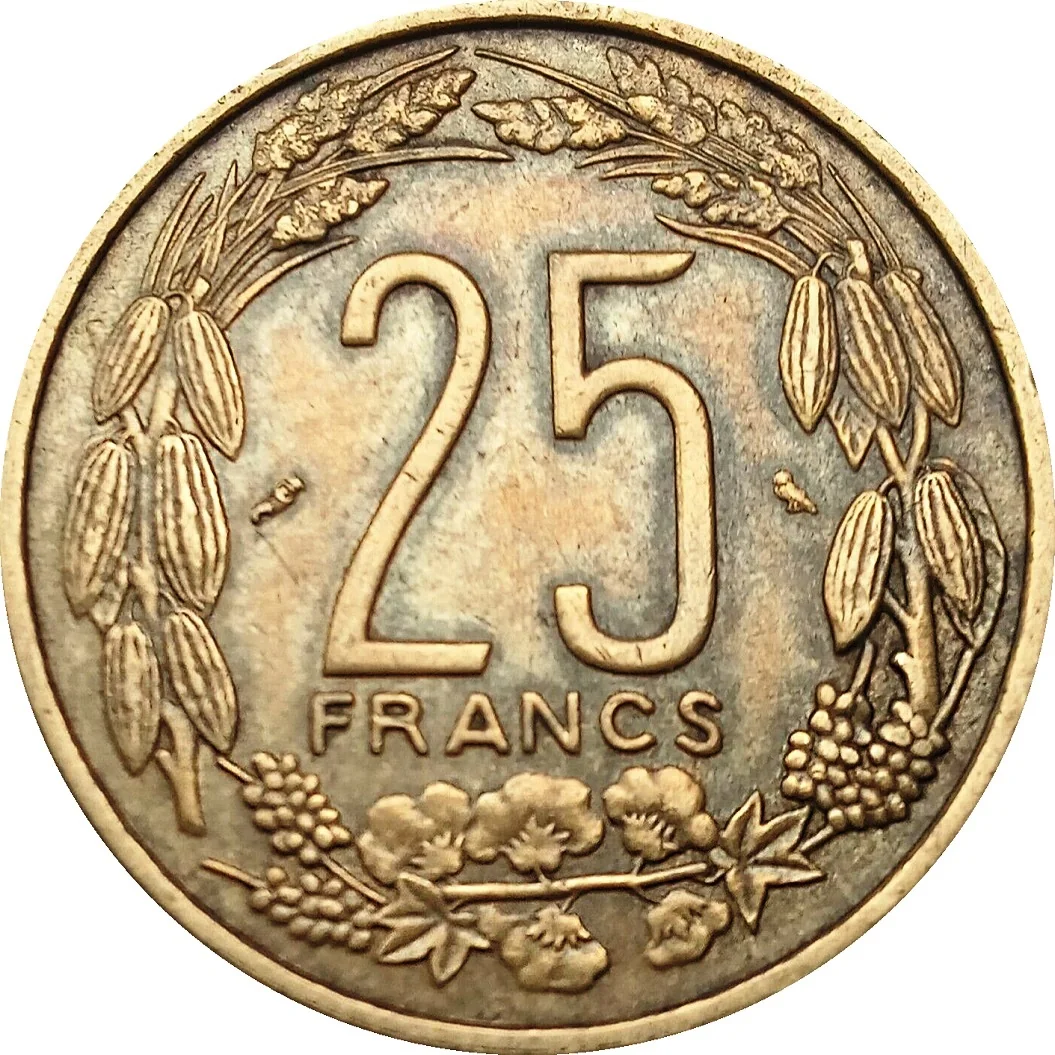
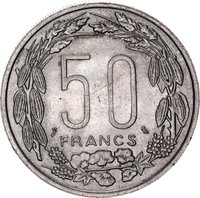
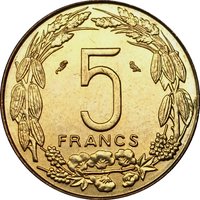
Wreath of major Cameroonian crops: cotton, coffee, cocoa, and grains.
Inscription:
25
FRANCS
FRANCS
Script: Latin
Engravers: Gabriel Bernard, Lucien Bazor
Edge
Plain
Categories
| Agriculture |
| Animal> Cow |
| Symbol> Wreath |
Mints
| Name | Mark |
|---|---|
| Monnaie de Paris | — |
Mintings
| Year | Mint Mark | Mintage | Quality | Collection |
|---|---|---|---|---|
| 1962 | — | 6,000,000 |
Historical background
In 1962, the currency situation in the Central African States was defined by the recent creation of the Communauté Financière Africaine (CFA) and the establishment of two distinct franc zones following the independence of former French colonies. The CFA franc (Colonies Françaises d'Afrique at the time) was created in 1945, but its structure was reconfigured in the early 1960s. As new nations like Chad, the Central African Republic, and Congo-Brazzaville gained sovereignty, they chose to maintain monetary cooperation with France. Consequently, 1962 fell within the transitional period where these states operated under the Central African CFA franc (XAF), administered by the Banque Centrale des États de l'Afrique Équatoriale et du Cameroun (BCEAEC), based in Paris.
This monetary arrangement provided critical stability. The CFA franc was pegged to the French franc at a fixed parity (1 CFA franc = 0.02 French francs in 1962) and was fully convertible, guaranteed by the French Treasury. This link offered these nascent economies a shield against inflation and a stable currency for trade, but it also meant France held considerable influence over their monetary policy. The system required member states to pool a significant portion of their foreign exchange reserves with the French Treasury, a point of both assurance and post-colonial contention.
Therefore, the currency situation in 1962 was one of inherited institutional continuity amidst political change. The Central African states, while politically independent, remained within a Franc Zone that ensured monetary stability but also entrenched economic dependency. This framework laid the foundation for the formal creation of the Banque des États de l'Afrique Centrale (BEAC) in 1973, which would later take over the issuance of the XAF, solidifying the currency union that persists in modified form to this day.
This monetary arrangement provided critical stability. The CFA franc was pegged to the French franc at a fixed parity (1 CFA franc = 0.02 French francs in 1962) and was fully convertible, guaranteed by the French Treasury. This link offered these nascent economies a shield against inflation and a stable currency for trade, but it also meant France held considerable influence over their monetary policy. The system required member states to pool a significant portion of their foreign exchange reserves with the French Treasury, a point of both assurance and post-colonial contention.
Therefore, the currency situation in 1962 was one of inherited institutional continuity amidst political change. The Central African states, while politically independent, remained within a Franc Zone that ensured monetary stability but also entrenched economic dependency. This framework laid the foundation for the formal creation of the Banque des États de l'Afrique Centrale (BEAC) in 1973, which would later take over the issuance of the XAF, solidifying the currency union that persists in modified form to this day.
🌱 Common