

5 centésimos – Uruguay
Add to wishlist
Uruguay
Context
Year: 1960
Issuer: Uruguay
Issuing organization: Bank of Oriental Republic of Uruguay
Period:
(since 1825)
Currency:
(1863—1975)
Demonetization: 1 July 1975
Total mintage: 88,000,000
Material
Diameter: 20 mm
Weight: 3.5 g
Shape: Round
Composition: Nickel brass
Magnetic: No
Technique: Milled
Alignment: Medal alignment
flip
References
KM: #
Numista: #8115
Value
Exchange value: 0.05 UYP
Obverse
Description:
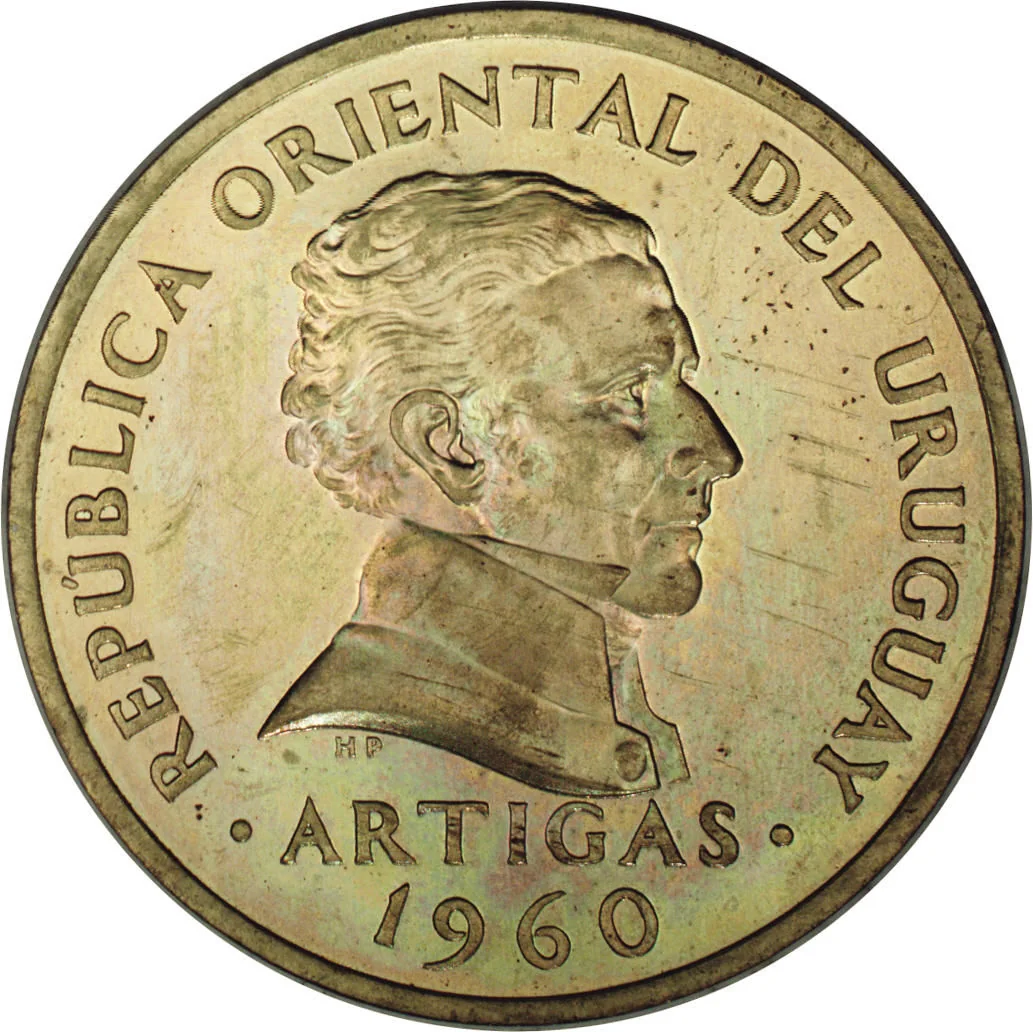
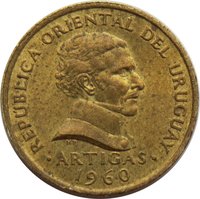
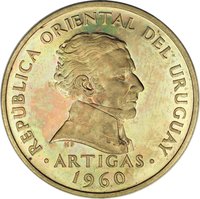
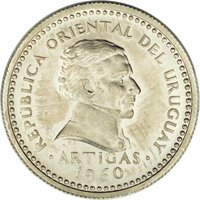
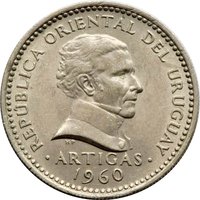
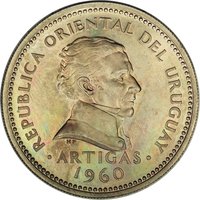
Portrait of José Gervasio Artigas facing right, with arched inscription above.
Inscription:
REPÚBLICA ORIENTAL DEL URUGUAY
·ARTIGAS·
1960
·ARTIGAS·
1960
Translation:
ORIENTAL REPUBLIC OF URUGUAY
·ARTIGAS·
1960
·ARTIGAS·
1960
Script: Latin
Language: Spanish
Engraver: Thomas Humphrey Paget
Reverse
Description:
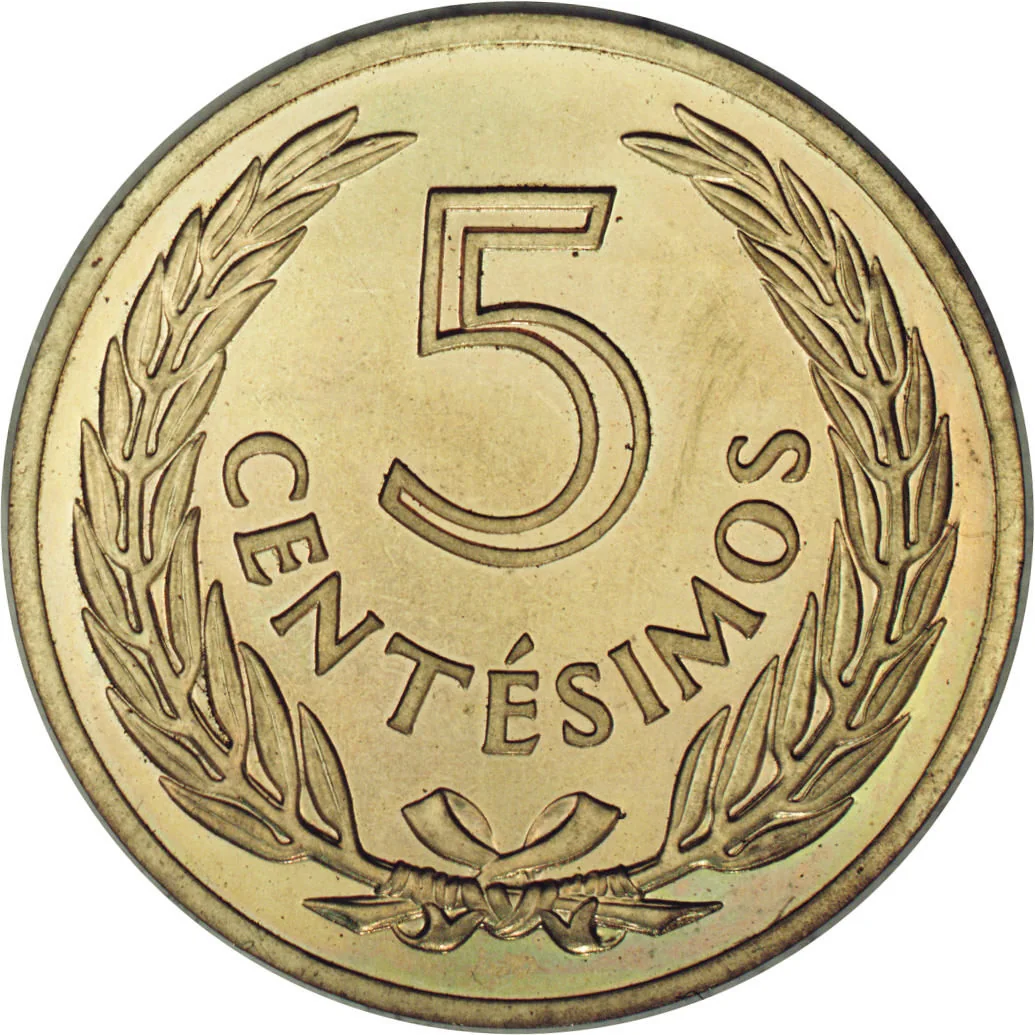
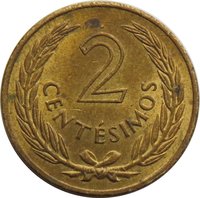
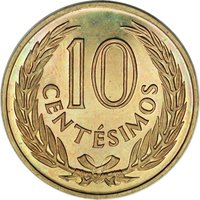
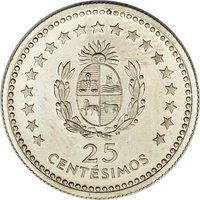
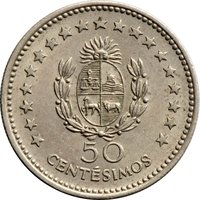
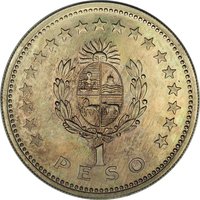
Wreath's worth
Inscription:
5
CENTÉSIMOS
CENTÉSIMOS
Translation:
Five Centésimos
Script: Latin
Language: Spanish
Engraver: Gilroy Roberts
Edge
Plain
Categories
| Person> Military leader |
| Person> Politician |
| Symbol> Wreath |
Mints
| Name | Mark |
|---|---|
| Royal Mint (Tower Hill) | — |
Mintings
| Year | Mint Mark | Mintage | Quality | Collection |
|---|---|---|---|---|
| 1960 | — | 88,000,000 | ||
| 1960 | — | — | Proof |
Historical background
In 1960, Uruguay's currency situation was characterized by a complex and strained system of exchange controls and multiple exchange rates, a legacy of persistent economic challenges. The country was still grappling with the long-term decline of its traditional agricultural export model, which had been the foundation of its early 20th-century prosperity. To manage chronic balance of payments deficits and shield domestic industry, the government maintained a heavily regulated financial environment through the Banco de la República Oriental del Uruguay (BROU). The official peso rate was fixed, but a system of "financial" or "free" exchange rates existed alongside it, creating a significant gap that encouraged a black market for dollars.
This multi-tiered system was inherently unstable and distortionary. Essential imports and traditional exports like beef and wool were handled at a preferential official rate, while most other transactions fell under a less favorable financial rate. The disparity between these rates created inefficiencies, discouraged certain exports, and led to frequent speculative pressures. Furthermore, high inflation—a recurring issue—eroded the peso's real value, putting downward pressure on the fixed official parity and widening the gap with the free market rate.
Overall, the currency regime of 1960 reflected a defensive and interventionist economic policy aimed at controlling scarce foreign reserves and protecting the welfare state. While it provided short-term stability for certain sectors, it masked deeper structural problems, including fiscal deficits and industrial stagnation. This cumbersome system would prove increasingly difficult to sustain, foreshadowing the more severe monetary crises, devaluations, and eventual liberalization efforts that would mark the coming decades in Uruguay.
This multi-tiered system was inherently unstable and distortionary. Essential imports and traditional exports like beef and wool were handled at a preferential official rate, while most other transactions fell under a less favorable financial rate. The disparity between these rates created inefficiencies, discouraged certain exports, and led to frequent speculative pressures. Furthermore, high inflation—a recurring issue—eroded the peso's real value, putting downward pressure on the fixed official parity and widening the gap with the free market rate.
Overall, the currency regime of 1960 reflected a defensive and interventionist economic policy aimed at controlling scarce foreign reserves and protecting the welfare state. While it provided short-term stability for certain sectors, it masked deeper structural problems, including fiscal deficits and industrial stagnation. This cumbersome system would prove increasingly difficult to sustain, foreshadowing the more severe monetary crises, devaluations, and eventual liberalization efforts that would mark the coming decades in Uruguay.
Series: 1960 Uruguay circulation coins
🌱 Very Common