

100 francs – France
Add to wishlist
France
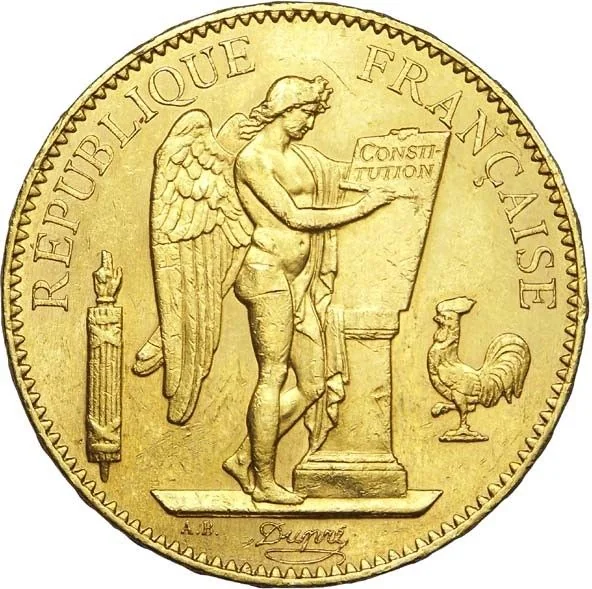
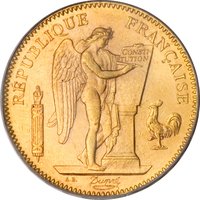
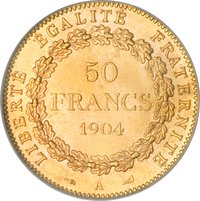
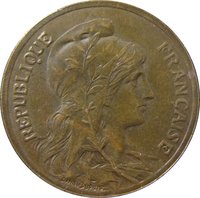
Obverse
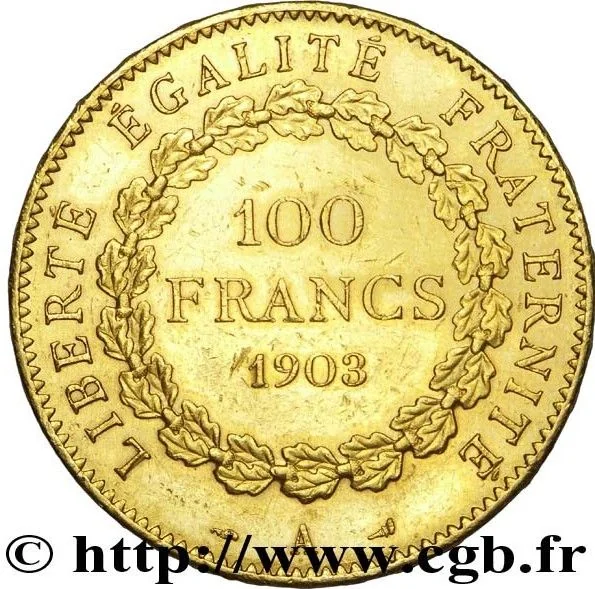
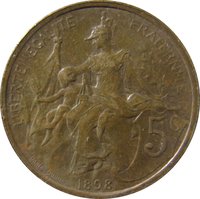
Reverse
Edge
Legend in relief.
Legend:
***** DIEU * PROTEGE * LA * FRANCE
Mints
| Name | Mark |
|---|---|
| Monnaie de Paris | (A) |
Mintings
| Year | Mint Mark | Mintage | Quality | Collection |
|---|---|---|---|---|
| 1878 | A | 12,814 | ||
| 1879 | A | 38,601 | ||
| 1881 | A | 21,670 | ||
| 1882 | A | 37,420 | ||
| 1885 | A | 2,894 | ||
| 1886 | A | 38,892 | ||
| 1887 | A | 234 | ||
| 1889 | A | 100 | ||
| 1894 | A | 143 | ||
| 1896 | A | 400 | ||
| 1899 | A | 10,000 | ||
| 1900 | A | 20,260 | ||
| 1901 | A | 10,121 | ||
| 1902 | A | 10,000 | ||
| 1903 | A | 10,096 | ||
| 1904 | A | 20,000 | ||
| 1905 | A | 10,000 | ||
| 1906 | A | 30,247 |
Historical background
In 1878, France was a key participant in the international monetary system known as the Latin Monetary Union (LMU), established in 1865. The nation operated on a bimetallic standard, legally valuing both gold and silver coins as legal tender at a fixed ratio (15.5 to 1). However, this system was under severe strain due to the global phenomenon of "the crime of 1873," where major economic powers like Germany and the United States demonetized silver in favor of a pure gold standard. This action caused a glut of silver on the market, depressing its value and threatening the fixed LMU ratio, as it became profitable to exchange overvalued silver for gold, draining France's gold reserves.
Domestically, this created a complex currency situation. While gold coins like the 20-franc Napoléon and silver 5-franc pieces remained in circulation, the intrinsic value of silver coins was falling below their face value. The French government, committed to the LMU and fearing the inflationary and disruptive effects of a collapsing bimetallic system, took defensive measures. It had already limited the minting of silver écus (5-franc coins) in 1876 to slow the influx of cheap silver, effectively moving toward a "limping gold standard," where gold was the primary basis of value but existing full-bodied silver coins remained legal tender.
Consequently, by 1878, France found itself in a precarious and transitional monetary state. It was officially bimetallic but practically protecting its gold reserves, acting as a crucial buffer in the international struggle between gold and silver standards. The situation was a source of ongoing debate between monométallistes (advocates for gold) and bimétallistes, with the government attempting to stabilize the system through international conferences, one of which was held in Paris in 1878. The failure to secure a new international bimetallic agreement that year set France on a path toward the eventual full adoption of the gold standard, which it would formally embrace in the latter part of the century.
Domestically, this created a complex currency situation. While gold coins like the 20-franc Napoléon and silver 5-franc pieces remained in circulation, the intrinsic value of silver coins was falling below their face value. The French government, committed to the LMU and fearing the inflationary and disruptive effects of a collapsing bimetallic system, took defensive measures. It had already limited the minting of silver écus (5-franc coins) in 1876 to slow the influx of cheap silver, effectively moving toward a "limping gold standard," where gold was the primary basis of value but existing full-bodied silver coins remained legal tender.
Consequently, by 1878, France found itself in a precarious and transitional monetary state. It was officially bimetallic but practically protecting its gold reserves, acting as a crucial buffer in the international struggle between gold and silver standards. The situation was a source of ongoing debate between monométallistes (advocates for gold) and bimétallistes, with the government attempting to stabilize the system through international conferences, one of which was held in Paris in 1878. The failure to secure a new international bimetallic agreement that year set France on a path toward the eventual full adoption of the gold standard, which it would formally embrace in the latter part of the century.
🌟 Limited