

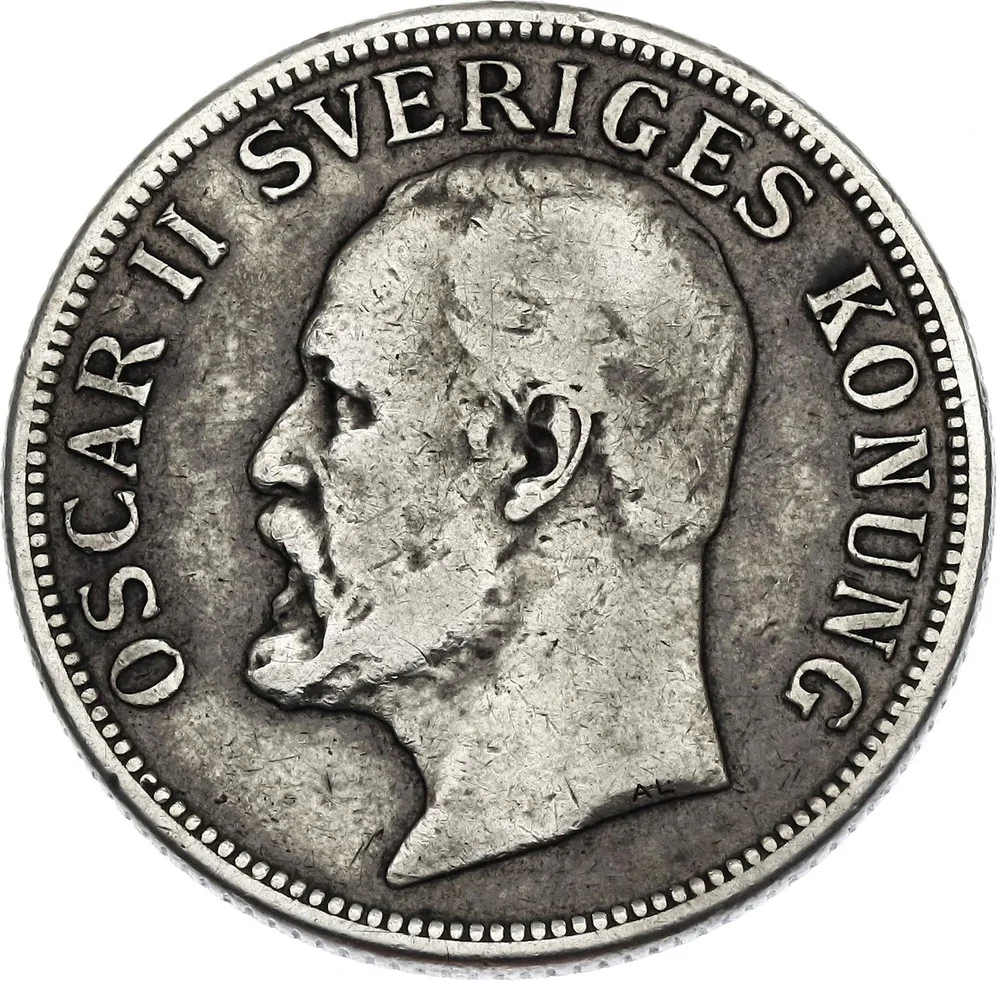
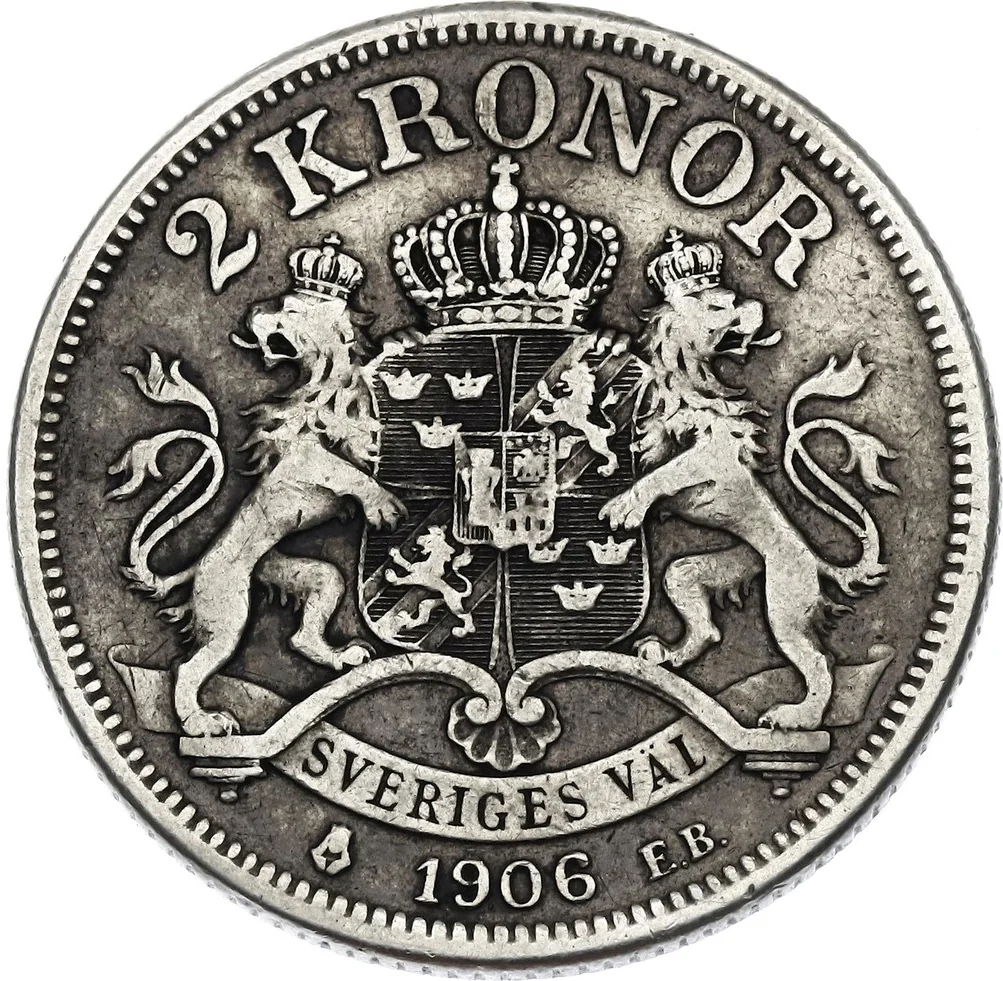
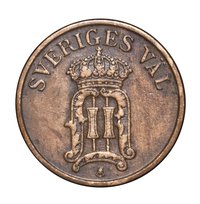
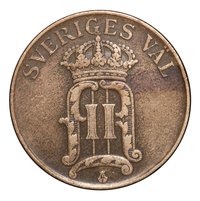
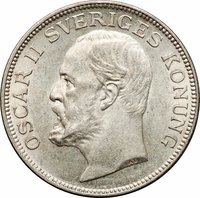
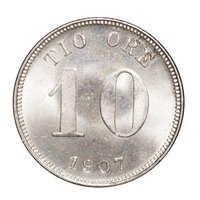
Obverse
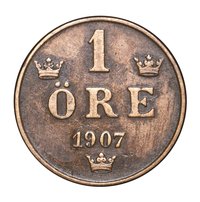
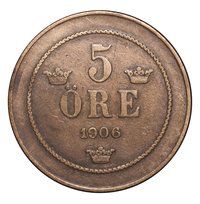
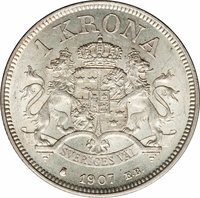
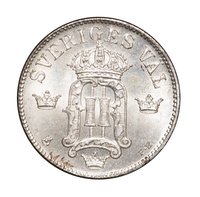
Reverse
Edge
Milled
Categories
| Symbols> Coat of Arms |
Mints
| Name | Mark |
|---|---|
| Kungliga Myntet | — |
Mintings
| Year | Mint Mark | Mintage | Quality | Collection |
|---|---|---|---|---|
| 1906 | — | 112,468 | ||
| 1907 | — | 300,573 |
Historical background
In 1906, Sweden operated under the gold standard as part of the Scandinavian Monetary Union (SMU), established in 1873 with Denmark and later joined by Norway. This union created a unified currency system where the Swedish krona (SEK), pegged to gold, was legally interchangeable at par with the Danish and Norwegian kroner. The system functioned smoothly in practice, facilitating trade and financial stability across the region. Domestically, the Riksbank, as the central bank, was obligated to exchange banknotes for gold upon demand, ensuring confidence in the currency's value.
However, the period around 1906 was one of underlying strain for the monetary union. While the formal framework remained intact, the economic and political foundations were beginning to erode. The outbreak of World War I in 1914 would ultimately precipitate its collapse, but in the preceding years, pressures were mounting. Divergent national economic policies, the rising cost of living, and the increasing strain on gold reserves were creating tensions. Furthermore, the international financial landscape was becoming more volatile, challenging the fixed exchange rates and gold convertibility that the union relied upon.
For the average Swede in 1906, the currency system was stable and largely taken for granted. The krona's value was solid, inflation was low, and the interchangeability with neighbouring currencies was a practical convenience. Yet, for economists and policymakers, it was a period of watchfulness. The Riksbank had to carefully manage its gold reserves to maintain convertibility, and debates about fiscal policy and the long-term viability of the gold standard were ongoing in financial circles, setting the stage for the profound monetary changes that the 20th century would bring.
However, the period around 1906 was one of underlying strain for the monetary union. While the formal framework remained intact, the economic and political foundations were beginning to erode. The outbreak of World War I in 1914 would ultimately precipitate its collapse, but in the preceding years, pressures were mounting. Divergent national economic policies, the rising cost of living, and the increasing strain on gold reserves were creating tensions. Furthermore, the international financial landscape was becoming more volatile, challenging the fixed exchange rates and gold convertibility that the union relied upon.
For the average Swede in 1906, the currency system was stable and largely taken for granted. The krona's value was solid, inflation was low, and the interchangeability with neighbouring currencies was a practical convenience. Yet, for economists and policymakers, it was a period of watchfulness. The Riksbank had to carefully manage its gold reserves to maintain convertibility, and debates about fiscal policy and the long-term viability of the gold standard were ongoing in financial circles, setting the stage for the profound monetary changes that the 20th century would bring.
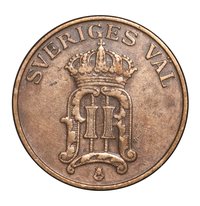
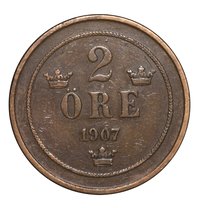
Series: 1906 Sweden circulation coins
🌱 Fairly Common