

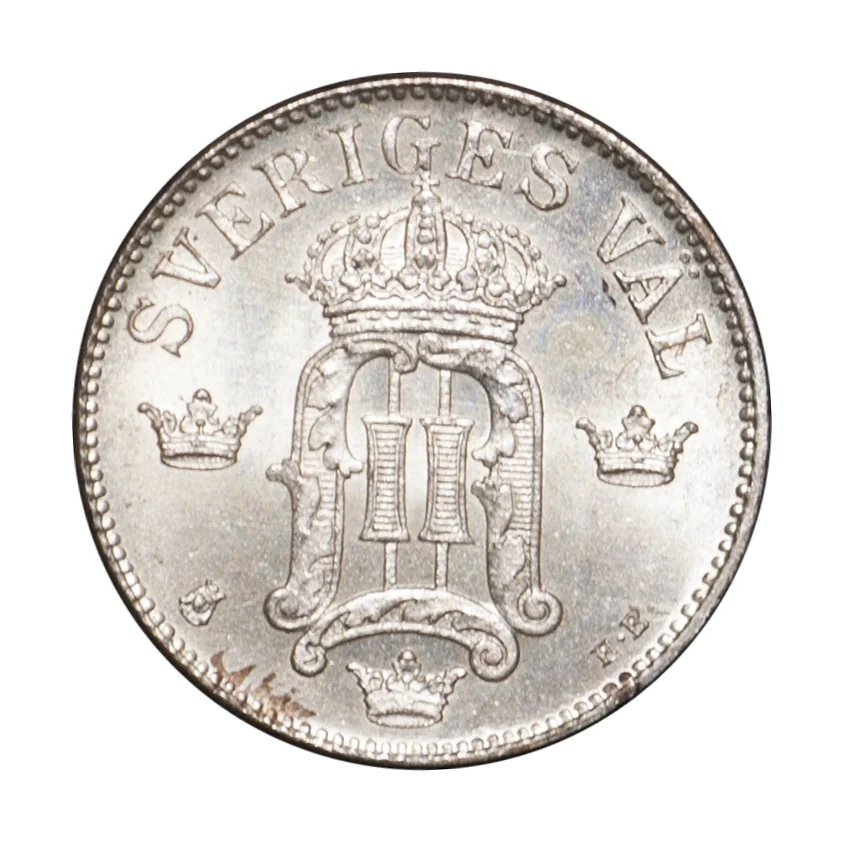
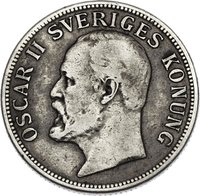
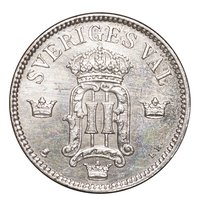
Obverse
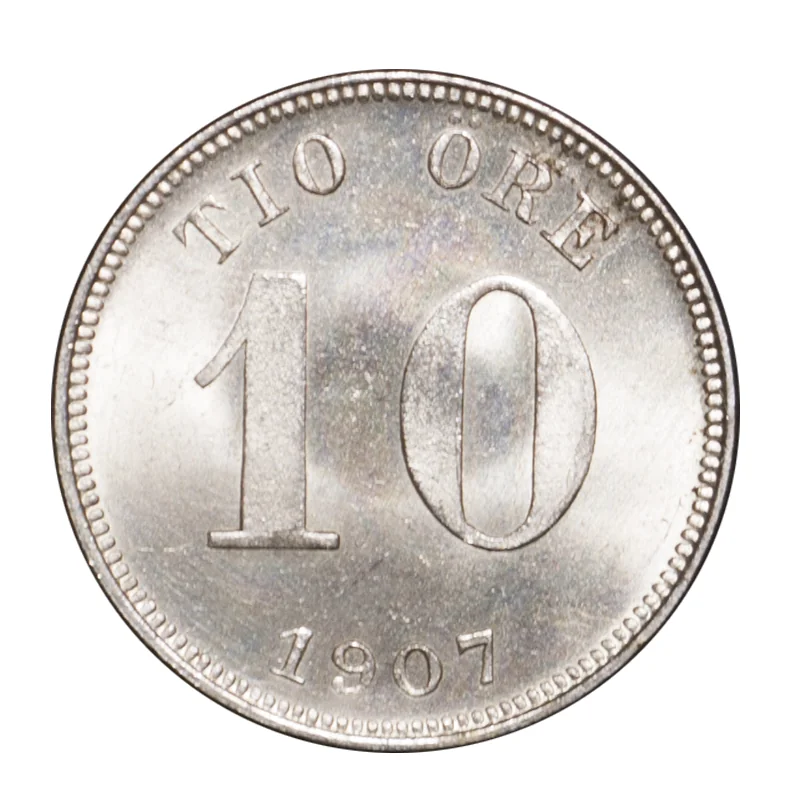
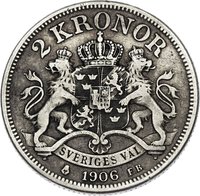
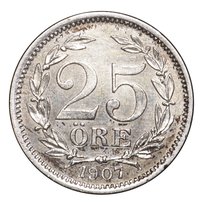
Reverse
Edge
Plain
Mints
| Name | Mark |
|---|---|
| Kungliga Myntet | — |
Mintings
| Year | Mint Mark | Mintage | Quality | Collection |
|---|---|---|---|---|
| 1907 | — | 7,319,640 |
Historical background
In 1907, Sweden operated under the classical gold standard, a system it had formally adopted in 1873 alongside Denmark and Norway to form the Scandinavian Monetary Union (SMU). This union established fixed exchange rates between the Swedish krona, the Danish krone, and the Norwegian krone, with all three currencies directly convertible into gold at a set parity. The system was designed to facilitate trade and financial stability across the region, and for decades it functioned smoothly, with member nations accepting each other's coins and banknotes at par.
However, by 1907, the Monetary Union was under significant strain, though not yet dissolved. The underlying pressure came from the diverging economic policies of the member states, particularly during times of international financial crisis. Sweden maintained a strong commitment to gold convertibility, holding substantial gold reserves to back its currency. In contrast, Norway and Denmark had begun to rely more on holding Swedish currency in lieu of gold, a practice that created vulnerability. The year 1907 itself was marked by an international financial panic, originating in the United States, which tested the liquidity and resolve of central banks worldwide, including Sweden's Riksbank.
Consequently, Sweden's currency situation in 1907 was one of formal stability within the gold standard framework, but with underlying fragility in its regional monetary alliance. The Riksbank's primary focus was on defending the krona's gold peg, requiring it to maintain high interest rates and careful management of its reserves amidst the global turbulence. While the Scandinavian Monetary Union would not officially end until the outbreak of World War I, the trust and automatic reciprocity between members had already eroded, making Sweden increasingly protective of its own gold stock and financially independent in its policies as it navigated the international crisis.
However, by 1907, the Monetary Union was under significant strain, though not yet dissolved. The underlying pressure came from the diverging economic policies of the member states, particularly during times of international financial crisis. Sweden maintained a strong commitment to gold convertibility, holding substantial gold reserves to back its currency. In contrast, Norway and Denmark had begun to rely more on holding Swedish currency in lieu of gold, a practice that created vulnerability. The year 1907 itself was marked by an international financial panic, originating in the United States, which tested the liquidity and resolve of central banks worldwide, including Sweden's Riksbank.
Consequently, Sweden's currency situation in 1907 was one of formal stability within the gold standard framework, but with underlying fragility in its regional monetary alliance. The Riksbank's primary focus was on defending the krona's gold peg, requiring it to maintain high interest rates and careful management of its reserves amidst the global turbulence. While the Scandinavian Monetary Union would not officially end until the outbreak of World War I, the trust and automatic reciprocity between members had already eroded, making Sweden increasingly protective of its own gold stock and financially independent in its policies as it navigated the international crisis.
🌱 Common