Logo Title
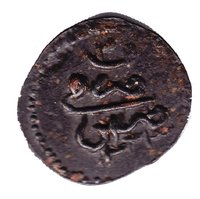
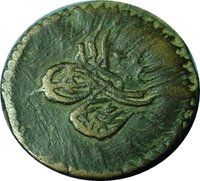
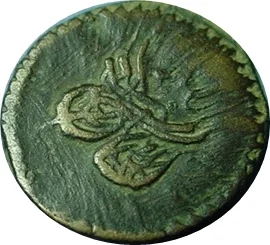
obverse
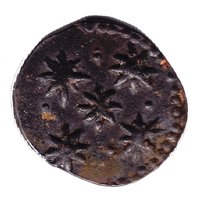
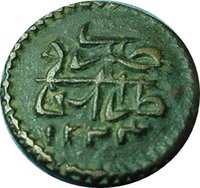
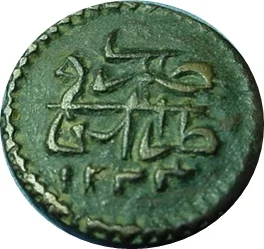
reverse
DNECoins
Context
Year: 1832
Islamic (Hijri) Year: 1223
Country: Libya Country flag
Ruler: Mahmud II
Currency:
(1688—1844)
Demonetized: Yes
Material
Diameter: 17 mm
Weight: 2.5 g
Composition: Copper
Magnetic: No
Technique: Hammered
References
KM: #Click to copy to clipboard81.2
Numista: #79930

Obverse

Description:
Mahmud II tughra, regnal year above.
Inscription:
٢٤

محمود
Translation:
Twenty-Four Mahmud
Script: Arabic
Language: Arabic

Reverse

Description:
Mint date
Inscription:
ضرب

في

طرابلس

١٢٢٣
Translation:
Struck

in

Tarabulus

1223
Script: Arabic
Language: Arabic

Edge

Irregular hammered

Mintings

YearMint MarkMintageQualityCollection
1832

Historical background

In 1832, the Regency of Tripoli was navigating a complex and unstable currency environment following its recent re-subordination to the Ottoman Empire. The 1835 restoration of direct Ottoman control ended the semi-autonomous rule of the Qaramanli dynasty, but it did not immediately resolve the longstanding monetary chaos. The local economy operated on a multi-currency system, a legacy of Mediterranean trade and weak central minting. Alongside heavily debased local copper mangır and silver piastres, Spanish dollars, Austrian thalers, and other European coins circulated widely, their values fluctuating based on weight and metallic purity rather than a fixed state guarantee.

This monetary fragmentation was exacerbated by severe fiscal strain. The regency's treasury was depleted after years of internal strife, the costly 1825 plague, and the final military confrontation with the Ottomans. The Ottoman authorities, focused on asserting political control, had not yet implemented a standardized monetary reform. Consequently, transactions required constant negotiation and the expertise of money-changers, creating a system vulnerable to fraud and hindering both local commerce and the state's ability to collect taxes efficiently.

Therefore, the currency situation in 1832 was one of transition and disorder. While political sovereignty had formally shifted to Constantinople, the monetary landscape remained a patchwork of eroded local coinage and foreign specie, reflecting the regency's past as a piratical state and trading port, and its present reality as a financially distressed Ottoman province in need of administrative and economic reorganization.

Series: 1832 Regency of Tripoli circulation coins

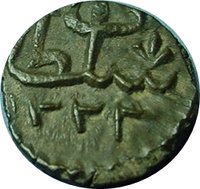
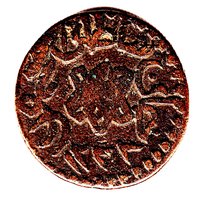
1 Para obverse
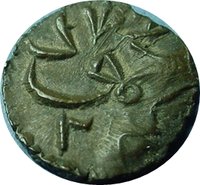
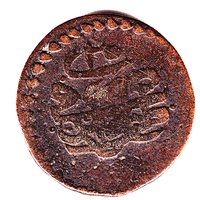
1 Para reverse
1 Para
1832
1 Para obverse
1 Para reverse
1 Para
1832
1 Para obverse
1 Para reverse
1 Para
1832
Legendary