

25 Centesimos – Panama
Circulating commemorative coins
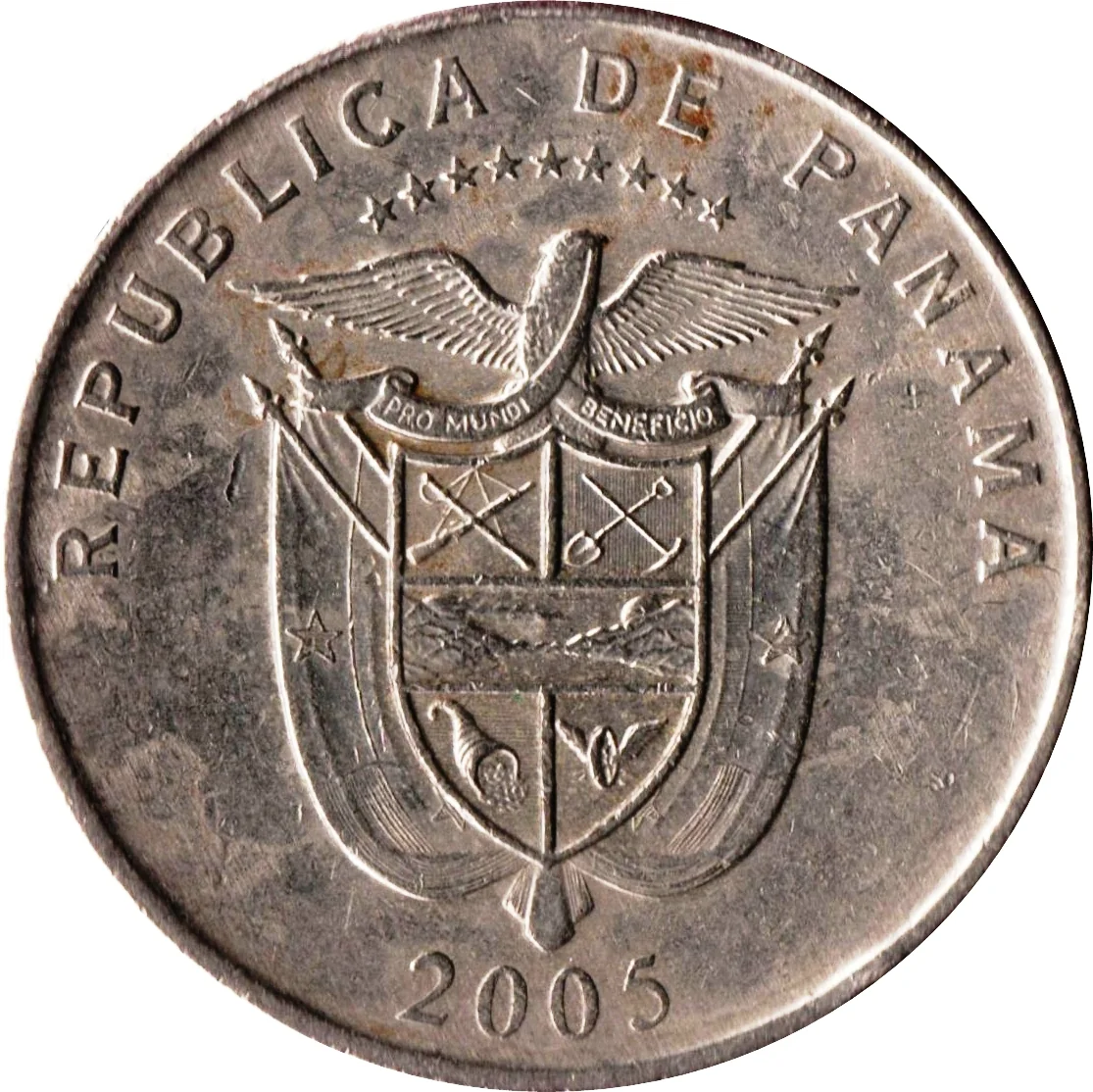
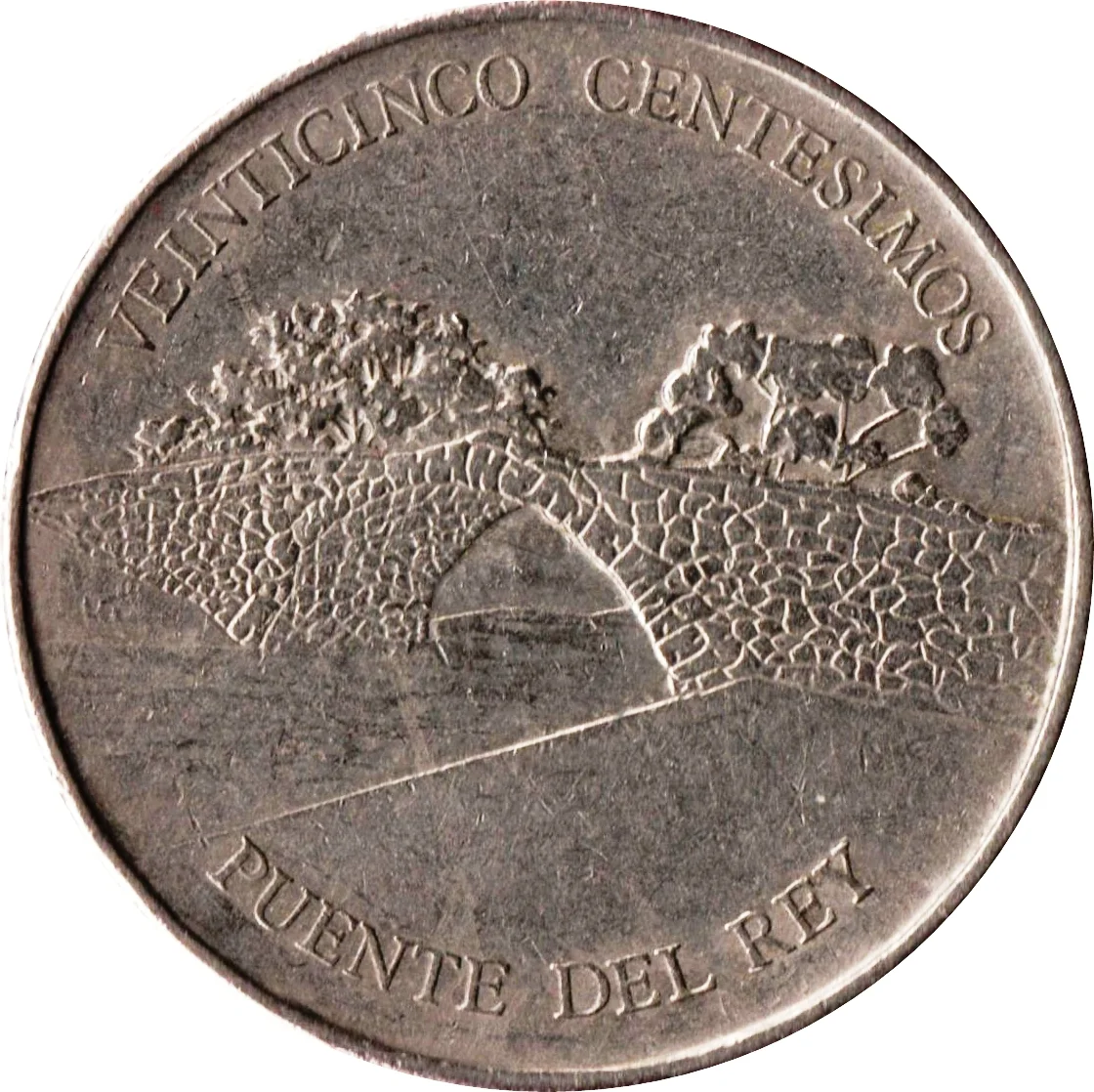
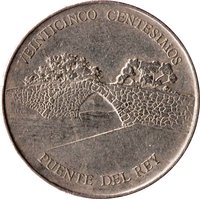
Commemoration: King's Bridge
Panama
Context
Material
References
KM: #Click to copy to clipboard136
Numista: #7986
Value
Exchange value: 0.25 PAB
Obverse
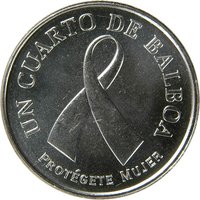
Reverse
Edge
Reeded
Categories
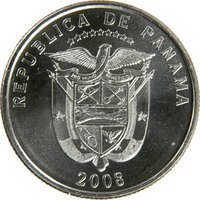
| Symbols> Coat of Arms |
| Building> Bridge |
Mints
| Name | Mark |
|---|---|
| Royal Canadian Mint of Winnipeg | — |
Mintings
| Year | Mint Mark | Mintage | Quality | Collection |
|---|---|---|---|---|
| 2005 | — | 3,000,000 | ||
| 2005 | — | 2,000 | Proof |
Historical background
In 2005, Panama's currency situation was defined by its unique and long-standing system of full dollarization, which had been in place since 1904. The country used the US dollar as its official legal tender for all paper currency, while also issuing its own coinage, the Panamanian balboa, which was pegged at a 1:1 ratio with the dollar. This system provided exceptional monetary stability, low inflation, and deep integration with the global financial system, which supported Panama's role as a regional banking and trade hub. The economy was not subject to exchange rate volatility or the need for a central bank to conduct independent monetary policy, as the US Federal Reserve effectively set the benchmark.
The primary economic context of 2005 was one of robust growth, driven by the expansion of the Panama Canal, a booming construction sector, and strong services exports. Dollarization facilitated this growth by ensuring predictable financial conditions for foreign investment and international trade. However, the system also meant Panama had no ability to devalue its currency to boost competitiveness or to act as a lender of last resort during banking crises, relying instead on fiscal discipline and substantial foreign reserves. The country's financial stability was further bolstered by a well-capitalized banking sector supervised by the Superintendency of Banks.
Overall, the currency regime in 2005 was viewed as a cornerstone of Panama's economic success and was widely accepted by the population and business community. The debate around dollarization was minimal, as the benefits of stability and integration were seen to outweigh the loss of autonomous monetary tools. The system's success was evident in the sustained economic expansion that year, with GDP growth exceeding 7%, demonstrating how dollarization provided a stable platform for a small, open economy heavily reliant on global commerce and the Canal.
The primary economic context of 2005 was one of robust growth, driven by the expansion of the Panama Canal, a booming construction sector, and strong services exports. Dollarization facilitated this growth by ensuring predictable financial conditions for foreign investment and international trade. However, the system also meant Panama had no ability to devalue its currency to boost competitiveness or to act as a lender of last resort during banking crises, relying instead on fiscal discipline and substantial foreign reserves. The country's financial stability was further bolstered by a well-capitalized banking sector supervised by the Superintendency of Banks.
Overall, the currency regime in 2005 was viewed as a cornerstone of Panama's economic success and was widely accepted by the population and business community. The debate around dollarization was minimal, as the benefits of stability and integration were seen to outweigh the loss of autonomous monetary tools. The system's success was evident in the sustained economic expansion that year, with GDP growth exceeding 7%, demonstrating how dollarization provided a stable platform for a small, open economy heavily reliant on global commerce and the Canal.
🌱 Common