

10 gulden (Reign of Queen Juliana) – Netherlands
Add to wishlist
Circulating commemorative coins
Commemoration: 25th Anniversary of the Reign of Queen Juliana
Netherlands
Context
Year: 1973
Issuer: Netherlands
Ruler: Juliana
Currency:
(1817—2001)
Demonetized: Yes
Total mintage: 4,605,570
Material
References
KM: #
Numista: #7947
Value
Exchange value: 10 NLG
Bullion value: $44.92
Inflation-adjusted value: 48.54 NLG
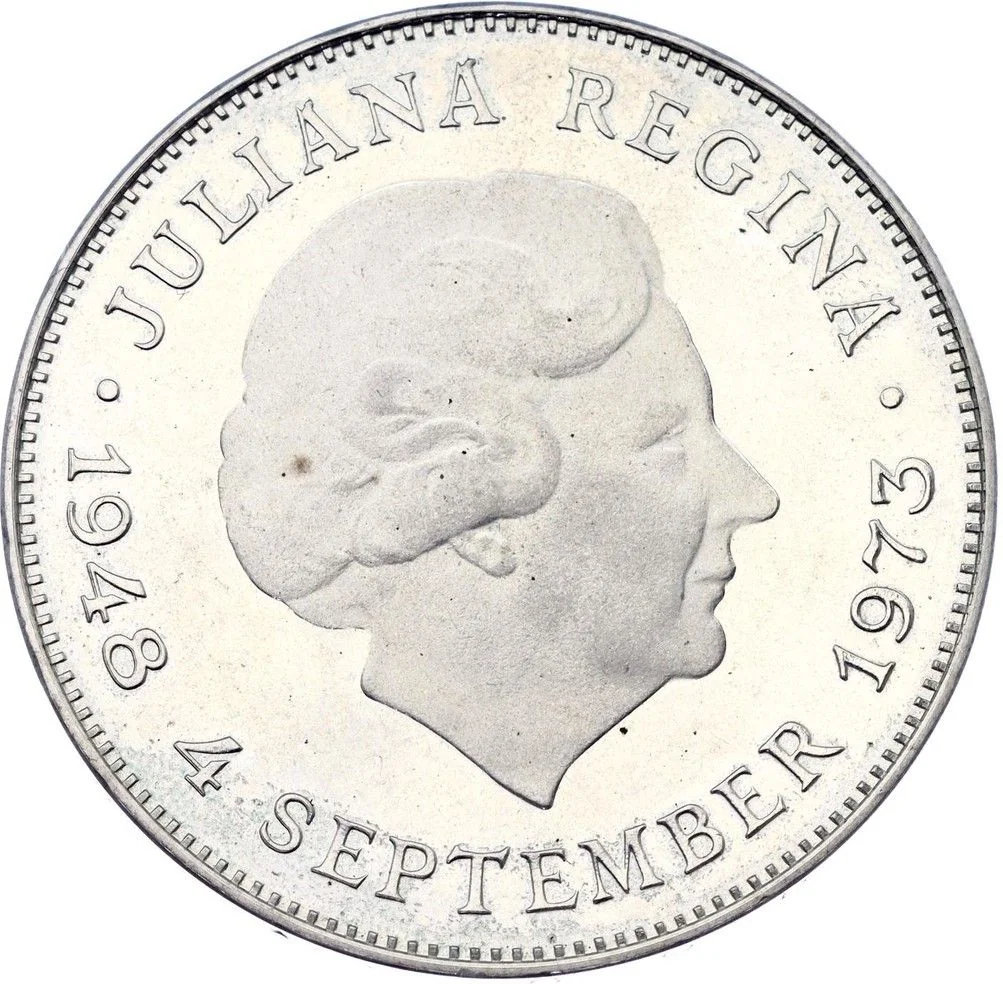
Obverse
Description:
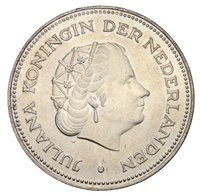
Queen Juliana facing right
Inscription:
· JULIANA REGINA ·
1948 4 SEPTEMBER 1973
1948 4 SEPTEMBER 1973
Translation:
Queen Juliana
1948 4 September 1973
1948 4 September 1973
Script: Latin
Engraver: Katinka Bruyn-van Rood
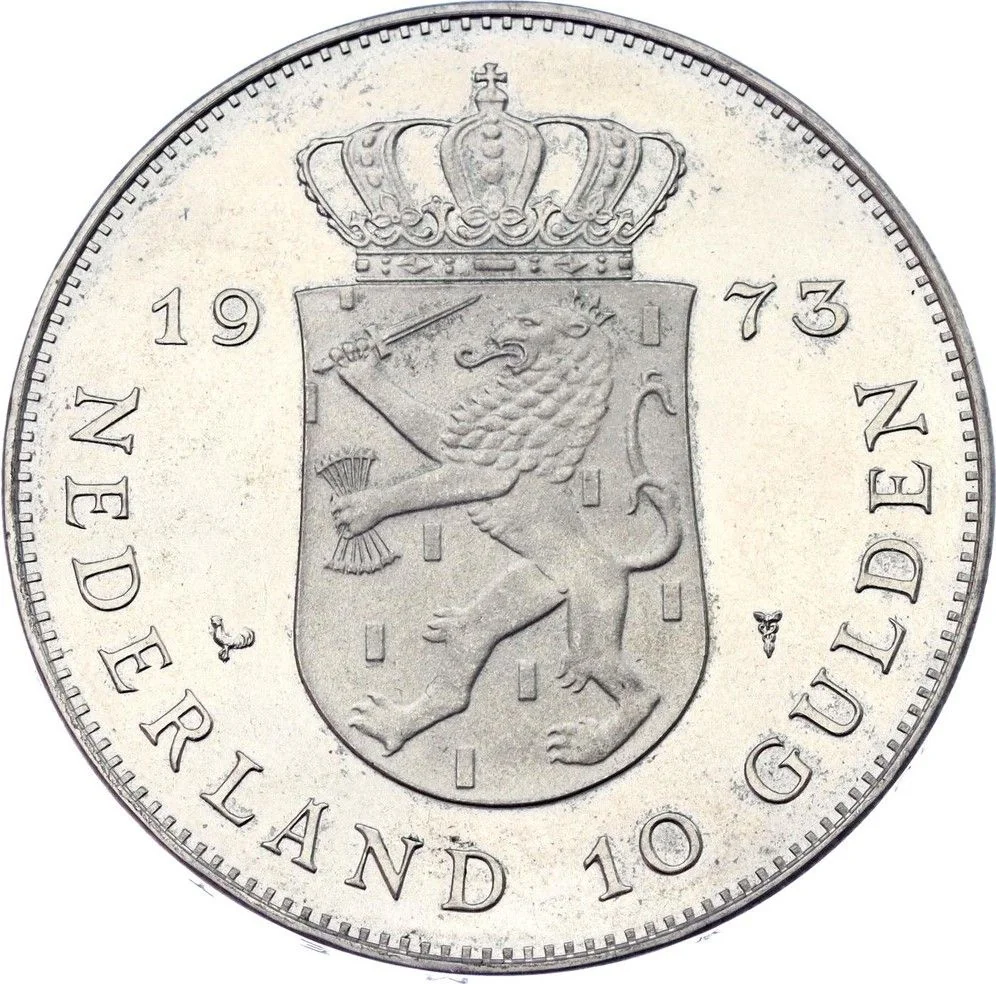
Reverse
Description:
Dutch coat of arms splits date, value beneath.
Inscription:
1973
NEDERLAND 10 GULDEN
NEDERLAND 10 GULDEN
Translation:
1973
NETHERLANDS 10 GUILDERS
NETHERLANDS 10 GUILDERS
Script: Latin
Engraver: Katinka Bruyn-van Rood
Edge
Categories
| Symbol> Crown |
| Symbols> Coat of Arms |
Mints
| Name | Mark |
|---|---|
| Royal Dutch Mint | — |
Mintings
| Year | Mint Mark | Mintage | Quality | Collection |
|---|---|---|---|---|
| 1973 | — | 4,500,000 | ||
| 1973 | — | 105,570 | Proof |
Historical background
In 1973, the Netherlands operated within the Bretton Woods system of fixed exchange rates, but this framework was in its final, tumultuous year of collapse. The Dutch guilder was officially pegged to the US dollar, yet this link was under immense strain. Global pressures, including the US decision to suspend dollar-gold convertibility in 1971, had already led to the Smithsonian Agreement, which created new parities. The guilder, considered a strong and stable currency, was revalued upwards by 2.76% against the dollar in December 1971 as part of this realignment, reflecting the Netherlands' robust economy and persistent balance-of-payments surpluses.
The year was dominated by the oil crisis, triggered by an embargo from Arab oil-producing nations in October following the Yom Kippur War. This caused the price of oil to quadruple, creating severe inflationary pressures and trade deficits across the West. For the Netherlands, a founding member of the European Economic Community (EEC), the crisis was particularly acute due to its heavy dependence on imported oil. The government responded with strict austerity measures, including car-free Sundays, which aimed to conserve fuel but also signaled deep economic disruption that would challenge the guilder's stability.
Within this volatile context, the Netherlands participated in the final efforts to maintain European currency stability. In March 1973, as the Bretton Woods system definitively broke down, the Netherlands joined the European "snake in the tunnel" arrangement. This mechanism, a forerunner to the European Monetary System, aimed to limit fluctuations between EEC currencies. The strong guilder was a core member of this "snake," but the economic shocks of the oil crisis made maintaining the required narrow bands exceptionally difficult. Thus, 1973 was a transitional year where the guilder moved from a dollar peg towards European monetary cooperation, all while navigating the most severe external economic shock of the decade.
The year was dominated by the oil crisis, triggered by an embargo from Arab oil-producing nations in October following the Yom Kippur War. This caused the price of oil to quadruple, creating severe inflationary pressures and trade deficits across the West. For the Netherlands, a founding member of the European Economic Community (EEC), the crisis was particularly acute due to its heavy dependence on imported oil. The government responded with strict austerity measures, including car-free Sundays, which aimed to conserve fuel but also signaled deep economic disruption that would challenge the guilder's stability.
Within this volatile context, the Netherlands participated in the final efforts to maintain European currency stability. In March 1973, as the Bretton Woods system definitively broke down, the Netherlands joined the European "snake in the tunnel" arrangement. This mechanism, a forerunner to the European Monetary System, aimed to limit fluctuations between EEC currencies. The strong guilder was a core member of this "snake," but the economic shocks of the oil crisis made maintaining the required narrow bands exceptionally difficult. Thus, 1973 was a transitional year where the guilder moved from a dollar peg towards European monetary cooperation, all while navigating the most severe external economic shock of the decade.
🌱 Common