

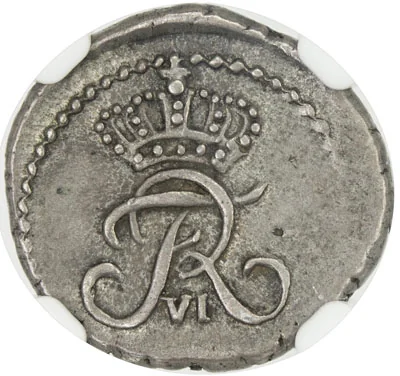
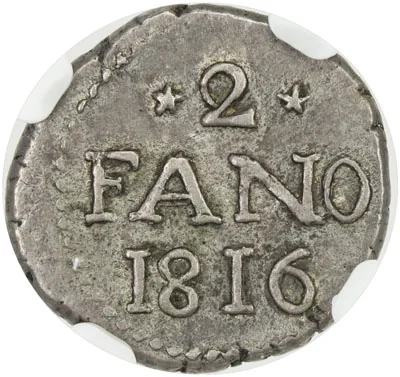
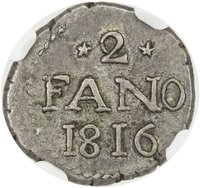
2 fanos – Danish India
Add to wishlist
India
Context
Years: 1816–1818
Country: India
Issuer: Danish India
Ruler: Frederick VI
Currency:
(1730—1818)
Demonetized: Yes
Material
References
KM: #
Numista: #113804
Value
Bullion value: $6.72
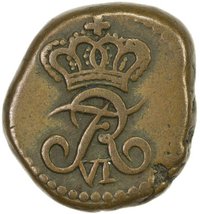
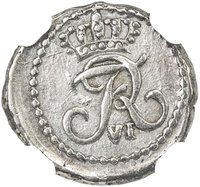
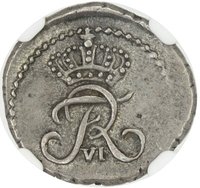
Obverse
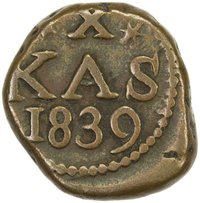
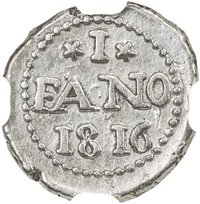
Reverse
Edge
Mintings
| Year | Mint Mark | Mintage | Quality | Collection |
|---|---|---|---|---|
| 1816 | — | — | ||
| 1818 | — | — |
Historical background
In 1816, Danish India, consisting primarily of the trading enclaves of Tranquebar (Tharangambadi) on the Coromandel Coast and Serampore (Frederiksnagore) in Bengal, operated within a complex and fragmented monetary landscape. The Danish administration did not issue a unified, high-value coinage for the territory. Instead, the local economy relied heavily on a multitude of circulating silver rupees from neighbouring Indian powers and other European East India companies, particularly the dominant British East India Company. These coins, along with smaller denomination copper and silver pieces, served as the medium of exchange, creating a system dependent on foreign currency.
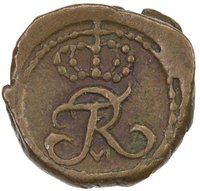
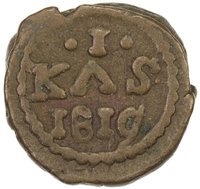
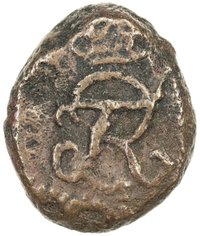
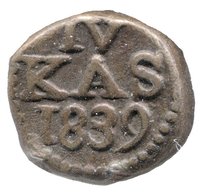
The Danish response to this situation was limited and pragmatic. The primary official minting activity was the production of low-value copper coins, known as "kash" or "casch," at the Tranquebar mint. These coins, often bearing the monogram of the reigning Danish king, Frederick VI, were intended for local, everyday transactions within the enclaves. Their value was not fixed to an independent standard but was instead pegged to the fluctuating value of the dominant silver rupee in the region, making them a subsidiary currency. This practice acknowledged the economic reality that high-value trade was conducted in silver, often using foreign coinage.
Therefore, the currency situation in 1816 was one of monetary dependency and adaptation. The Danish presence was commercially oriented and lacked the political or economic weight to impose its own standard. The system was essentially bimetallic (silver and copper) but with the silver component being almost entirely foreign. This arrangement reflected the enclaves' role as minor trading posts within the vast and economically integrated Indian subcontinent, where the monetary currents of larger empires and the British Company set the prevailing conditions for commerce.
The Danish response to this situation was limited and pragmatic. The primary official minting activity was the production of low-value copper coins, known as "kash" or "casch," at the Tranquebar mint. These coins, often bearing the monogram of the reigning Danish king, Frederick VI, were intended for local, everyday transactions within the enclaves. Their value was not fixed to an independent standard but was instead pegged to the fluctuating value of the dominant silver rupee in the region, making them a subsidiary currency. This practice acknowledged the economic reality that high-value trade was conducted in silver, often using foreign coinage.
Therefore, the currency situation in 1816 was one of monetary dependency and adaptation. The Danish presence was commercially oriented and lacked the political or economic weight to impose its own standard. The system was essentially bimetallic (silver and copper) but with the silver component being almost entirely foreign. This arrangement reflected the enclaves' role as minor trading posts within the vast and economically integrated Indian subcontinent, where the monetary currents of larger empires and the British Company set the prevailing conditions for commerce.
✨ Legendary