

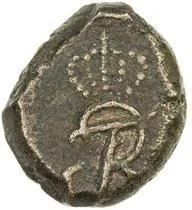
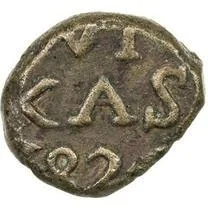
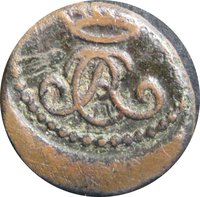
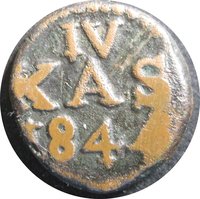
4 Cash – Danish India
India
Context
Year: 1824
Country: India 
Issuer: Danish India
Ruler: Frederick VI
Currency:
(1730—1818)
Demonetized: Yes
Material
References
KM: #Click to copy to clipboard160
Numista: #113799
Mintings
| Year | Mint Mark | Mintage | Quality | Collection |
|---|---|---|---|---|
| 1824 | — | — |
Historical background
In 1824, the currency situation in Danish India, centered on the small colonial enclave of Tranquebar (Tharangambadi) on the Coromandel Coast, was characterized by a complex and often chaotic multiplicity of circulating coins. The official Danish currency, the rigsdaler, was in use but competed heavily with a variety of other silver coins that dominated regional trade. The most important of these was the British East India Company's silver rupee, alongside other Indian issues and Spanish silver dollars (pieces of eight), reflecting the enclave's deep integration into the wider South Indian economic sphere rather than the Danish monetary system.
This multiplicity led to persistent problems of exchange rate fluctuations and valuation disputes, as merchants and the colonial administration had to constantly calculate values between different coins of varying silver purity and weight. The Danish authorities attempted to fix official exchange rates by proclamation, but market forces and the preponderance of British Indian trade often rendered these mandates ineffective. The situation was further complicated by the widespread use of fanams, small local gold coins, for smaller transactions, adding another layer to the monetary mosaic.
Ultimately, the currency chaos of 1824 was symptomatic of Danish India's diminished commercial and political significance. With the colony's economy being peripheral and trade-dependent, it lacked the monetary sovereignty to impose a single standard. The persistent circulation of foreign, primarily British Indian, coinage foreshadowed the enclave's eventual fate; Danish India was sold to the British East India Company in 1845, after which the currency system was fully integrated into the British Indian rupee standard.
This multiplicity led to persistent problems of exchange rate fluctuations and valuation disputes, as merchants and the colonial administration had to constantly calculate values between different coins of varying silver purity and weight. The Danish authorities attempted to fix official exchange rates by proclamation, but market forces and the preponderance of British Indian trade often rendered these mandates ineffective. The situation was further complicated by the widespread use of fanams, small local gold coins, for smaller transactions, adding another layer to the monetary mosaic.
Ultimately, the currency chaos of 1824 was symptomatic of Danish India's diminished commercial and political significance. With the colony's economy being peripheral and trade-dependent, it lacked the monetary sovereignty to impose a single standard. The persistent circulation of foreign, primarily British Indian, coinage foreshadowed the enclave's eventual fate; Danish India was sold to the British East India Company in 1845, after which the currency system was fully integrated into the British Indian rupee standard.
✨ Legendary