

5 Euro – Finland
Finland

Obverse
Description:
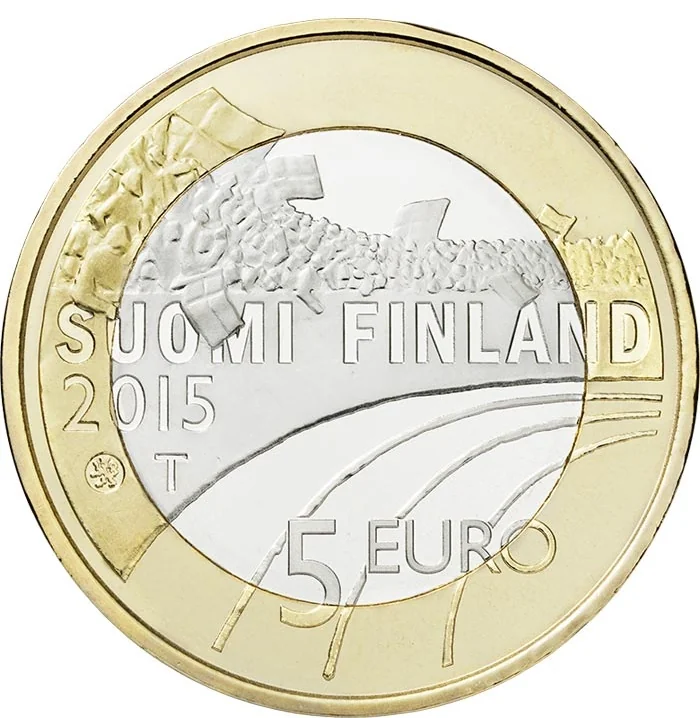
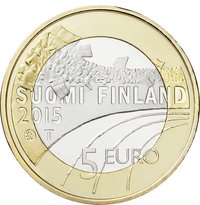
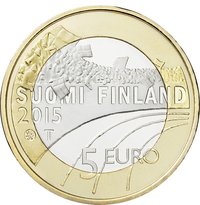
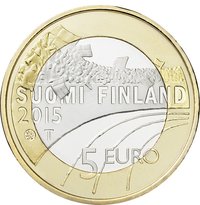
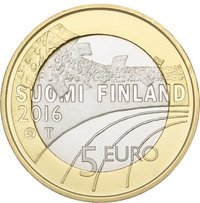
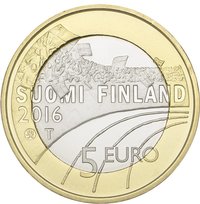
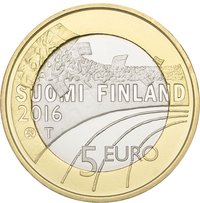
The obverse shows a curved stadium with tracks and cheering crowds.
Inscription:
SUOMI FINLAND
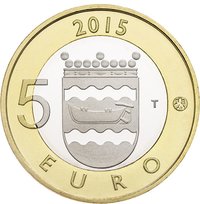
2015
T
5 EURO
2015
T
5 EURO
Script: Latin
Engraver: Nora Tapper
Reverse
Description:
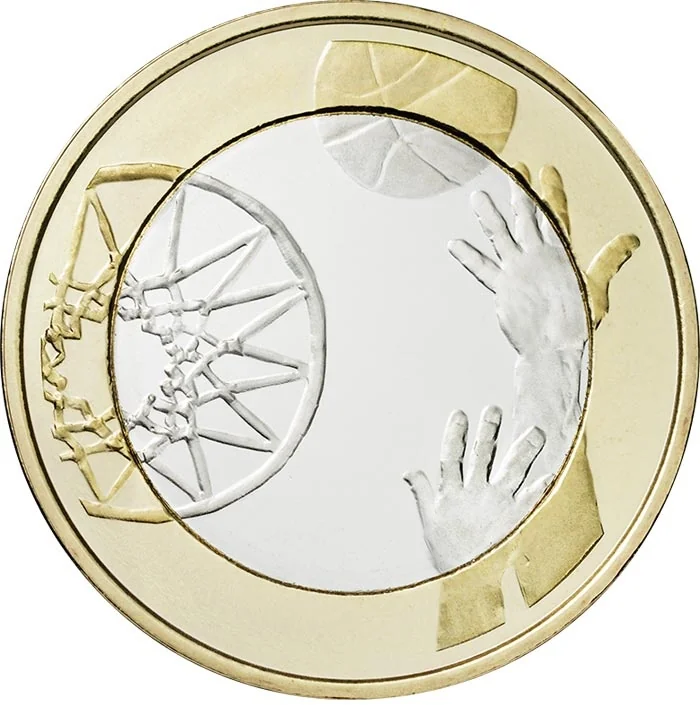
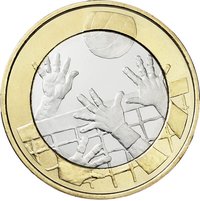
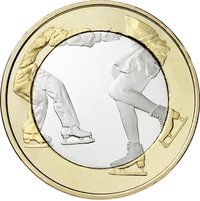
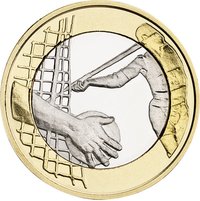
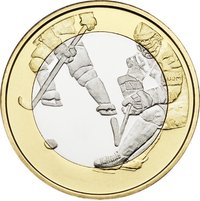
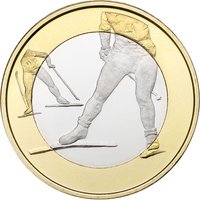
Reverse shows a basketball hoop, ball, and hands.
Engraver: Nora Tapper
Edge
Plain
Categories
| Sport> Basketball |
Mints
| Name | Mark |
|---|---|
| Mint of Finland | — |
Mintings
| Year | Mint Mark | Mintage | Quality | Collection |
|---|---|---|---|---|
| 2015 | — | 50,000 | ||
| 2015 | — | 10,000 | Proof |
Historical background
In 2015, Finland was navigating a complex currency environment as a member of the Eurozone. The country had adopted the euro in 2002, meaning its monetary policy was set by the European Central Bank (ECB), not by Finnish authorities. This framework presented significant challenges in 2015, as Finland's economy was mired in a prolonged period of stagnation, later termed the "lost decade." The national economy was grappling with the decline of its traditional industrial pillars—notably the struggles of Nokia and the forestry sector—while the euro's exchange rate was broadly strong, hampering export competitiveness.
The common currency situation was particularly strained by the ECB's policy responses to the wider Eurozone crisis. In early 2015, the ECB launched a full-scale quantitative easing (QE) program to combat deflationary risks and stimulate the struggling economies of the currency bloc. For Finland, this meant an accommodative monetary policy that was necessary for the southern European members but was arguably mismatched with its own needs. While QE helped keep borrowing costs low, it did not directly address Finland's specific structural problems, including high labor costs and rigidities in its domestic market.
Consequently, the currency situation fueled an ongoing domestic debate about economic sovereignty. Some commentators and political figures, notably from the Finns Party, questioned the benefits of euro membership, arguing that Finland might have recovered more swiftly with a devalued national currency, the markka. However, the mainstream political and economic consensus remained firmly in favor of euro membership, viewing it as a source of stability and integration. Thus, in 2015, Finland's currency situation was defined by the tension between the one-size-fits-all monetary policy of the ECB and the need for deep structural reforms at home to restore competitiveness within the fixed exchange rate system.
The common currency situation was particularly strained by the ECB's policy responses to the wider Eurozone crisis. In early 2015, the ECB launched a full-scale quantitative easing (QE) program to combat deflationary risks and stimulate the struggling economies of the currency bloc. For Finland, this meant an accommodative monetary policy that was necessary for the southern European members but was arguably mismatched with its own needs. While QE helped keep borrowing costs low, it did not directly address Finland's specific structural problems, including high labor costs and rigidities in its domestic market.
Consequently, the currency situation fueled an ongoing domestic debate about economic sovereignty. Some commentators and political figures, notably from the Finns Party, questioned the benefits of euro membership, arguing that Finland might have recovered more swiftly with a devalued national currency, the markka. However, the mainstream political and economic consensus remained firmly in favor of euro membership, viewing it as a source of stability and integration. Thus, in 2015, Finland's currency situation was defined by the tension between the one-size-fits-all monetary policy of the ECB and the need for deep structural reforms at home to restore competitiveness within the fixed exchange rate system.
Series: Sports Coins
🌟 Limited