


Obverse
Description:
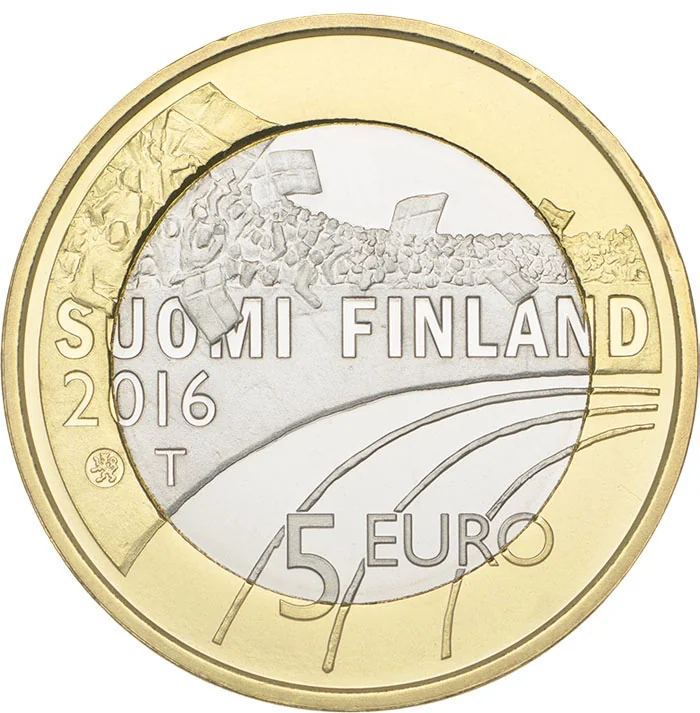
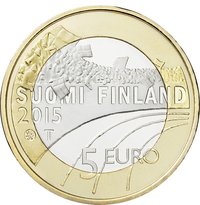
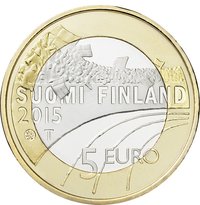
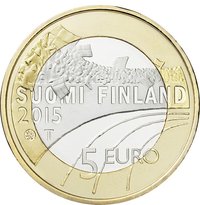
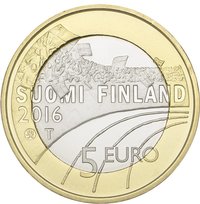
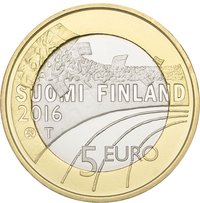
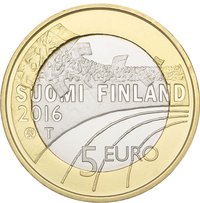
The obverse shows a curved stadium with tracks and cheering crowds.
Inscription:
SUOMI FINLAND
2016
T
5 EURO
2016
T
5 EURO
Translation:
SUOMI FINLAND
2016
T
5 EURO
2016
T
5 EURO
Script: Latin
Engraver: Nora Tapper
Reverse
Description:
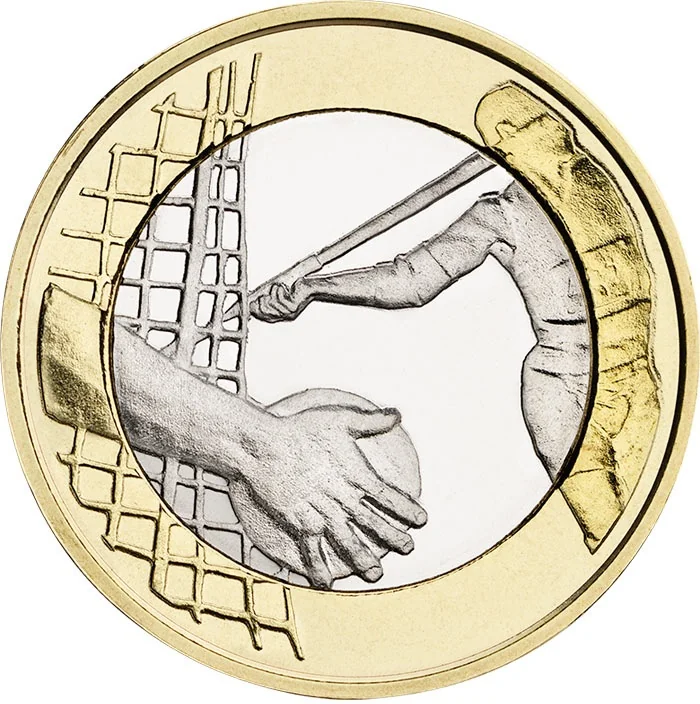
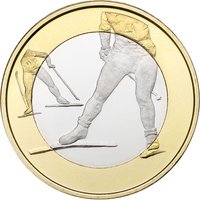
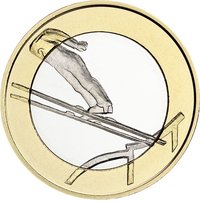
A javelin thrower and discus thrower.
Engraver: Nora Tapper
Edge
Plain
Mints
| Name | Mark |
|---|---|
| Mint of Finland | — |
Mintings
| Year | Mint Mark | Mintage | Quality | Collection |
|---|---|---|---|---|
| 2016 | — | 50,000 | ||
| 2016 | — | 10,000 | Proof |
Historical background
In 2016, Finland remained a committed member of the Eurozone, using the euro (€) as its sole official currency since its introduction in 2002. The broader economic context, however, was challenging. The country was grappling with the prolonged aftermath of the decline of its flagship technology company, Nokia, and structural shifts in its important paper and pulp industry. This contributed to a period of sluggish economic growth, with Finland's recovery from the 2008-2009 financial crisis lagging behind many of its European peers, leading some economists to label the situation a "lost decade."
Domestically, there was no serious political movement to abandon the euro, but the currency's policies were a point of contention. As a member of the Eurozone, Finland's monetary policy was set by the European Central Bank (ECB), which continued its expansive quantitative easing program and maintained historically low, even negative, interest rates throughout 2016. While these measures aimed to stimulate the Eurozone economy, they posed specific difficulties for Finland, particularly by putting pressure on the earnings of pension funds and insurance companies and reducing returns for savers.
Furthermore, the common currency was seen by some as a straitjacket, limiting traditional tools for boosting competitiveness. With the ability to devalue a national currency unavailable, Finland pursued a path of "internal devaluation" – a strategy of cutting labor costs and increasing efficiency through reforms. The government, led by Prime Minister Juha Sipilä, implemented a controversial competitiveness pact in 2016 aimed at lowering unit labor costs. Thus, the euro's role in 2016 was dual: it provided stability and deep market integration, but also framed the difficult structural adjustments the Finnish economy was forced to undertake.
Domestically, there was no serious political movement to abandon the euro, but the currency's policies were a point of contention. As a member of the Eurozone, Finland's monetary policy was set by the European Central Bank (ECB), which continued its expansive quantitative easing program and maintained historically low, even negative, interest rates throughout 2016. While these measures aimed to stimulate the Eurozone economy, they posed specific difficulties for Finland, particularly by putting pressure on the earnings of pension funds and insurance companies and reducing returns for savers.
Furthermore, the common currency was seen by some as a straitjacket, limiting traditional tools for boosting competitiveness. With the ability to devalue a national currency unavailable, Finland pursued a path of "internal devaluation" – a strategy of cutting labor costs and increasing efficiency through reforms. The government, led by Prime Minister Juha Sipilä, implemented a controversial competitiveness pact in 2016 aimed at lowering unit labor costs. Thus, the euro's role in 2016 was dual: it provided stability and deep market integration, but also framed the difficult structural adjustments the Finnish economy was forced to undertake.
Series: Sports Coins
⭐ Somewhat Rare