

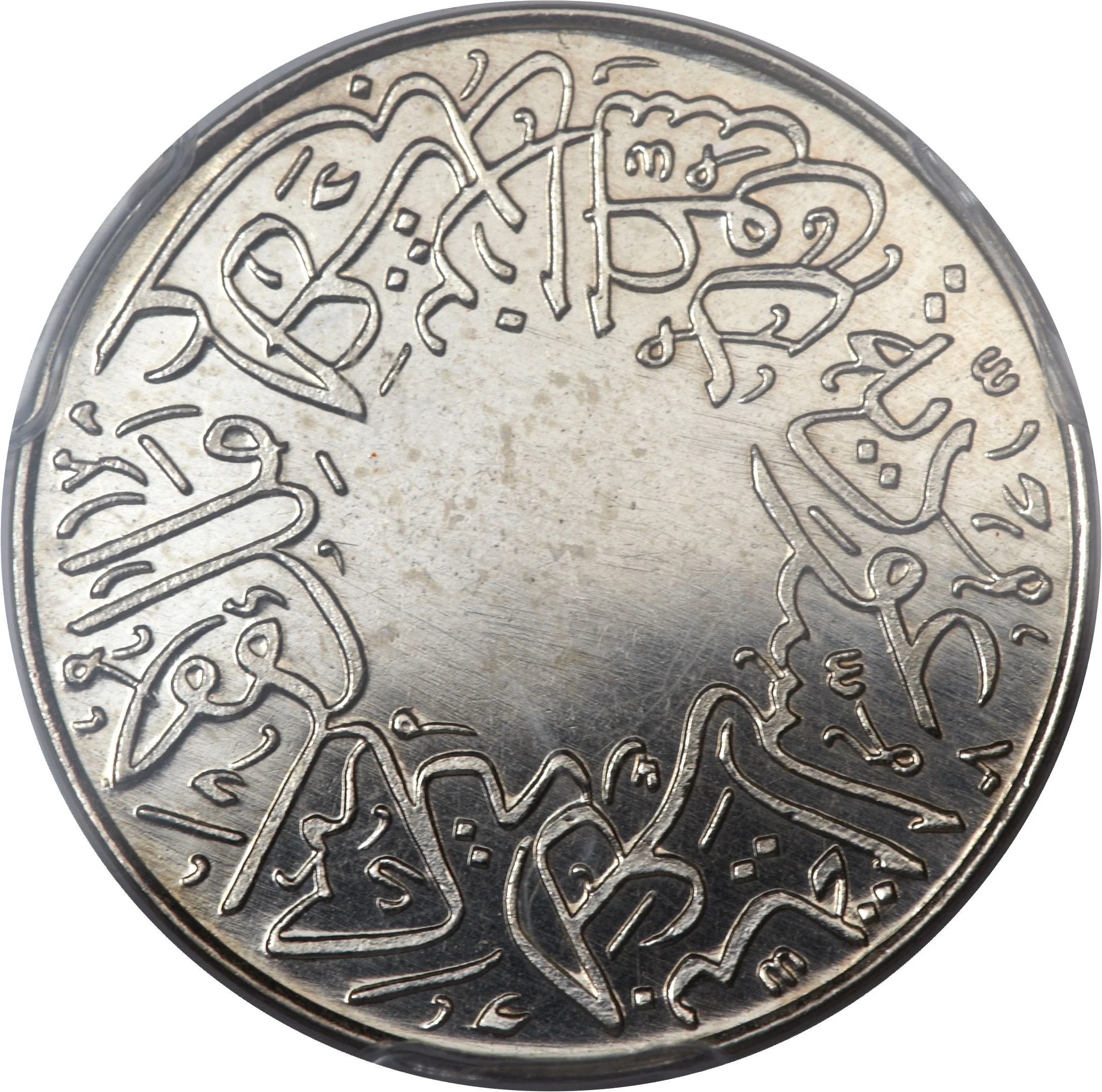
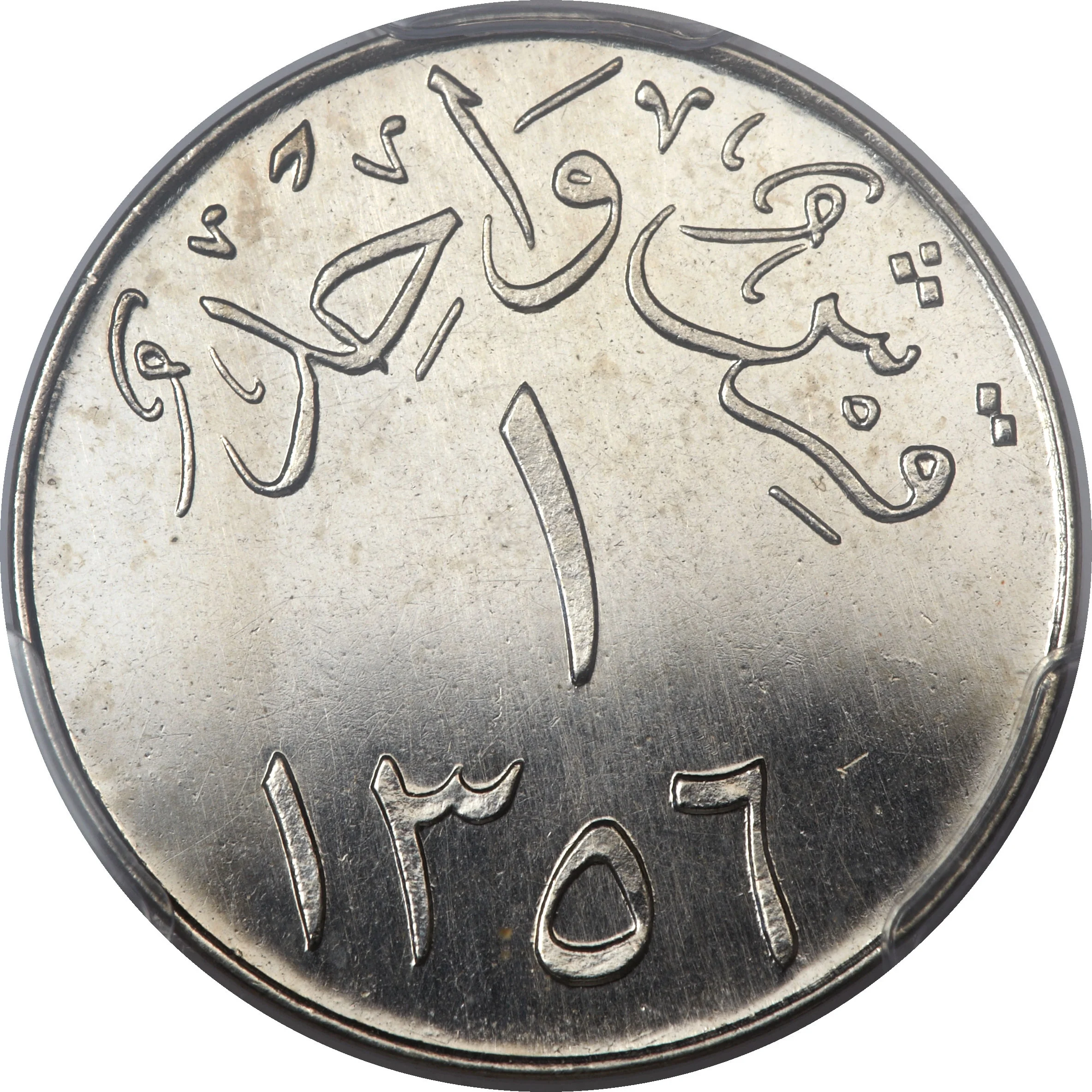
1 qirsh – Saudi Arabia
Add to wishlist
Saudi Arabia
Context
Year: 1937
Islamic (Hijri) Year:: 1356
Issuer: Saudi Arabia
Ruler: Abdulaziz bin Abdulrahman
Currency:
(1925—1960)
Demonetized: Yes
Total mintage: 4,000,000
Material
References
KM: #
Numista: #11350
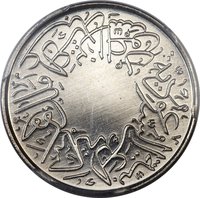
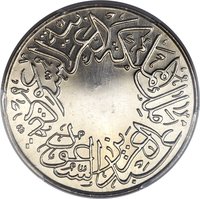
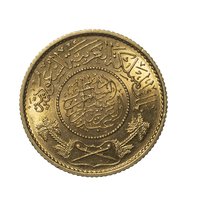
Obverse
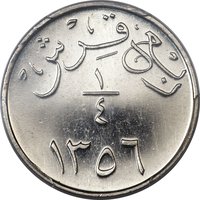
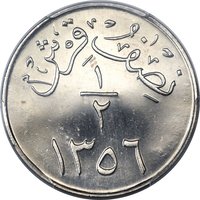
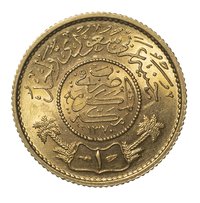
Reverse
Edge
Milled or smooth
Mintings
| Year | Mint Mark | Mintage | Quality | Collection |
|---|---|---|---|---|
| 1937 | — | 4,000,000 | ||
| 1937 | — | — | Proof |
Historical background
In 1937, the currency situation in the Kingdom of Saudi Arabia was a complex tapestry of competing monies, reflecting its recent unification and nascent state institutions. The official currency, the Saudi Riyal, was a silver coin first minted in 1935, but its circulation was limited. The economy still relied heavily on foreign silver coins, particularly the Maria Theresa Thaler (or "riyal fransī"), which had been the dominant trade currency in the region for over a century. Alongside these, gold sovereigns, Indian rupees, and even Ottoman and Egyptian coins circulated freely, creating a chaotic and inefficient monetary system without a central regulating authority.
This monetary fragmentation posed significant challenges for King Abdulaziz Al Saud's modernizing state. The lack of a uniform currency complicated taxation, government payments, and trade, while fluctuating values of foreign coins created economic instability. Recognizing that monetary sovereignty was essential for national consolidation and economic development, the government had already taken its first major step by establishing the Saudi Arabian Monetary Agency (SAMA) in 1952. However, the groundwork for this move was being laid in the late 1930s, as advisors and the growing revenues from the new oil concession granted to CASOC (the forerunner of Aramco) in 1933 highlighted the urgent need for financial reform.
Thus, 1937 represents a pivotal transitional moment. While the old, multi-currency system persisted in daily life, the pressures of state-building and the dawning oil age made its inadequacies glaringly apparent. The silver Riyal was a symbolic assertion of national identity, but the practical work of designing a modern, managed currency system lay ahead. The experiences of this period directly informed the comprehensive financial reforms that would be implemented by SAMA in the following decade, ultimately leading to the stable and unified currency system known today.
This monetary fragmentation posed significant challenges for King Abdulaziz Al Saud's modernizing state. The lack of a uniform currency complicated taxation, government payments, and trade, while fluctuating values of foreign coins created economic instability. Recognizing that monetary sovereignty was essential for national consolidation and economic development, the government had already taken its first major step by establishing the Saudi Arabian Monetary Agency (SAMA) in 1952. However, the groundwork for this move was being laid in the late 1930s, as advisors and the growing revenues from the new oil concession granted to CASOC (the forerunner of Aramco) in 1933 highlighted the urgent need for financial reform.
Thus, 1937 represents a pivotal transitional moment. While the old, multi-currency system persisted in daily life, the pressures of state-building and the dawning oil age made its inadequacies glaringly apparent. The silver Riyal was a symbolic assertion of national identity, but the practical work of designing a modern, managed currency system lay ahead. The experiences of this period directly informed the comprehensive financial reforms that would be implemented by SAMA in the following decade, ultimately leading to the stable and unified currency system known today.
🌱 Common