

1 millieme – Egypt
Add to wishlist
Egypt
Context
Years: 1929–1935
Issuer: Egypt
Ruler: Ahmed Fuad I
Currency:
(since 1916)
Demonetized: Yes
Total mintage: 30,110,000
Material
References
KM: #
Numista: #7719
Value
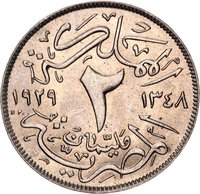
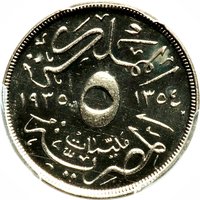
Exchange value: 0.001 EGP
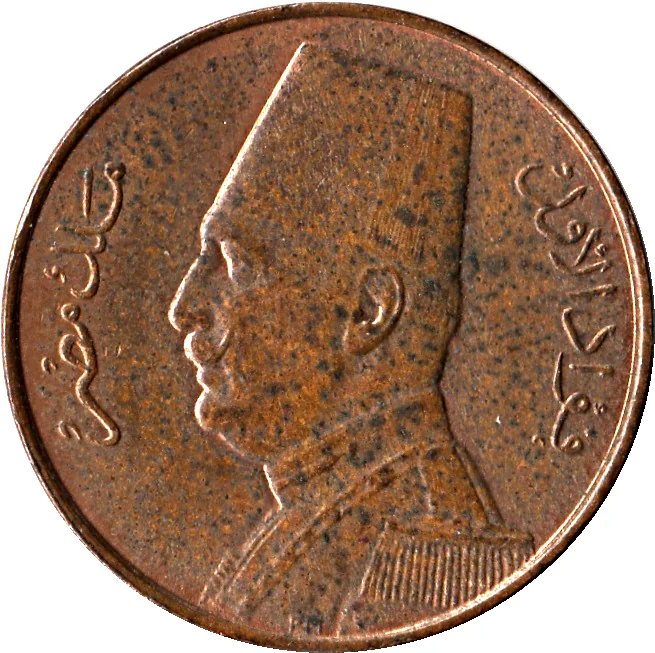
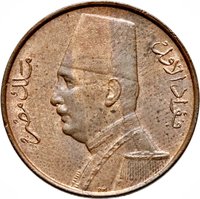
Obverse
Description:
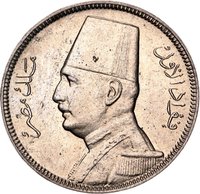
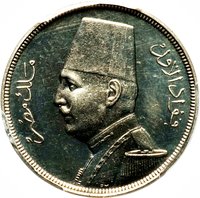
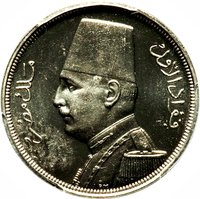
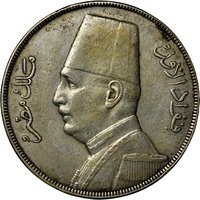
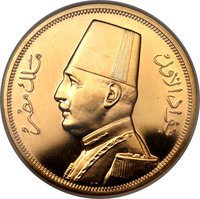
King Fuad I of Egypt
Inscription:
فؤاد الأول
ملك مصر
ملك مصر
Translation:
Fuad I
King of Egypt
King of Egypt
Script: Arabic
Language: Arabic
Engraver: Percy Metcalfe
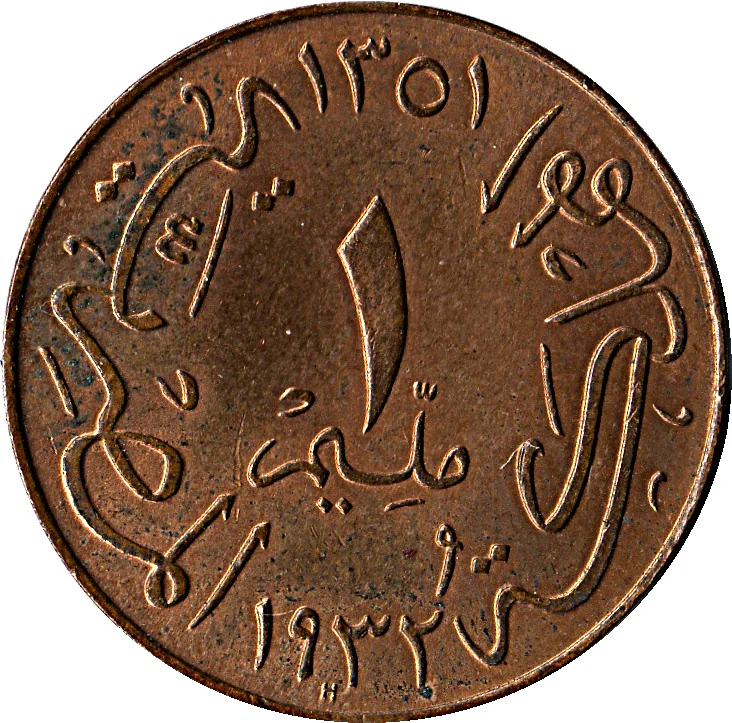
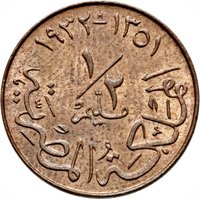
Reverse
Edge
Plain
Mints
| Name | Mark |
|---|---|
| Hungarian mint | BP |
| Heaton and Sons / The Mint Birmingham | H |
Mintings
| Year | Mint Mark | Mintage | Quality | Collection |
|---|---|---|---|---|
| 1929 | — | 4,500,000 | ||
| 1932 | — | 2,500,000 | ||
| 1932 | — | — | Proof | |
| 1933 | — | 5,110,000 | ||
| 1935 | — | 18,000,000 |
Historical background
In 1929, Egypt’s currency situation was defined by its adherence to the gold standard through the Egyptian pound (EE), which was pegged to and fully backed by British sterling. This system, formalized in the 1885 Currency Reform, ensured stability and facilitated trade, but it also tightly bound Egypt’s economy to that of Britain. The Egyptian pound was managed by the privately-owned National Bank of Egypt, which acted as the quasi-central bank, holding substantial sterling reserves in London to guarantee convertibility. This linkage provided credibility and attracted foreign investment, but it also meant that Egypt’s monetary policy was largely dictated by the Bank of England’s decisions, limiting autonomous economic management.
The year 1929 itself marked a critical juncture, as the global onset of the Great Depression began to expose the vulnerabilities of this dependent system. While the immediate shockwaves from the Wall Street Crash were somewhat buffered by Egypt’s agricultural export economy, the subsequent collapse in global commodity prices would soon have severe consequences. The sterling peg, while a source of prior stability, meant Egypt would import the deflationary pressures and economic contraction from Britain, with no independent mechanism to devalue its currency to boost exports.
Consequently, the period directly following 1929 set the stage for a severe economic crisis. The plummeting value of Egypt’s primary exports—cotton and agricultural products—led to a dramatic fall in national income and government revenue. Pressure on the pound grew as the trade balance deteriorated, testing the gold-standard convertibility. This unsustainable position would force Egypt to abandon the gold standard in 1931, shortly after Britain did so, culminating in the establishment of a central bank and a more managed currency system in the following decade.
The year 1929 itself marked a critical juncture, as the global onset of the Great Depression began to expose the vulnerabilities of this dependent system. While the immediate shockwaves from the Wall Street Crash were somewhat buffered by Egypt’s agricultural export economy, the subsequent collapse in global commodity prices would soon have severe consequences. The sterling peg, while a source of prior stability, meant Egypt would import the deflationary pressures and economic contraction from Britain, with no independent mechanism to devalue its currency to boost exports.
Consequently, the period directly following 1929 set the stage for a severe economic crisis. The plummeting value of Egypt’s primary exports—cotton and agricultural products—led to a dramatic fall in national income and government revenue. Pressure on the pound grew as the trade balance deteriorated, testing the gold-standard convertibility. This unsustainable position would force Egypt to abandon the gold standard in 1931, shortly after Britain did so, culminating in the establishment of a central bank and a more managed currency system in the following decade.
Series: 1929 Egypt circulation coins
🌱 Common