

50 francs – France
Add to wishlist
France
Context
Years: 1862–1868
Issuer: France
Ruler: Napoleon III
Currency:
(1795—1959)
Demonetization: 25 June 1928
Total mintage: 165,194
Material
References
KM: #
Numista: #11338
Value
Bullion value: $2234.71
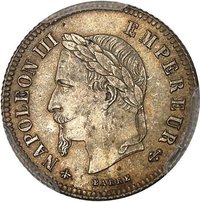
Obverse
Description:
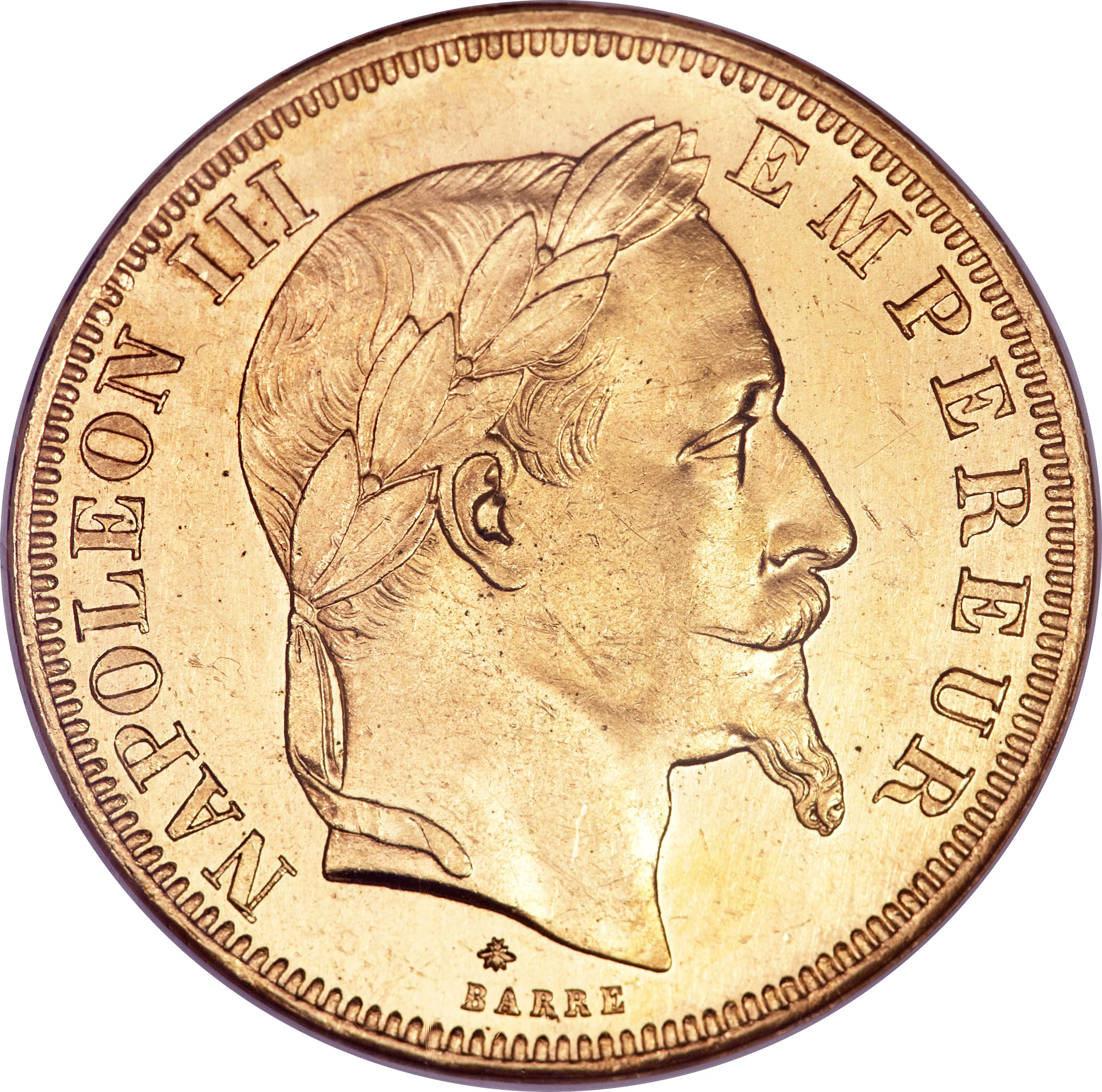
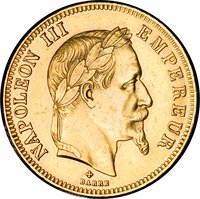
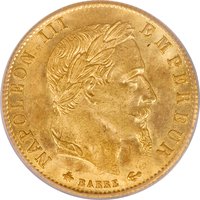
Napoleon III Laurel Head coin.
Inscription:
NAPOLEON III EMPEREUR
Translation:
NAPOLEON III EMPEROR
Script: Latin
Language: French
Engraver: Désiré-Albert Barre
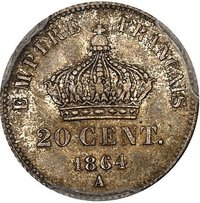
Reverse
Description:
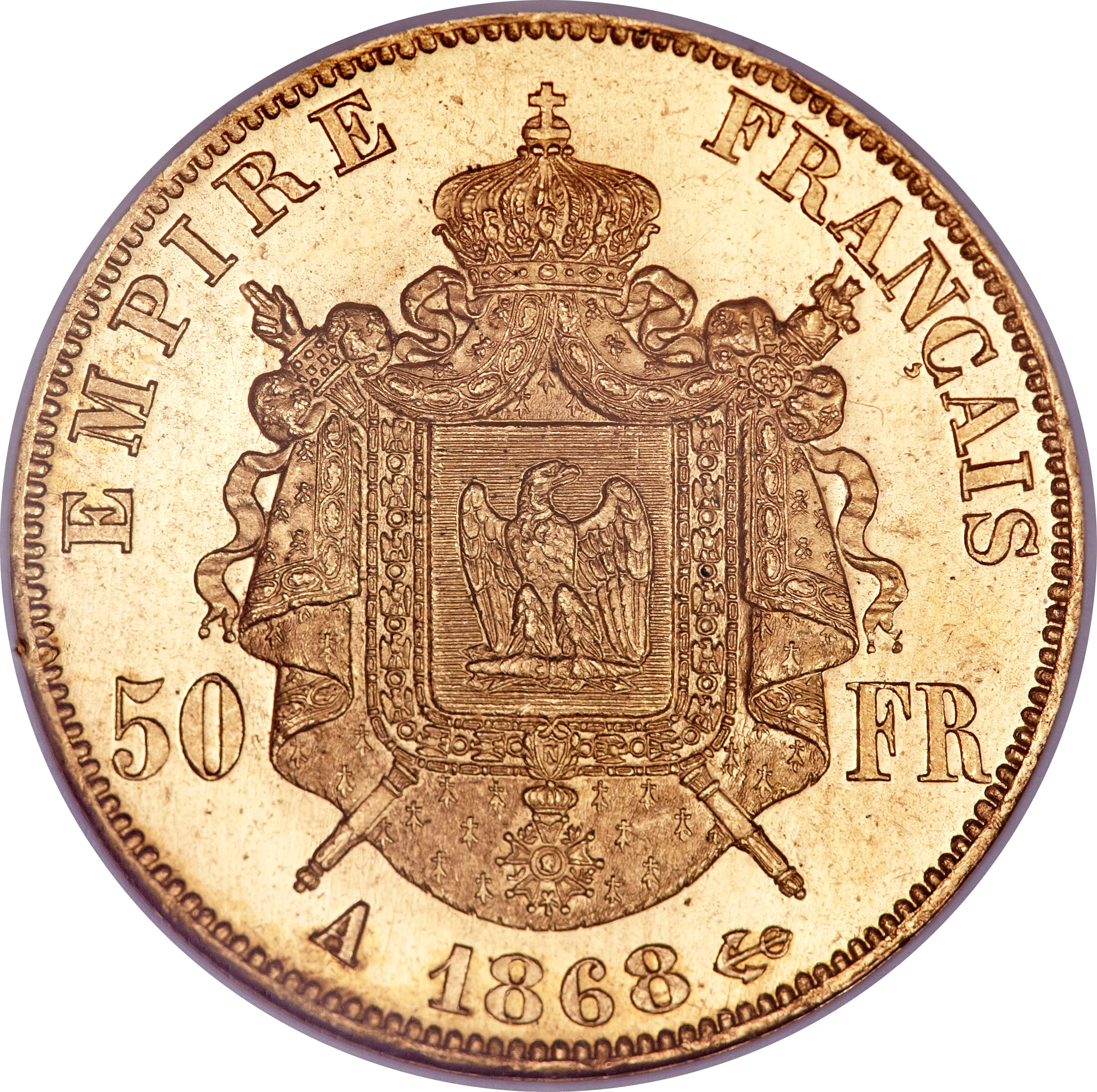
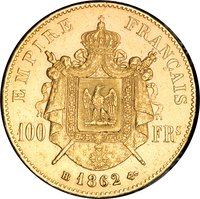
Eagle on a beam within the Legion of Honor collar.
Inscription:
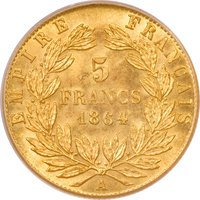
EMPIRE FRANCAIS
50 FR
A 1868
50 FR
A 1868
Script: Latin
Engraver: Désiré-Albert Barre
Edge
Categories
| Person> Monarch |
| Symbols> Coat of Arms |
Mints
| Name | Mark |
|---|---|
| Monnaie de Paris | A |
| Strasbourg | BB |
Mintings
Historical background
In 1862, France operated under a bimetallic monetary system, as established by the Franc Germinal law of 1803. This system fixed the value of the franc to both gold and silver at a legally defined ratio of 15.5 to 1 (15.5 units of silver equaling 1 unit of gold). The franc was a stable and internationally respected currency, with coins of both metals considered legal tender and freely minted at the state's expense for anyone bringing bullion to the mint. This system facilitated trade and positioned Paris as a significant financial center.
However, this bimetallic stability was increasingly under strain. The mid-19th century saw major gold discoveries in California and Australia, which increased the global supply of gold and subtly altered its market value relative to silver. This began to create an imbalance, as the fixed mint ratio no longer perfectly reflected the market ratio. Following Gresham's Law ("bad money drives out good"), there was a risk that the metal undervalued at the mint would be hoarded or exported, leaving only the overvalued metal in circulation. While the full disruptive effects were not yet acute in 1862, financial authorities were watching the situation closely.
The period was also one of monetary expansion and modernization. The Bank of France, holding a monopoly on note issuance in Paris, saw its influence grow, and its banknotes were gaining broader public acceptance beyond commercial circles. Furthermore, 1862 fell within the reign of Napoleon III, a period of major economic modernization and imperial ambition. The stability of the franc was crucial for his grand projects, including the rebuilding of Paris and foreign ventures. Consequently, maintaining confidence in the currency was a paramount state concern, even as the foundations of the bimetallic system were being quietly eroded by global shifts in precious metal supplies.
However, this bimetallic stability was increasingly under strain. The mid-19th century saw major gold discoveries in California and Australia, which increased the global supply of gold and subtly altered its market value relative to silver. This began to create an imbalance, as the fixed mint ratio no longer perfectly reflected the market ratio. Following Gresham's Law ("bad money drives out good"), there was a risk that the metal undervalued at the mint would be hoarded or exported, leaving only the overvalued metal in circulation. While the full disruptive effects were not yet acute in 1862, financial authorities were watching the situation closely.
The period was also one of monetary expansion and modernization. The Bank of France, holding a monopoly on note issuance in Paris, saw its influence grow, and its banknotes were gaining broader public acceptance beyond commercial circles. Furthermore, 1862 fell within the reign of Napoleon III, a period of major economic modernization and imperial ambition. The stability of the franc was crucial for his grand projects, including the rebuilding of Paris and foreign ventures. Consequently, maintaining confidence in the currency was a paramount state concern, even as the foundations of the bimetallic system were being quietly eroded by global shifts in precious metal supplies.
🌟 Limited