

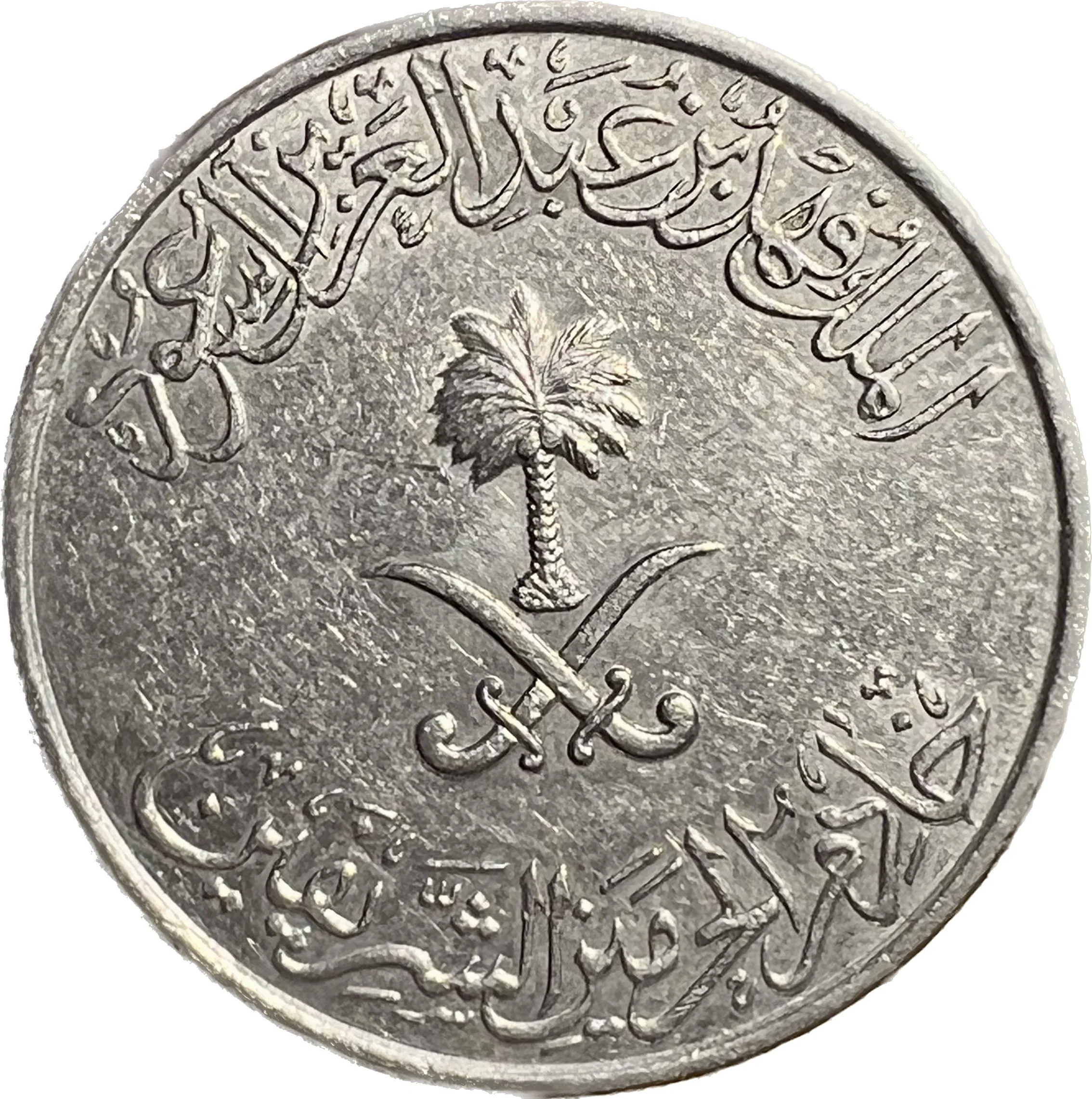
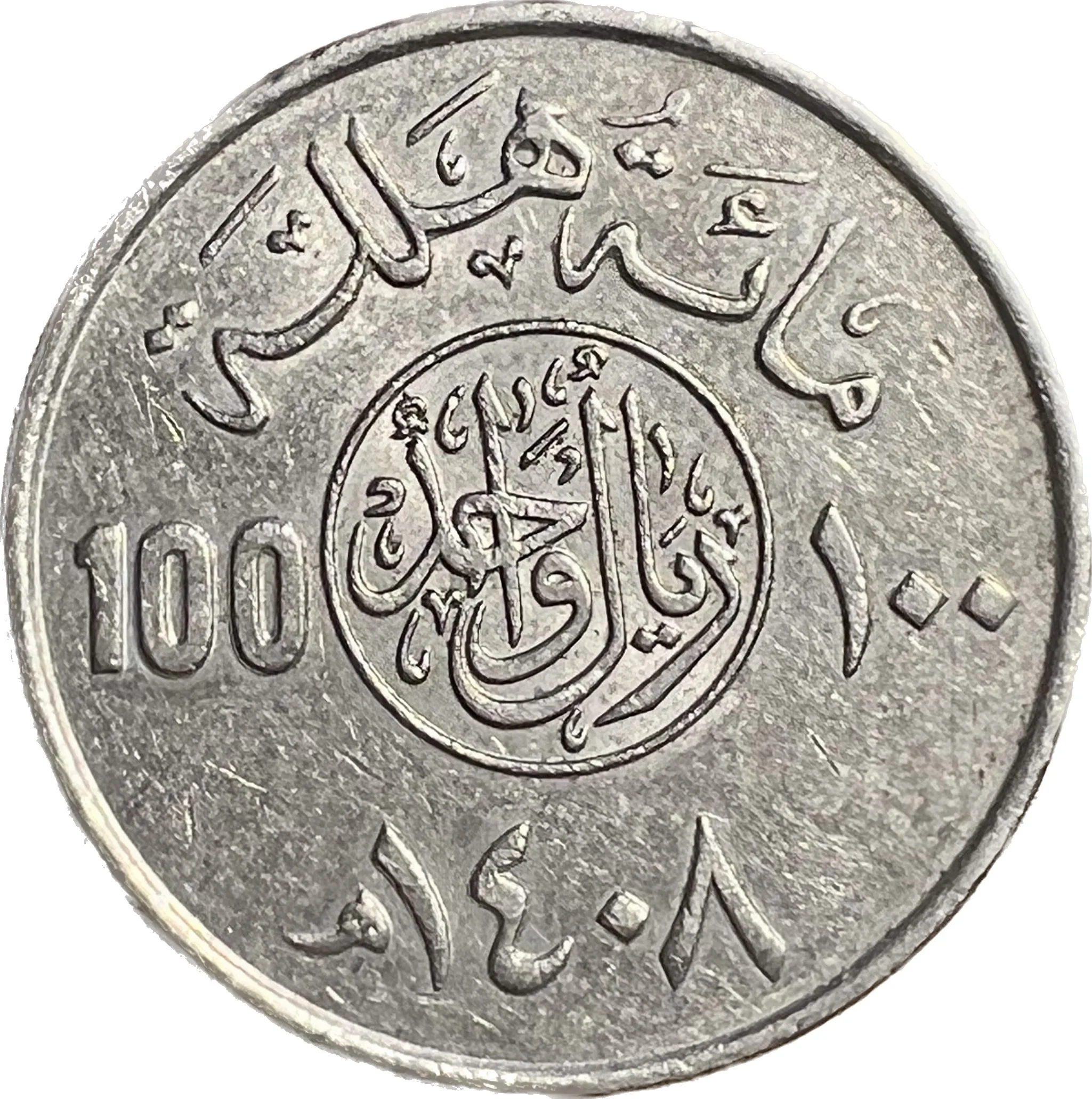
100 halalas – Saudi Arabia
Add to wishlist
Saudi Arabia
Context
Years: 1988–1994
Issuer: Saudi Arabia
Ruler: Fahd bin Abdulaziz
Currency:
(since 1960)
Total mintage: 10,000
Material
Diameter: 30 mm
Weight: 10 g
Thickness: 1.9 mm
Shape: Round
Composition: Copper-nickel
Technique: Milled
Alignment: Medal alignment
flip
References
KM: #
Numista: #7638
Value
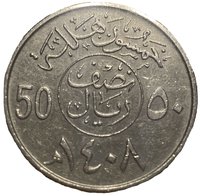
Exchange value: 1 SAR
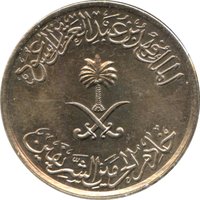
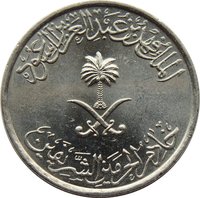
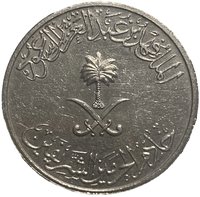
Obverse
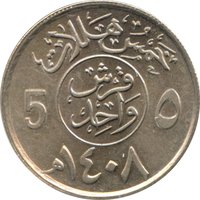
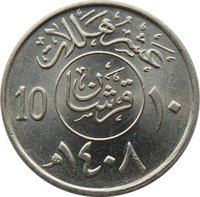
Reverse
Edge
Reeded
Categories
| Plant> Tree |
| Symbols> Coat of Arms |
| Object> Cold weapons |
Mints
| Name | Mark |
|---|---|
| Royal Mint | — |
Mintings
| Year | Mint Mark | Mintage | Quality | Collection |
|---|---|---|---|---|
| 1988 | — | — | ||
| 1988 | — | 5,000 | Proof | |
| 1994 | — | 5,000 |
Historical background
In 1988, Saudi Arabia's currency situation was characterized by stability and confidence, underpinned by the nation's pivotal role in the global oil market. The Saudi Riyal (SAR) was, and remains, pegged to the U.S. dollar at a fixed rate of 3.75, a policy formally established in 1986. This peg provided a crucial anchor for the economy, insulating it from the volatility of oil prices and facilitating predictable trade and investment flows. The country's substantial foreign exchange reserves, accumulated during the oil boom years of the 1970s, provided a deep buffer to defend this parity, ensuring minimal market pressure on the currency's value.
The economic context of 1988, however, was one of adjustment following a severe downturn. After a decade of high oil revenues, the mid-1980s saw a dramatic collapse in oil prices, leading to budget deficits and a drawdown of financial reserves. While the currency itself was stable due to the dollar peg, the broader financial situation was constrained. The government had entered a period of fiscal consolidation, and growth in the money supply was tightly managed. There was no devaluation or currency crisis, as the regime's commitment to the peg was unwavering, backed by the credibility of its reserves and its strategic relationship with the United States.
Consequently, the monetary landscape was one of cautious management. The Saudi Arabian Monetary Authority (SAMA) focused on maintaining the dollar peg as its primary policy, using its reserves to manage liquidity and ensure stability. Domestic interest rates largely mirrored U.S. Federal Reserve policy to maintain the peg's integrity. For businesses and residents, this meant a reliable and convertible currency, but within an economy feeling the pinch of lower oil revenues. The stability of the Riyal in 1988 stood in contrast to the fiscal challenges, serving as a symbol of long-term policy commitment amidst short-term economic pressures.
The economic context of 1988, however, was one of adjustment following a severe downturn. After a decade of high oil revenues, the mid-1980s saw a dramatic collapse in oil prices, leading to budget deficits and a drawdown of financial reserves. While the currency itself was stable due to the dollar peg, the broader financial situation was constrained. The government had entered a period of fiscal consolidation, and growth in the money supply was tightly managed. There was no devaluation or currency crisis, as the regime's commitment to the peg was unwavering, backed by the credibility of its reserves and its strategic relationship with the United States.
Consequently, the monetary landscape was one of cautious management. The Saudi Arabian Monetary Authority (SAMA) focused on maintaining the dollar peg as its primary policy, using its reserves to manage liquidity and ensure stability. Domestic interest rates largely mirrored U.S. Federal Reserve policy to maintain the peg's integrity. For businesses and residents, this meant a reliable and convertible currency, but within an economy feeling the pinch of lower oil revenues. The stability of the Riyal in 1988 stood in contrast to the fiscal challenges, serving as a symbol of long-term policy commitment amidst short-term economic pressures.

🌱 Common