

100 halalas – Saudi Arabia
Add to wishlist
Saudi Arabia
Context
Year: 1999
Islamic (Hijri) Year:: 1419
Issuer: Saudi Arabia
Ruler: Fahd bin Abdulaziz
Currency:
(since 1960)
Material
References
KM: #
Numista: #9928
Value
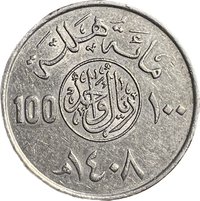
Exchange value: 1 SAR
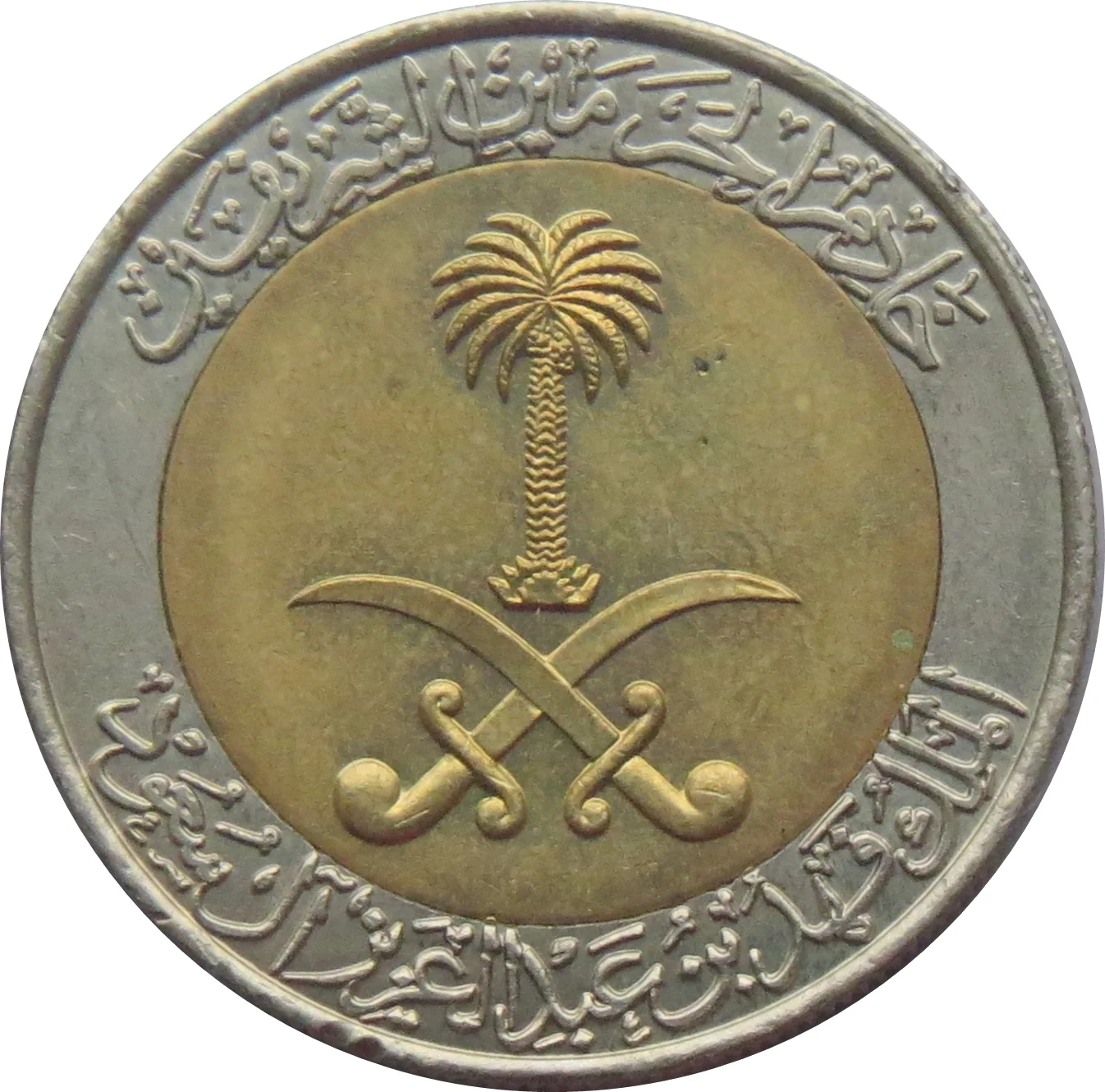
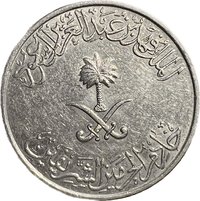
Obverse
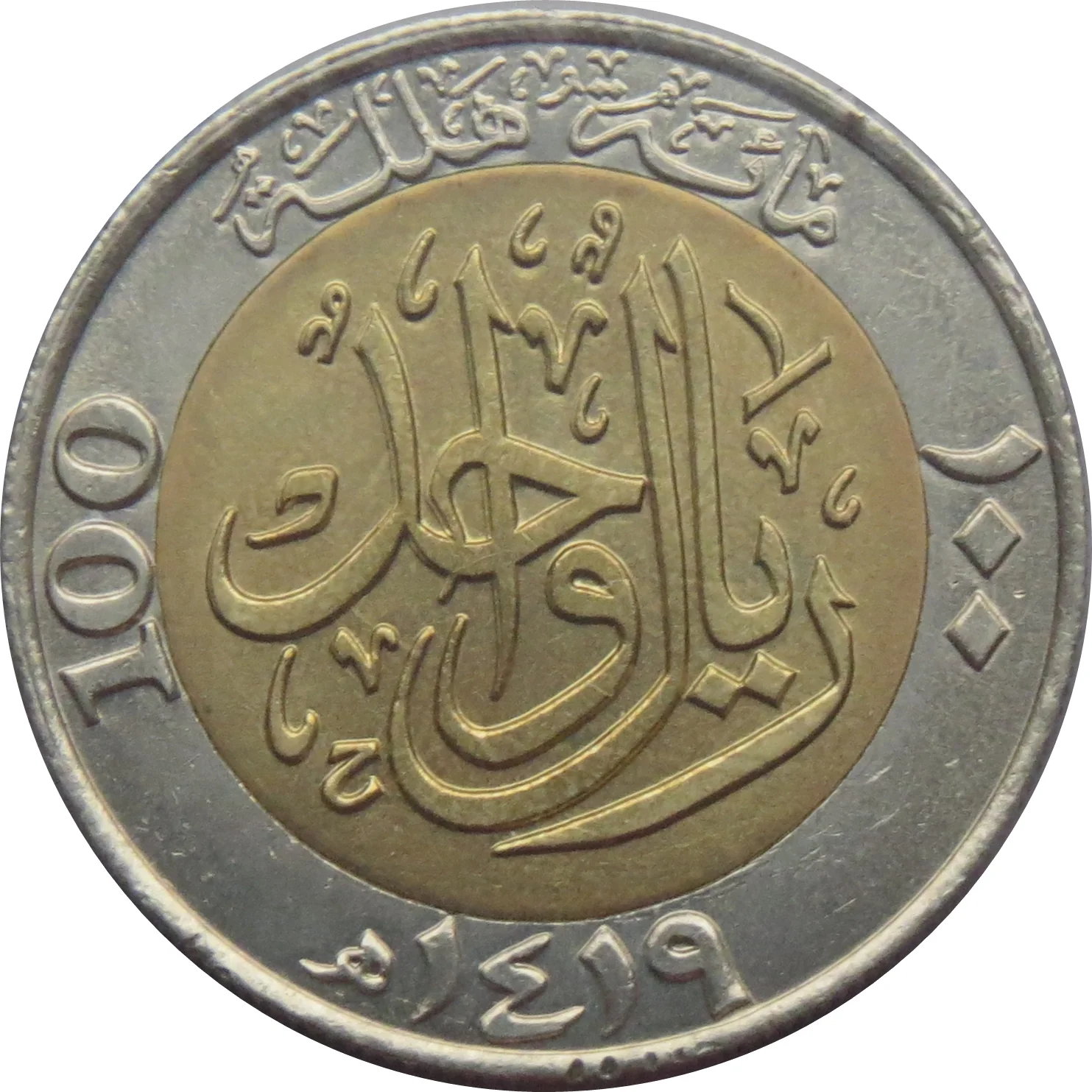
Reverse
Edge
Reeded
Categories
| Plant> Tree |
| Symbols> Coat of Arms |
| Object> Cold weapons |
Mintings
| Year | Mint Mark | Mintage | Quality | Collection |
|---|---|---|---|---|
| 1999 | — | — |
Historical background
In 1999, the currency situation in Saudi Arabia was defined by exceptional stability, anchored by the Kingdom's long-standing and unwavering peg of the Saudi Riyal (SAR) to the U.S. Dollar. Established in 1986 at a fixed rate of 3.75 SAR to 1 USD, this peg was a cornerstone of monetary policy, providing predictability for the oil-dominated economy and fostering confidence in international trade and investment. The system was managed by the Saudi Arabian Monetary Agency (SAMA), which maintained substantial foreign exchange reserves, primarily in U.S. Treasury securities, to defend the parity without the need for capital controls.
This stability existed against a backdrop of economic pressure due to low oil prices, which had averaged around $18 per barrel for much of the late 1990s. The resulting budget deficits had drawn down the Kingdom's financial reserves from their peak in the early 1980s. However, the fixed exchange rate served as a critical anchor, insulating the domestic economy from currency volatility even as fiscal accounts were strained. The credibility of the peg was rarely questioned, as it was underpinned by the nation's pivotal role in the global oil market and the political will to maintain it as a symbol of economic reliability.
Looking forward, the currency regime of 1999 was seen as permanent, with no serious internal debate about a change. The system's success was measured by its transparency and the absence of a parallel market; the official rate was the only rate. This environment set the stage for the economic resurgence that would follow in the early 2000s, when rising oil prices dramatically improved fiscal and external balances, further reinforcing the strength and perceived permanence of the dollar peg that continues to define Saudi monetary policy today.
This stability existed against a backdrop of economic pressure due to low oil prices, which had averaged around $18 per barrel for much of the late 1990s. The resulting budget deficits had drawn down the Kingdom's financial reserves from their peak in the early 1980s. However, the fixed exchange rate served as a critical anchor, insulating the domestic economy from currency volatility even as fiscal accounts were strained. The credibility of the peg was rarely questioned, as it was underpinned by the nation's pivotal role in the global oil market and the political will to maintain it as a symbol of economic reliability.
Looking forward, the currency regime of 1999 was seen as permanent, with no serious internal debate about a change. The system's success was measured by its transparency and the absence of a parallel market; the official rate was the only rate. This environment set the stage for the economic resurgence that would follow in the early 2000s, when rising oil prices dramatically improved fiscal and external balances, further reinforcing the strength and perceived permanence of the dollar peg that continues to define Saudi monetary policy today.
🌱 Common