

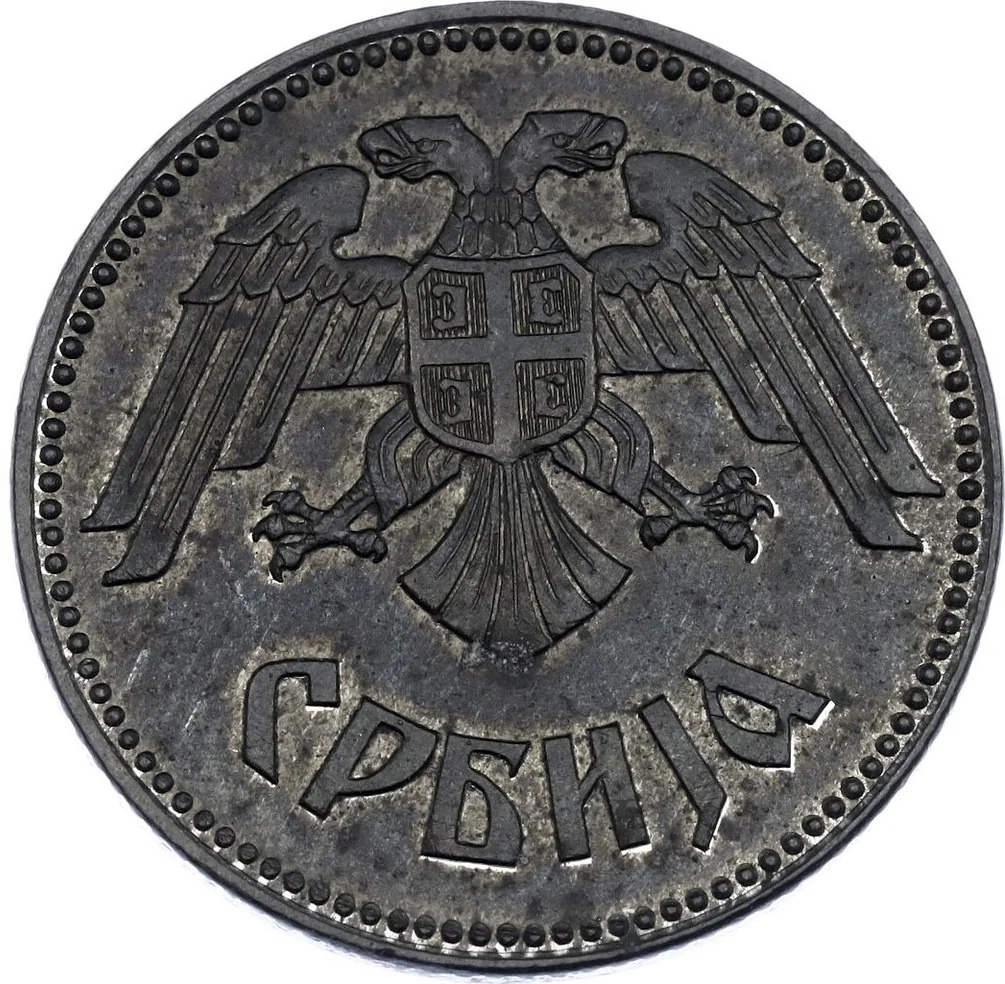
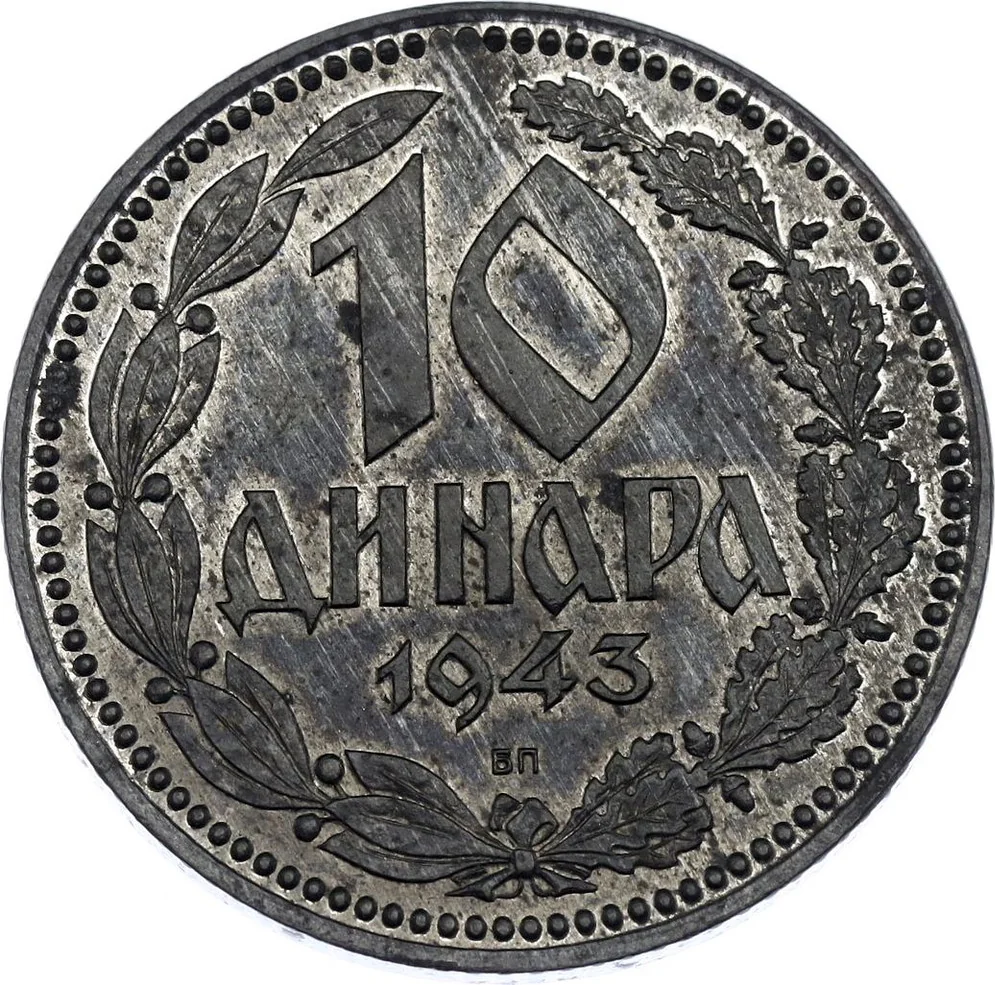
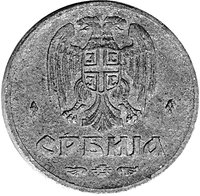
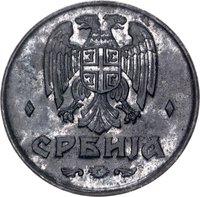
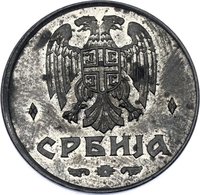
Obverse
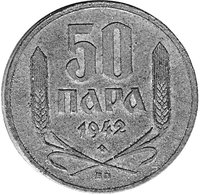
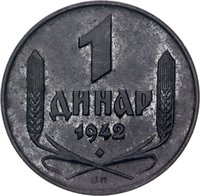
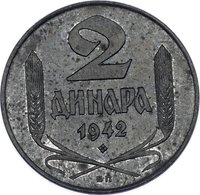
Reverse
Edge
Reeded
Categories
| Symbol> Wreath |
| Animal> Bird |
| Symbols> Coat of Arms |
| Symbol> Double-headed eagle |
Mints
| Name | Mark |
|---|---|
| Hungarian mint | БП |
Mintings
| Year | Mint Mark | Mintage | Quality | Collection |
|---|---|---|---|---|
| 1943 | БП | 50,000,000 |
Historical background
In 1943, Serbia was a fractured and occupied territory, its currency situation a direct reflection of the violent political chaos of the Second World War. The country was divided among multiple competing authorities: the German military administration held direct control over most of Serbia, while other regions were under Bulgarian, Hungarian, or Croatian Ustaše rule. Furthermore, two major resistance movements—the royalist Chetniks and the communist Partisans—controlled significant swathes of the rural and mountainous interior. Each of these powers sought to impose its own monetary system to fund its operations and assert legitimacy, leading to a complex and unstable multi-currency environment.
The official and dominant currency in German-occupied areas was the Serbian dinar, issued by the puppet government under Milan Nedić and managed by the occupying authorities through the Serbian National Bank. However, this currency was severely compromised. Its value was artificially pegged to the German Reichsmark at an unfavorable rate, facilitating the systematic economic plunder of the region. Rampant inflation began to set in as the occupiers printed money to cover costs, eroding public trust. Alongside this, the German Reichsmark itself circulated for major military and official transactions, while in border regions, the currencies of the other occupying powers—like the Bulgarian lev and the Croatian kuna—also had forced circulation.
In the territories held by the Partisan resistance, a parallel financial system was emerging. The Partisan leadership, establishing the foundations of a state, began issuing their own provisional currency notes in liberated zones, often called "vouchers" or "liberation money." These notes, while primitive and locally produced, were crucial for facilitating trade within their controlled areas and paying fighters, representing a direct challenge to the monetary authority of the occupiers. Thus, by 1943, the act of handling money in Serbia was a political statement, with the proliferation of currencies vividly illustrating the fierce struggle for sovereignty and the severe economic exploitation of the population caught between warring factions.
The official and dominant currency in German-occupied areas was the Serbian dinar, issued by the puppet government under Milan Nedić and managed by the occupying authorities through the Serbian National Bank. However, this currency was severely compromised. Its value was artificially pegged to the German Reichsmark at an unfavorable rate, facilitating the systematic economic plunder of the region. Rampant inflation began to set in as the occupiers printed money to cover costs, eroding public trust. Alongside this, the German Reichsmark itself circulated for major military and official transactions, while in border regions, the currencies of the other occupying powers—like the Bulgarian lev and the Croatian kuna—also had forced circulation.
In the territories held by the Partisan resistance, a parallel financial system was emerging. The Partisan leadership, establishing the foundations of a state, began issuing their own provisional currency notes in liberated zones, often called "vouchers" or "liberation money." These notes, while primitive and locally produced, were crucial for facilitating trade within their controlled areas and paying fighters, representing a direct challenge to the monetary authority of the occupiers. Thus, by 1943, the act of handling money in Serbia was a political statement, with the proliferation of currencies vividly illustrating the fierce struggle for sovereignty and the severe economic exploitation of the population caught between warring factions.
🌱 Common