

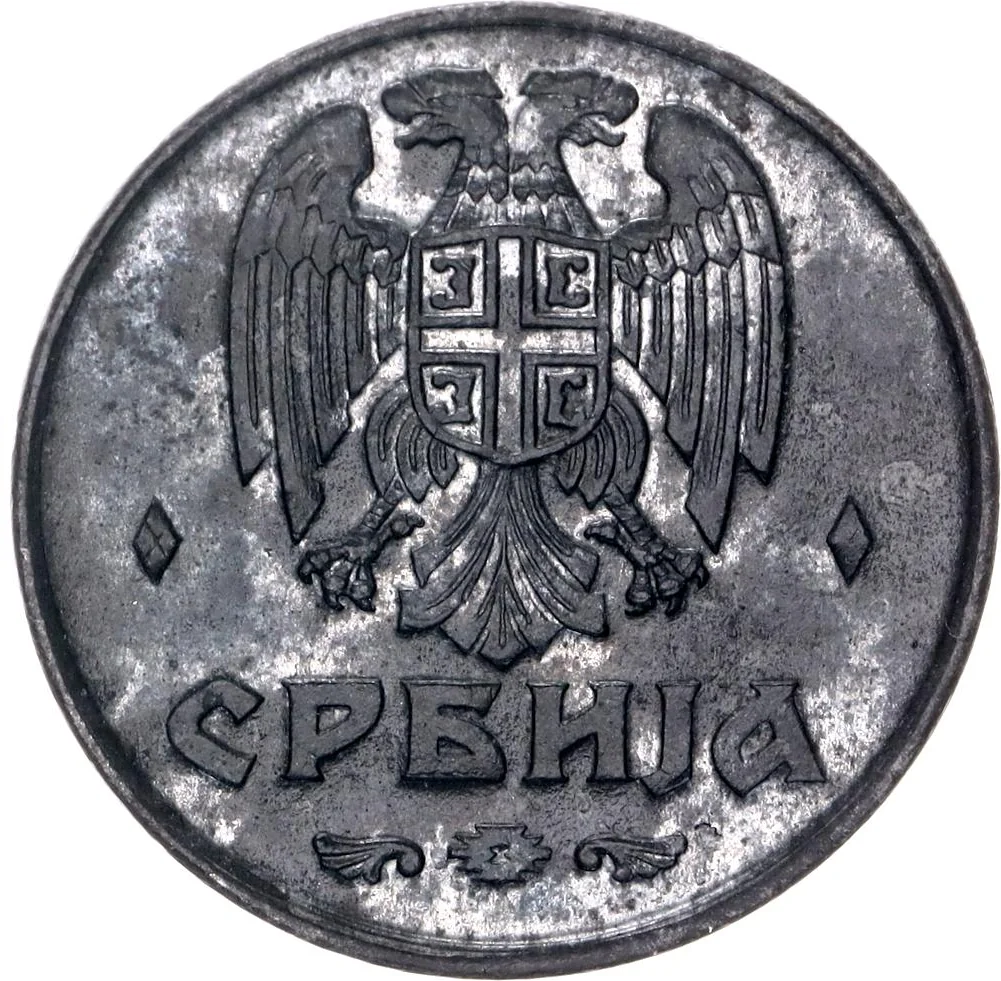
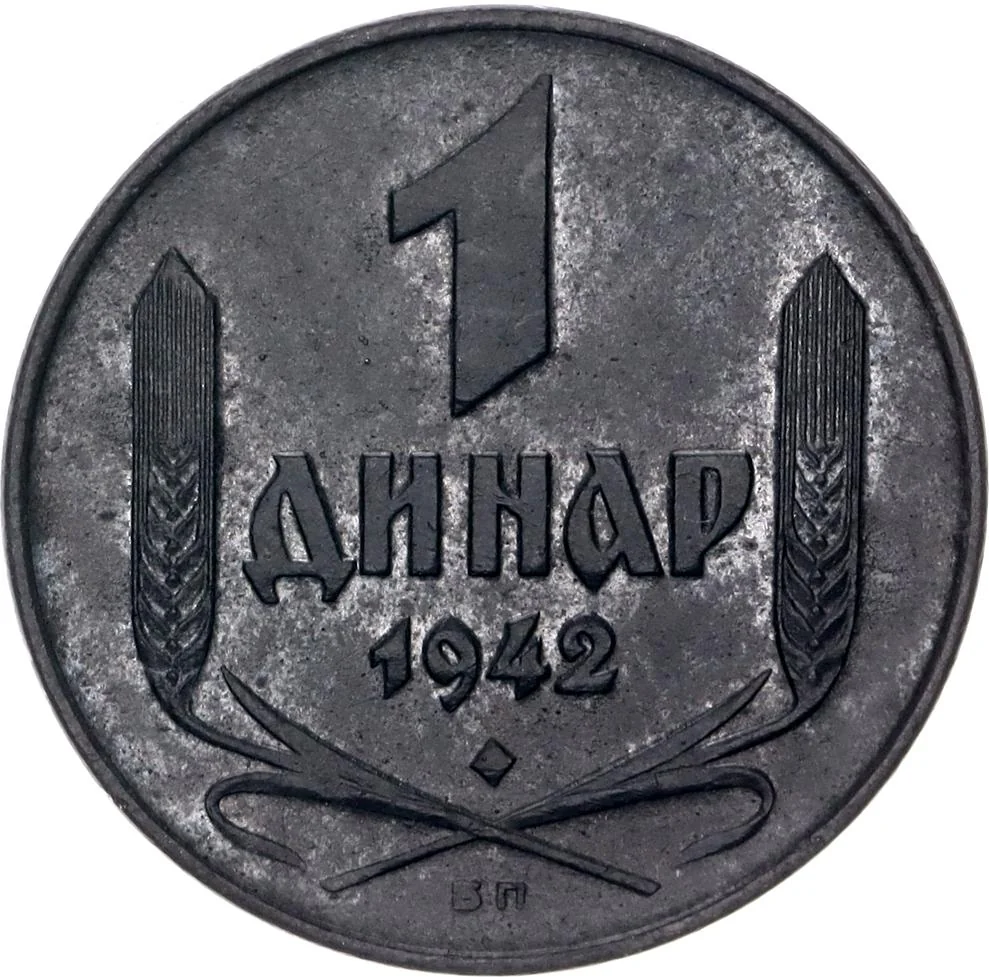
1 dinar – Serbia
Add to wishlist
Serbia
Context
Year: 1942
Issuer: Serbia
Period:
(1941—1944)
Currency:
(1941—1944)
Demonetized: Yes
Total mintage: 50,000,000
Material
Diameter: 20 mm
Weight: 3.11 g
Shape: Round
Composition: Zinc
Standard: Gold tenth ounce
Magnetic: No
Technique: Milled
Alignment: Coin alignment
flip
References
KM: #
Numista: #7627
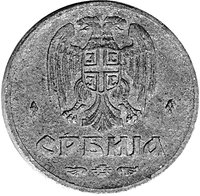
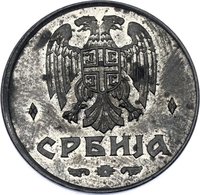
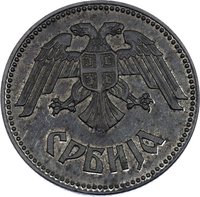
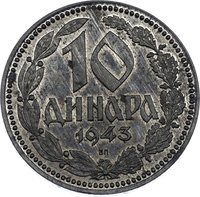
Obverse
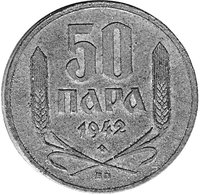
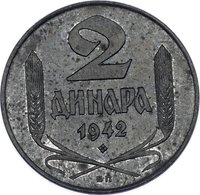
Reverse
Edge
Plain
Categories
| Animal> Bird |
| Symbols> Coat of Arms |
| Symbol> Double-headed eagle |
Mints
| Name | Mark |
|---|---|
| Hungarian mint | БП |
Mintings
| Year | Mint Mark | Mintage | Quality | Collection |
|---|---|---|---|---|
| 1942 | БП (BP) | — | ||
| 1942 | БП | 50,000,000 |
Historical background
In 1942, Serbia’s currency situation was defined by the chaos of Axis occupation and competing monetary authorities. Following the April 1941 invasion and dismemberment of Yugoslavia, the Territory of the Military Commander in Serbia was established as a German-run puppet state. The official currency became the Serbian dinar, issued by the puppet National Bank of Serbia, but it was effectively pegged to and guaranteed by the German Reichsmark at a fixed rate. This arrangement served to financially integrate the occupied territory into the German war economy, facilitating the systematic extraction of resources and the funding of occupation costs.
Alongside this official currency, a complex and destabilizing multiplicity of other means of payment circulated. Most significantly, the German Reichskreditkassenscheine (military occupation marks) were imposed and given forced parity. Additionally, the currencies of other occupying and neighboring powers, like the Bulgarian lev in annexed areas and the Hungarian pengő, had legal tender status in their respective zones of control. This proliferation of currencies, all with artificially set exchange rates, created a confused and manipulated monetary environment that severely disrupted normal economic activity and trade.
The result was rapid inflation and a growing loss of public confidence in the official dinar. While not yet the hyperinflation that would characterize the later war years, the pressure of financing the occupation, rampant war profiteering, and a collapsing productive economy began a steep devaluation. The population increasingly resorted to barter or hoarded tangible assets, while the resistance movements, particularly the royalist Chetniks and communist Partisans, established their own parallel financial systems in the territories they controlled, further fragmenting the monetary landscape.
Alongside this official currency, a complex and destabilizing multiplicity of other means of payment circulated. Most significantly, the German Reichskreditkassenscheine (military occupation marks) were imposed and given forced parity. Additionally, the currencies of other occupying and neighboring powers, like the Bulgarian lev in annexed areas and the Hungarian pengő, had legal tender status in their respective zones of control. This proliferation of currencies, all with artificially set exchange rates, created a confused and manipulated monetary environment that severely disrupted normal economic activity and trade.
The result was rapid inflation and a growing loss of public confidence in the official dinar. While not yet the hyperinflation that would characterize the later war years, the pressure of financing the occupation, rampant war profiteering, and a collapsing productive economy began a steep devaluation. The population increasingly resorted to barter or hoarded tangible assets, while the resistance movements, particularly the royalist Chetniks and communist Partisans, established their own parallel financial systems in the territories they controlled, further fragmenting the monetary landscape.
🌱 Common