

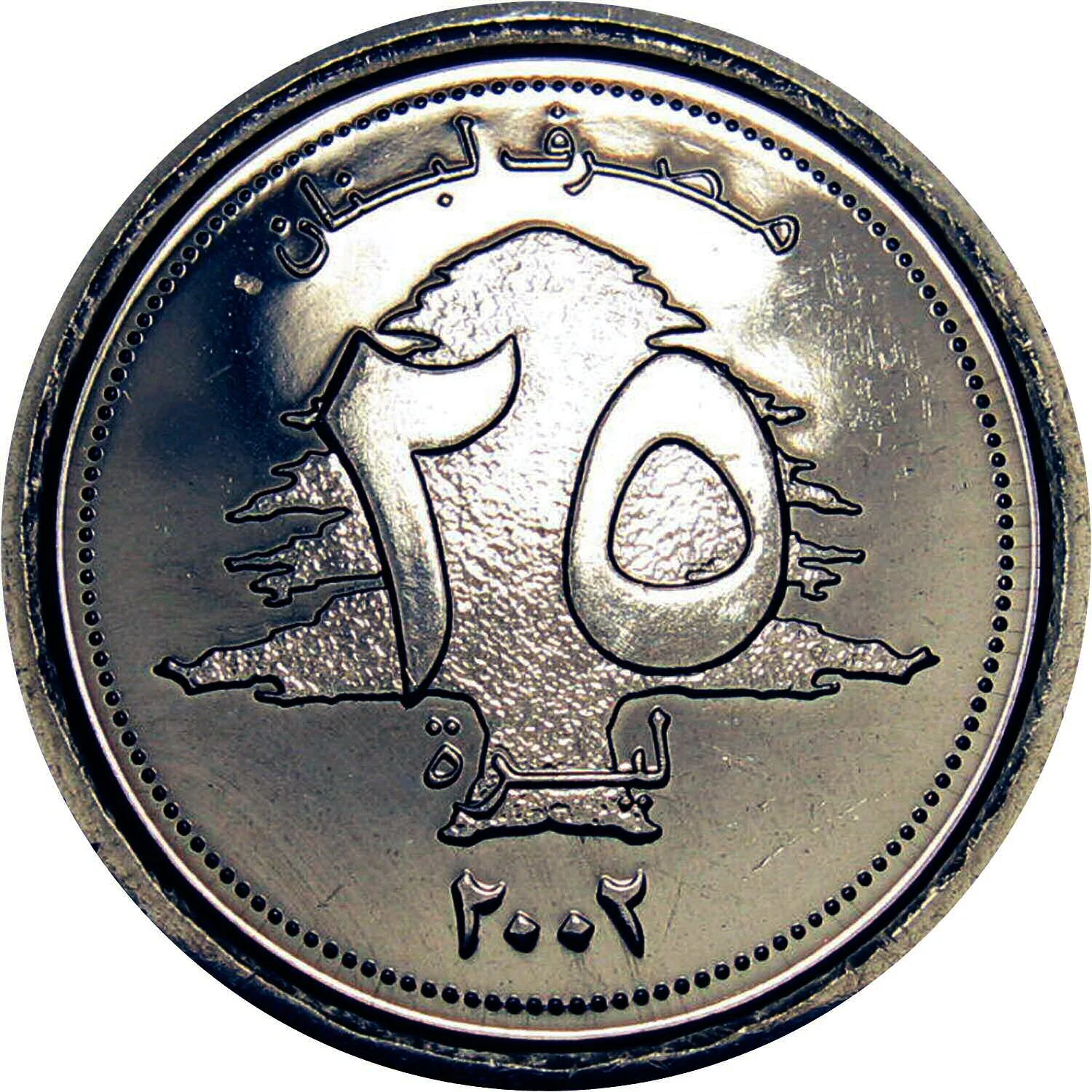

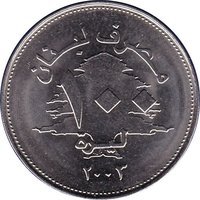
Obverse
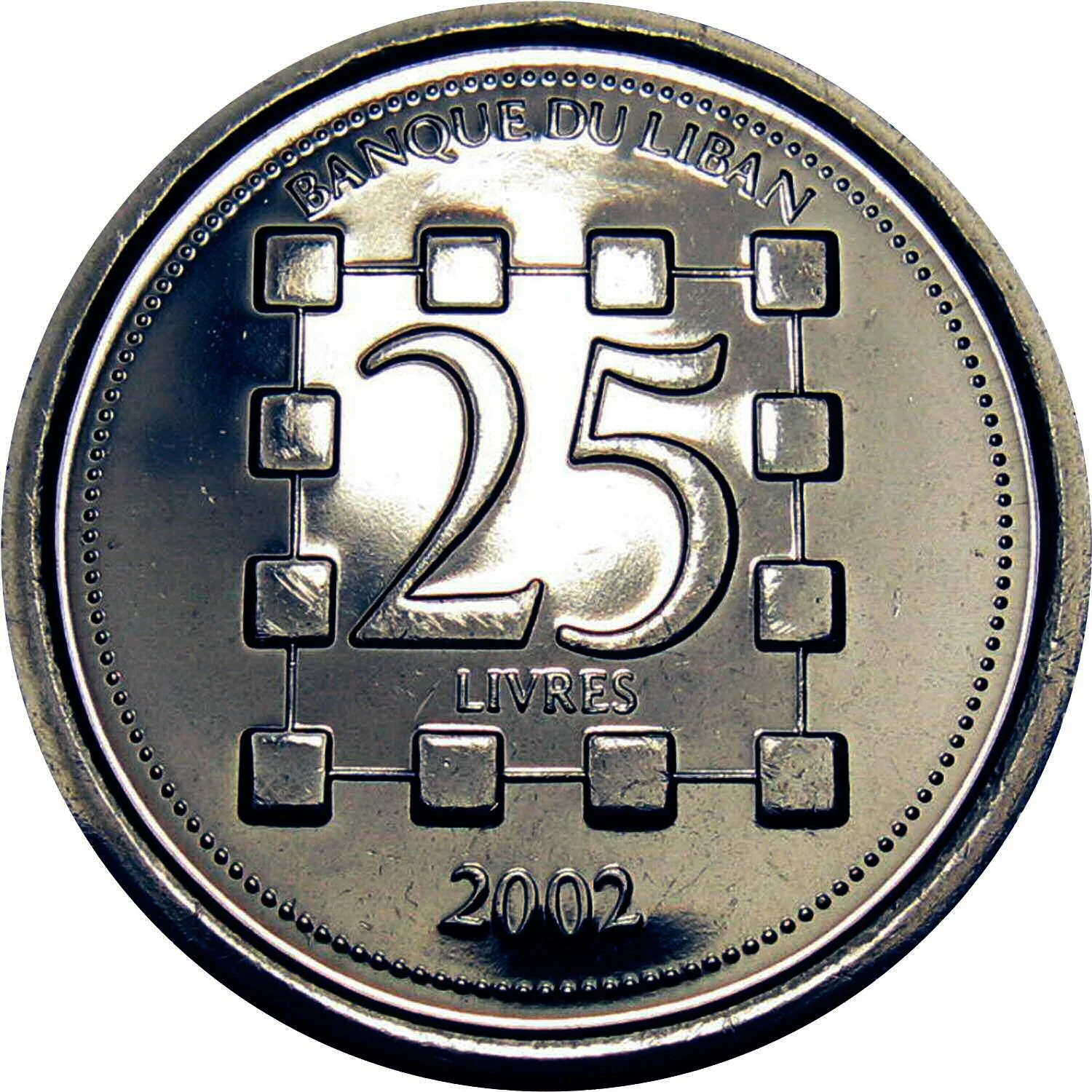
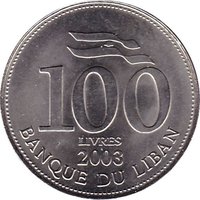
Reverse
Edge
Plain
Mints
| Name | Mark |
|---|---|
| Royal Canadian Mint of Winnipeg | — |
Mintings
| Year | Mint Mark | Mintage | Quality | Collection |
|---|---|---|---|---|
| 2002 | — | 2,000 | BU | |
| 2002 | — | 1,000 |
Historical background
In 2002, Lebanon's currency situation was characterized by a fragile and artificial stability. The Lebanese pound (lira) had been officially pegged to the US dollar at a rate of 1,507.5 since 1997, a policy maintained by the Banque du Liban (Central Bank) through high interest rates and significant foreign exchange reserves. This peg was a cornerstone of government policy, intended to provide economic confidence and stability after the civil war (1975-1990) and to curb the hyperinflation of that period. On the surface, the peg held firmly throughout the year, with the official and parallel market rates showing minimal deviation.
However, this stability masked underlying and severe structural weaknesses. Public debt had soared to over 180% of GDP, fueled by massive post-war reconstruction costs and persistent government deficits. The economy was heavily reliant on continuous inflows of foreign capital, particularly from the Lebanese diaspora, to finance this debt and defend the currency peg. This created a volatile cycle where high-interest rates were needed to attract deposits, which in turn increased the debt servicing burden. The banking sector's health became intrinsically tied to sovereign debt, storing up significant risk for the future.
Consequently, while 2002 did not see a currency crisis, it represented the calm before the storm. Economists and international institutions, including the IMF, repeatedly warned that the peg was unsustainable without deep fiscal reforms and privatization of state assets—measures that faced strong political resistance. The year ended with the currency peg intact but with the fundamental imbalances that would eventually lead to its catastrophic collapse nearly two decades later having been firmly entrenched and left unaddressed.
However, this stability masked underlying and severe structural weaknesses. Public debt had soared to over 180% of GDP, fueled by massive post-war reconstruction costs and persistent government deficits. The economy was heavily reliant on continuous inflows of foreign capital, particularly from the Lebanese diaspora, to finance this debt and defend the currency peg. This created a volatile cycle where high-interest rates were needed to attract deposits, which in turn increased the debt servicing burden. The banking sector's health became intrinsically tied to sovereign debt, storing up significant risk for the future.
Consequently, while 2002 did not see a currency crisis, it represented the calm before the storm. Economists and international institutions, including the IMF, repeatedly warned that the peg was unsustainable without deep fiscal reforms and privatization of state assets—measures that faced strong political resistance. The year ended with the currency peg intact but with the fundamental imbalances that would eventually lead to its catastrophic collapse nearly two decades later having been firmly entrenched and left unaddressed.
🌱 Very Common