

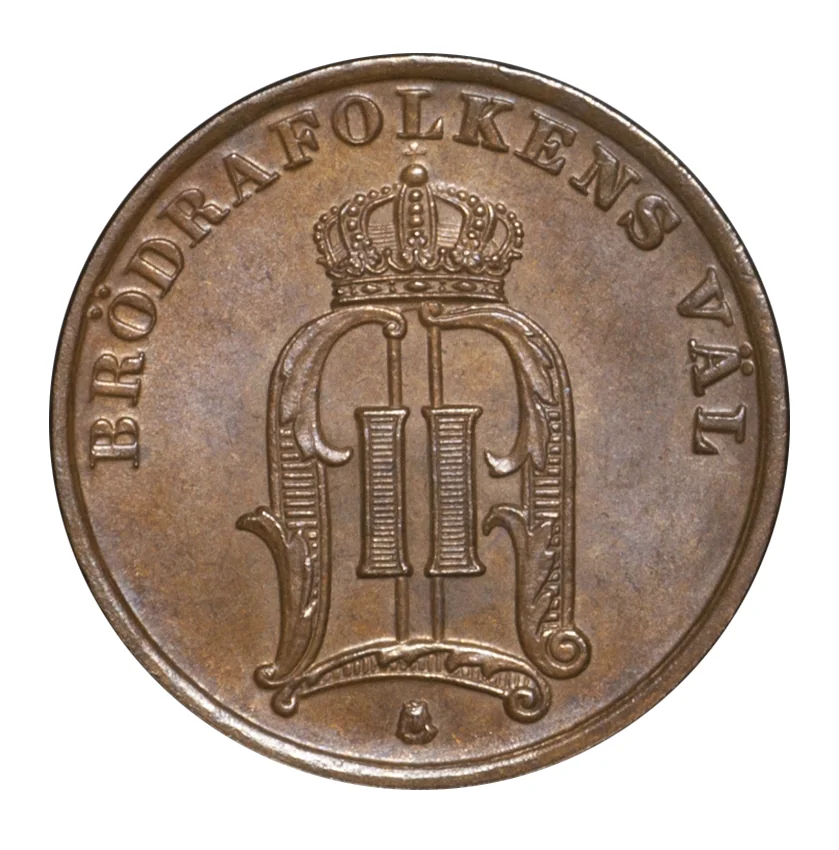
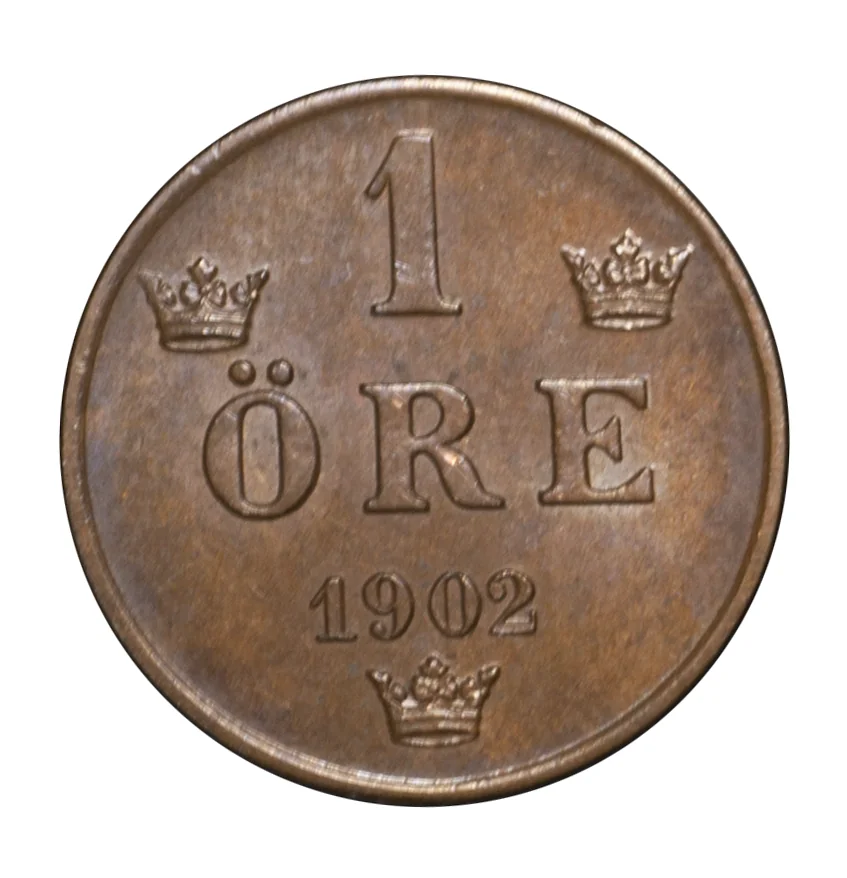
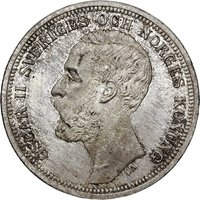
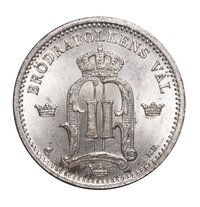
Obverse
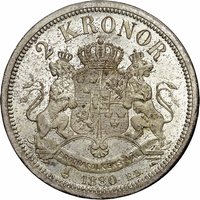
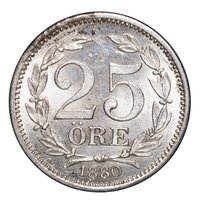
Reverse
Edge
Plain
Mints
| Name | Mark |
|---|---|
| Kungliga Myntet | — |
Mintings
| Year | Mint Mark | Mintage | Quality | Collection |
|---|---|---|---|---|
| 1879 | — | 1,630,000 | ||
| 1880 | — | 1,713,463 | ||
| 1881 | — | 1,983,580 | ||
| 1882 | — | 2,586,570 | ||
| 1883 | — | 2,586,510 | ||
| 1884 | — | 2,626,192 | ||
| 1885 | — | 2,464,335 | ||
| 1886 | — | 1,233,605 | ||
| 1888 | — | 1,737,932 | ||
| 1889 | — | 1,188,766 | ||
| 1890 | — | 1,948,794 | ||
| 1891 | — | 2,722,756 | ||
| 1892 | — | 280,000 | ||
| 1893 | — | 2,144,901 | ||
| 1894 | — | 589,598 | ||
| 1895 | — | 2,011,826 | ||
| 1896 | — | 1,446,310 | ||
| 1897 | — | 2,544,224 | ||
| 1898 | — | 2,959,498 | ||
| 1899 | — | 2,821,400 | ||
| 1900 | — | 2,928,700 | ||
| 1901 | — | 3,074,700 | ||
| 1902 | — | 2,685,400 | ||
| 1903 | — | 2,695,600 | ||
| 1904 | — | 2,032,700 | ||
| 1905 | — | 3,555,600 |
Historical background
In 1879, Sweden found itself in a complex monetary transition, caught between two systems. Officially, the country was on a silver standard, having adopted it in 1834 after a long period of bimetallism. The riksdaler riksmynt was the unit of account, and its value was defined by a specific weight of silver. However, the global economic landscape of the late 19th century was dominated by the shift towards gold, following the lead of Great Britain and the newly unified Germany. This created practical difficulties for Sweden's international trade and finance, as the fluctuating values between gold and silver introduced uncertainty and exchange risk.
The debate over monetary policy was intense. Proponents of the gold standard, including many in the banking and export-oriented business communities, argued that adopting gold would stabilize exchange rates with Sweden's major trading partners, facilitate capital flows, and integrate the nation more securely into the global economy. They pointed to the instability of silver prices, which had begun a long-term decline due to increased production, particularly from new mines in the Americas. This devaluation threatened the purchasing power of a silver-based currency.
Despite this pressure, 1879 was not the year of change. The Riksdag remained divided, with concerns about the cost of transition and the impact on debtors and the agricultural sector. A definitive move to the gold standard would require accumulating sufficient gold reserves and passing new legislation. Consequently, while the momentum was clearly building towards gold, Sweden in 1879 remained formally committed to silver, operating in a state of monetary limbo while preparing for the inevitable shift that would finally occur with the adoption of the gold standard in 1873—though its full implementation took several more years to complete.
The debate over monetary policy was intense. Proponents of the gold standard, including many in the banking and export-oriented business communities, argued that adopting gold would stabilize exchange rates with Sweden's major trading partners, facilitate capital flows, and integrate the nation more securely into the global economy. They pointed to the instability of silver prices, which had begun a long-term decline due to increased production, particularly from new mines in the Americas. This devaluation threatened the purchasing power of a silver-based currency.
Despite this pressure, 1879 was not the year of change. The Riksdag remained divided, with concerns about the cost of transition and the impact on debtors and the agricultural sector. A definitive move to the gold standard would require accumulating sufficient gold reserves and passing new legislation. Consequently, while the momentum was clearly building towards gold, Sweden in 1879 remained formally committed to silver, operating in a state of monetary limbo while preparing for the inevitable shift that would finally occur with the adoption of the gold standard in 1873—though its full implementation took several more years to complete.
🌱 Very Common