

½ Cent – French Indochina
Context
Years: 1939–1940
Issuer: French Indochina
Period:
(1870—1940)
Currency:
(1880—1952)
Demonetized: Yes
Total mintage: 185,000
Material
Diameter: 21 mm
Weight: 3.04 g
Thickness: 1.6 mm
Shape: Round with a round hole
Composition: Zinc
Magnetic: No
Technique: Milled
Alignment: Coin alignment
flip
References
KM: #Click to copy to clipboard20a
Numista: #75693
Value
Exchange value: 0.005 ICFP
Obverse
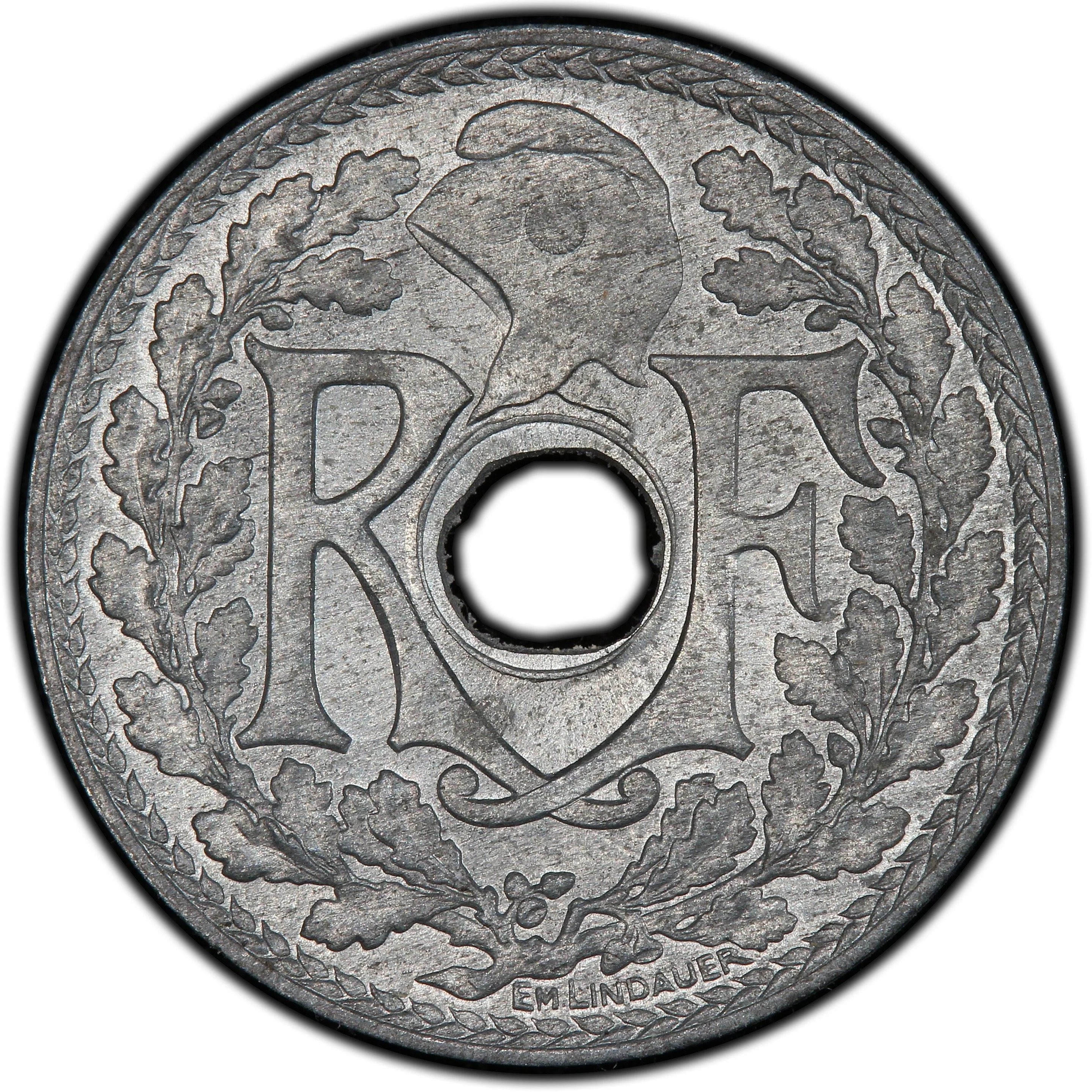
Description:
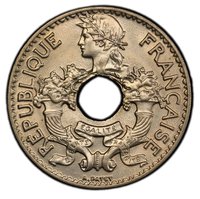
RF divided by center hole, liberty cap above, encircled by wreath.
Inscription:
R F
Translation:
Rex Francorum
Script: Latin
Language: Latin
Engraver: Edmond-Émile Lindauer
Reverse
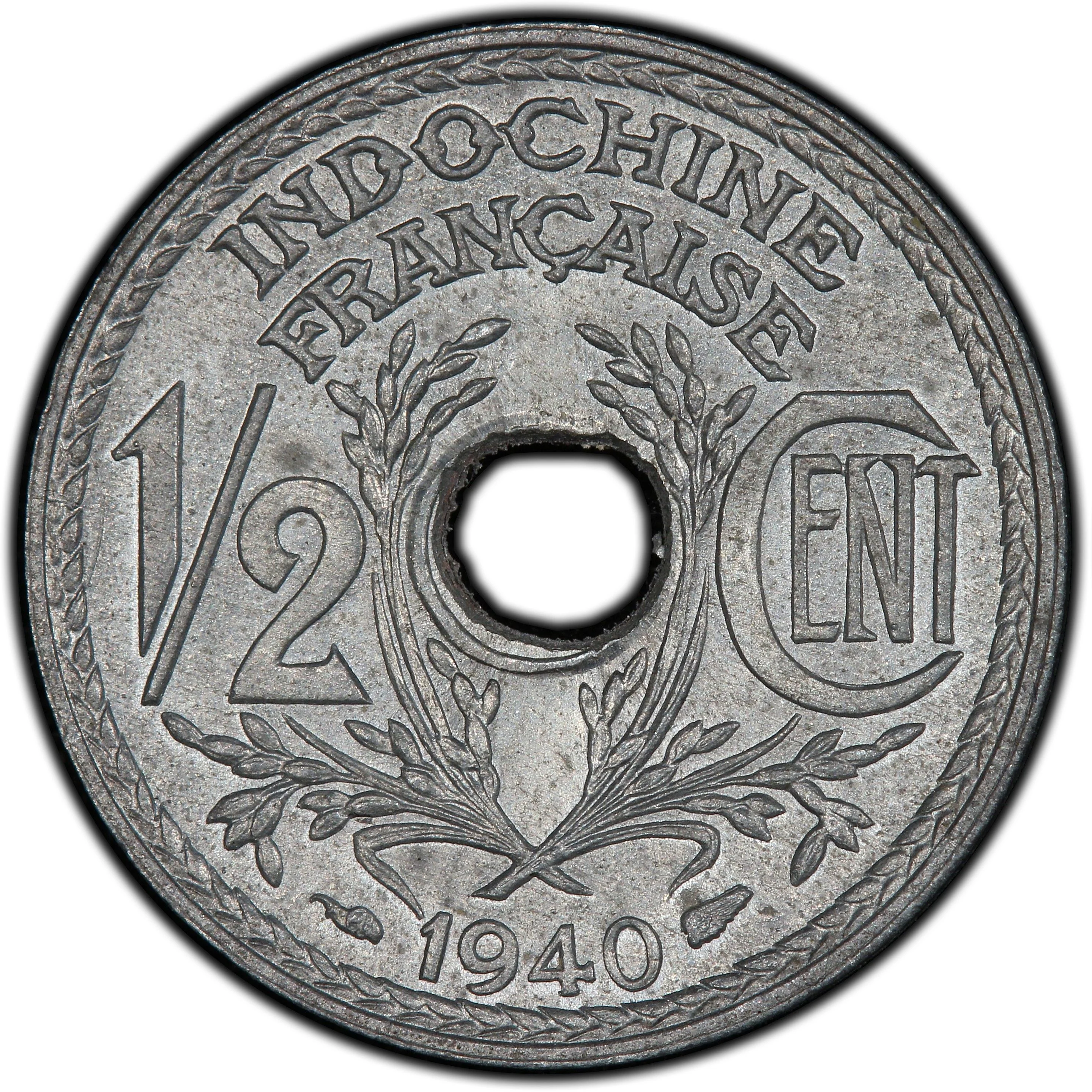
Description:
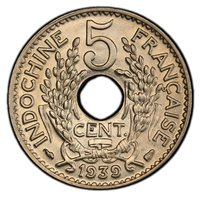
Denomination flanked by grain, date below.
Inscription:
INDOCHINE
FRANÇAISE
1/2 CENT
1940
FRANÇAISE
1/2 CENT
1940
Translation:
French Indochina
1/2 Cent
1940
1/2 Cent
1940
Script: Latin
Language: French
Engraver: Edmond-Émile Lindauer
Edge
Plain
Categories
| Symbol> Phrygian cap |
| Symbol> Wreath |
Mints
| Name | Mark |
|---|---|
| Monnaie de Paris | — |
Mintings
| Year | Mint Mark | Mintage | Quality | Collection |
|---|---|---|---|---|
| 1939 | — | 185,000 | ||
| 1940 | — | — |
Historical background
In 1939, the currency situation in French Indochina was defined by the dominance of the Piastre de Commerce, a silver-based currency issued by the Banque de l'Indochine. This bank, though privately owned, held the exclusive privilege of note issuance for the colony. The piastre was notably strong, deliberately overvalued by French authorities to benefit metropolitan interests. Its high exchange rate made imports from France cheap for the colonizers and local elites, but it severely handicapped Indochina's export competitiveness, particularly for rice and rubber, by making them more expensive on the world market. This policy created a persistent trade imbalance and drained wealth from the local economy to the benefit of the French colons and the mother country.
The currency system was inherently dualistic and hierarchical. Alongside the silver piastre, a subsidiary currency of zinc and copper-alloy coins circulated for everyday transactions among the indigenous population. More significantly, the monetary zone was expansive, as the Banque de l'Indochine's piastre also served as the official currency in the French concessions in China (Guangzhouwan) and, until 1937, in Cambodia and Laos. This created a unified but extractive financial bloc. Furthermore, the colony's finances were deeply integrated with France; a large portion of Indochina's reserves were held in French francs in Paris, tethering its economic fate to the metropolitan power.
By the eve of World War II, this system was under strain. The global economic turbulence of the 1930s and France's own financial weaknesses pressured the fixed exchange rate. While still formally pegged to silver and the franc, the piastre's management was increasingly geared toward insulating the colony from external shocks and maintaining French control. The outbreak of war in Europe in September 1939 would soon exacerbate these pressures, leading to stricter exchange controls and the eventual severing of the franc link during the wartime Japanese occupation, which would irrevocably disrupt the pre-war monetary order.
The currency system was inherently dualistic and hierarchical. Alongside the silver piastre, a subsidiary currency of zinc and copper-alloy coins circulated for everyday transactions among the indigenous population. More significantly, the monetary zone was expansive, as the Banque de l'Indochine's piastre also served as the official currency in the French concessions in China (Guangzhouwan) and, until 1937, in Cambodia and Laos. This created a unified but extractive financial bloc. Furthermore, the colony's finances were deeply integrated with France; a large portion of Indochina's reserves were held in French francs in Paris, tethering its economic fate to the metropolitan power.
By the eve of World War II, this system was under strain. The global economic turbulence of the 1930s and France's own financial weaknesses pressured the fixed exchange rate. While still formally pegged to silver and the franc, the piastre's management was increasingly geared toward insulating the colony from external shocks and maintaining French control. The outbreak of war in Europe in September 1939 would soon exacerbate these pressures, leading to stricter exchange controls and the eventual severing of the franc link during the wartime Japanese occupation, which would irrevocably disrupt the pre-war monetary order.
💎 Extremely Rare