


Obverse
Description:
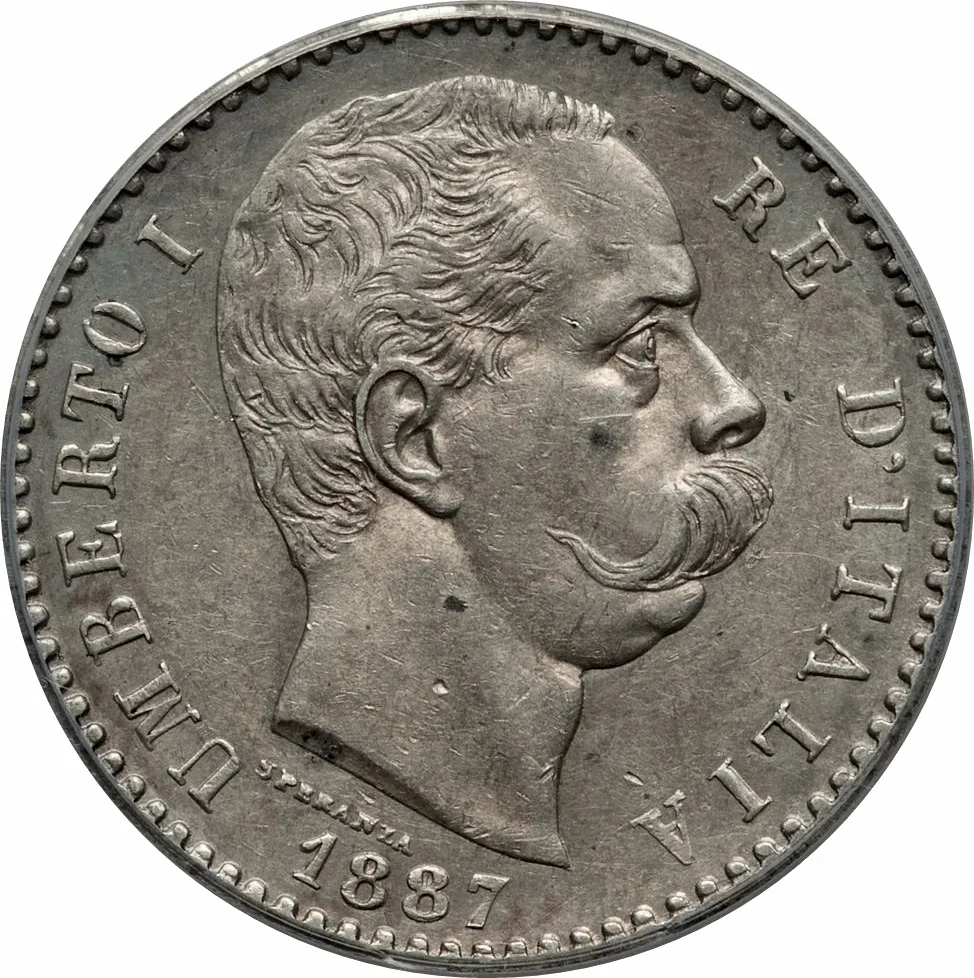
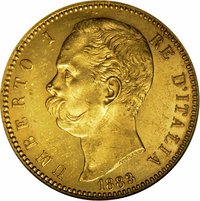
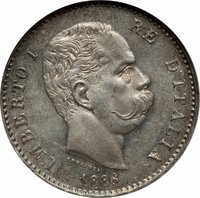
King Umberto I facing right. Engraver's name and date below.
Inscription:
UMBERTO I
RE D'ITALIA 1887
SPERANZA
RE D'ITALIA 1887
SPERANZA
Translation:
Umberto I
King of Italy 1887
Hope
King of Italy 1887
Hope
Script: Latin
Language: Italian
Engraver: Filippo Speranza
Reverse
Description:
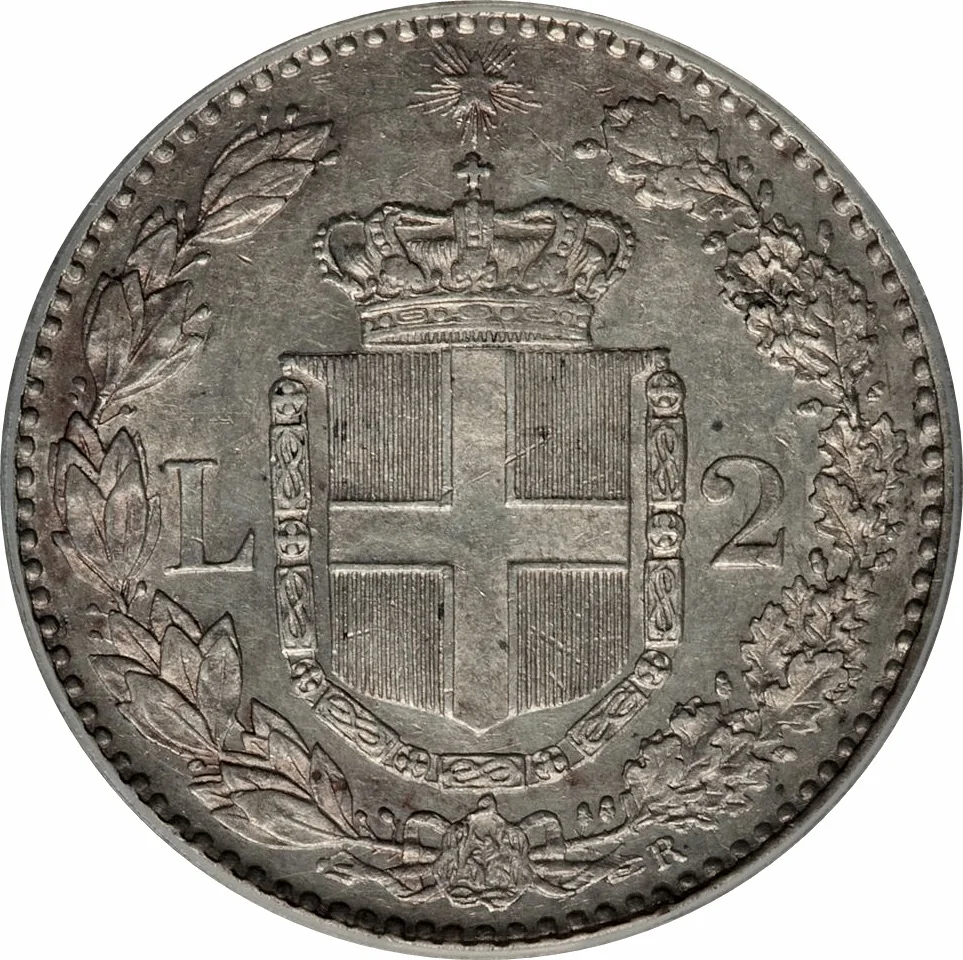
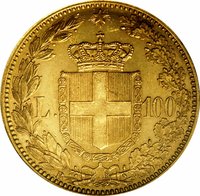
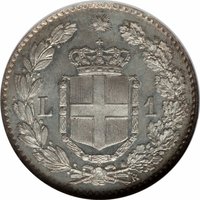
The crowned Savoy coat of arms with the Annunziata collar divides the value, flanked by the Star of Italy above and the mintmark below, all within a laurel and oak wreath.
Inscription:
L 2
R
R
Translation:
To the health of the emperor.
Script: Latin
Language: Latin
Engraver: Filippo Speranza
Edge
Inscription with Guilloche and rosettes
Legend:
FERT FERT FERT
Translation:
FERT FERT FERT
Language: Latin
Mints
| Name | Mark |
|---|---|
| Rome | R |
Mintings
Historical background
In 1881, Italy's currency situation was defined by the aftermath of the corso forzoso (forced circulation), a period of inconvertible paper money that began in 1866. To finance the costs of the Third War of Italian Independence and early national unification, the government had suspended the convertibility of banknotes into gold or silver. This led to a floating and often depreciated lira, exchange rate instability, and a premium for gold (aggio sull'oro), which hampered international trade and investment confidence. The system created a dual circulation where metal coinage was hoarded, and paper money was viewed with public suspicion, reflecting deeper anxieties about the fiscal health of the young Kingdom of Italy.
The political and economic establishment viewed a return to metal convertibility as essential for national prestige and modern economic integration. Consequently, 1881 marked a pivotal year with the implementation of the Magliani Law (named after the Finance Minister, Agostino Magliani). This ambitious policy aimed to resume convertibility by accumulating a substantial gold reserve through foreign loans and budget surpluses. The government successfully negotiated a large international loan, primarily from German banks, and used the proceeds to amass gold, temporarily stabilizing the lira and allowing for a brief resumption of convertibility in 1883.
However, this achievement proved short-lived. The underlying structural weaknesses of the Italian economy—including a large public debt, persistent budget deficits, and a lack of industrial competitiveness—were not resolved. The heavy reliance on foreign borrowing simply exchanged one problem for another, creating new debt service obligations. By the mid-1880s, a sharp trade deficit and the depletion of the new gold reserves forced the government to abandon convertibility once again, re-establishing the corso forzoso in 1885. Thus, the 1881 effort, while a significant political milestone, ultimately highlighted the difficulty of achieving monetary stability without sustained fiscal discipline and economic growth.
The political and economic establishment viewed a return to metal convertibility as essential for national prestige and modern economic integration. Consequently, 1881 marked a pivotal year with the implementation of the Magliani Law (named after the Finance Minister, Agostino Magliani). This ambitious policy aimed to resume convertibility by accumulating a substantial gold reserve through foreign loans and budget surpluses. The government successfully negotiated a large international loan, primarily from German banks, and used the proceeds to amass gold, temporarily stabilizing the lira and allowing for a brief resumption of convertibility in 1883.
However, this achievement proved short-lived. The underlying structural weaknesses of the Italian economy—including a large public debt, persistent budget deficits, and a lack of industrial competitiveness—were not resolved. The heavy reliance on foreign borrowing simply exchanged one problem for another, creating new debt service obligations. By the mid-1880s, a sharp trade deficit and the depletion of the new gold reserves forced the government to abandon convertibility once again, re-establishing the corso forzoso in 1885. Thus, the 1881 effort, while a significant political milestone, ultimately highlighted the difficulty of achieving monetary stability without sustained fiscal discipline and economic growth.
🌱 Common