


Obverse
Description:
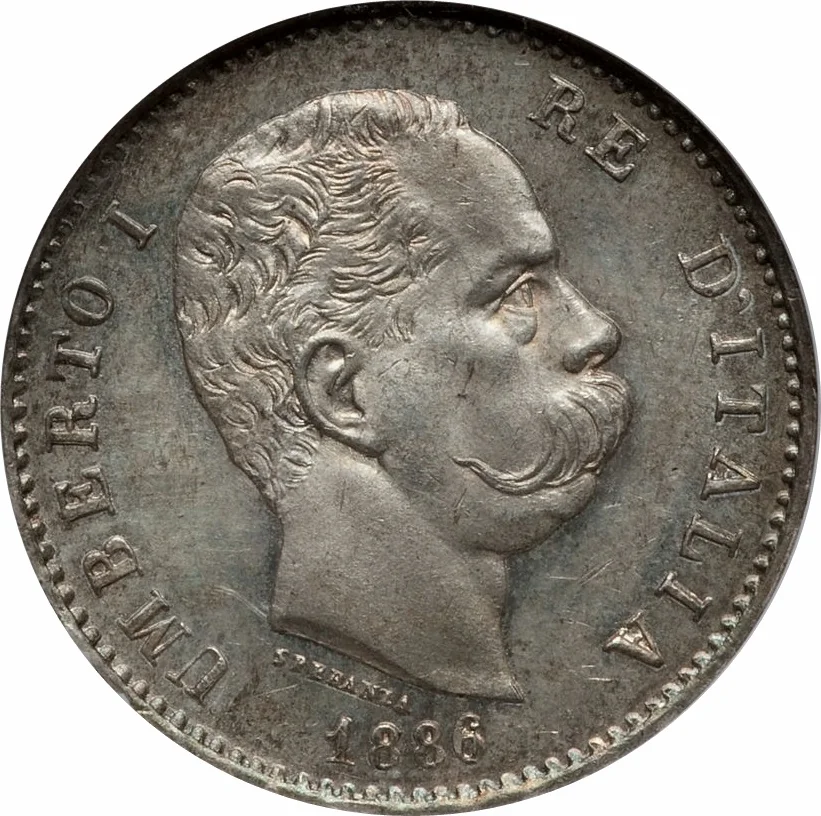
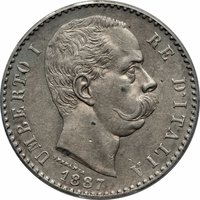
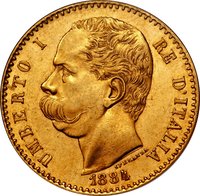
King Umberto I facing right, with engraver's name and date below.
Inscription:
UMBERTO I RE D'ITALIA
SPERANZA
1886
SPERANZA
1886
Translation:
Umberto I King of Italy
Hope
1886
Hope
1886
Script: Latin
Language: Italian
Engraver: Filippo Speranza
Reverse
Description:
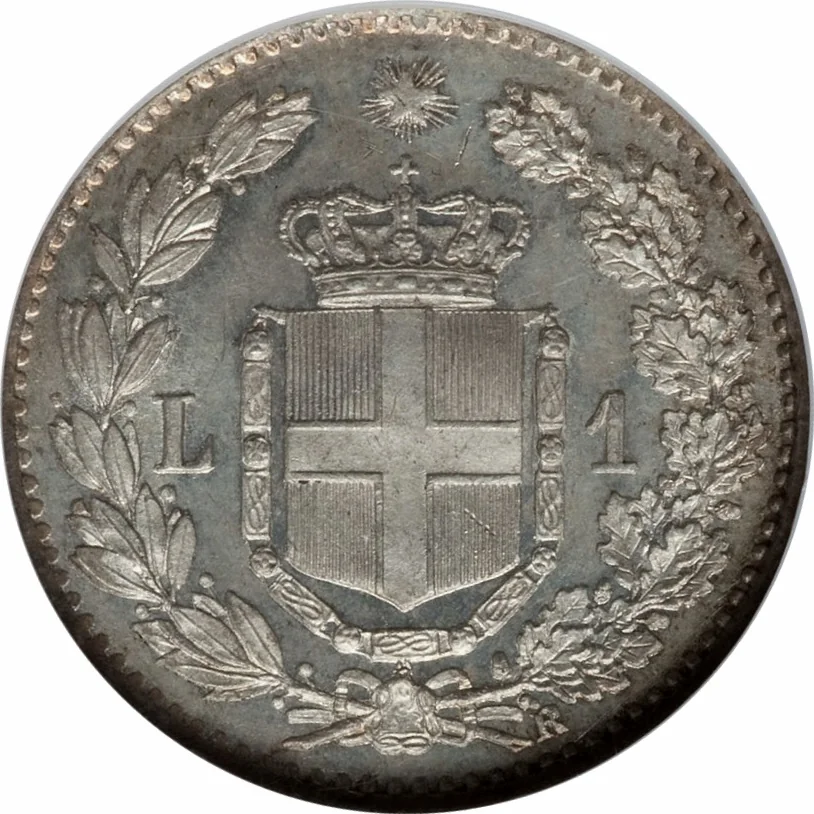
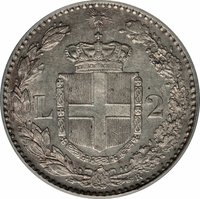
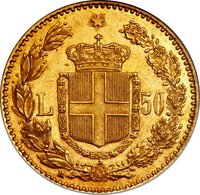
Crowned Savoy coat of arms with the Annunziata collar, flanked by laurel and oak branches, topped by Italy's star.
Inscription:
L 1
R
R
Translation:
By the authority of the Senate.
Script: Latin
Language: Latin
Engraver: Filippo Speranza
Edge
Mintings
Historical background
In 1883, Italy's currency situation was defined by its recent and tumultuous transition to the lira as the sole national currency, a process known as the corso forzoso (forced circulation). Since Italian unification in 1861, the new kingdom had inherited a mosaic of regional monies from the former states. The government, burdened by massive debts from the wars of unification and heavy public spending, suspended the convertibility of banknotes into gold or silver in 1866. This created an inconvertible paper lira, which was not backed by precious metal reserves but by government decree.
This period of corso forzoso led to significant economic challenges. The lira's value fluctuated on international markets, often depreciating against gold-backed currencies like the British pound and the French franc. This depreciation increased the cost of servicing foreign debt and contributed to inflation, straining the finances of both the state and ordinary citizens. The government's persistent budget deficits were financed by the central banks, leading to a growing circulation of paper money and further undermining confidence in the currency.
By 1883, the corso forzoso was still in effect, but political and economic debates were intensifying over a return to convertibility, known as la riscossa (the redemption). Advocates, including many industrialists and financiers tied to international trade, argued that a return to a metal standard was essential for long-term stability, credibility, and integration into the global economy. However, the state's fragile finances and the deep structural imbalances within the Italian economy made the path to a stable gold or bimetallic standard a complex and politically charged challenge that would not be fully resolved until the 1890s.
This period of corso forzoso led to significant economic challenges. The lira's value fluctuated on international markets, often depreciating against gold-backed currencies like the British pound and the French franc. This depreciation increased the cost of servicing foreign debt and contributed to inflation, straining the finances of both the state and ordinary citizens. The government's persistent budget deficits were financed by the central banks, leading to a growing circulation of paper money and further undermining confidence in the currency.
By 1883, the corso forzoso was still in effect, but political and economic debates were intensifying over a return to convertibility, known as la riscossa (the redemption). Advocates, including many industrialists and financiers tied to international trade, argued that a return to a metal standard was essential for long-term stability, credibility, and integration into the global economy. However, the state's fragile finances and the deep structural imbalances within the Italian economy made the path to a stable gold or bimetallic standard a complex and politically charged challenge that would not be fully resolved until the 1890s.
🌱 Common