

2 Centavos – Honduras
Honduras
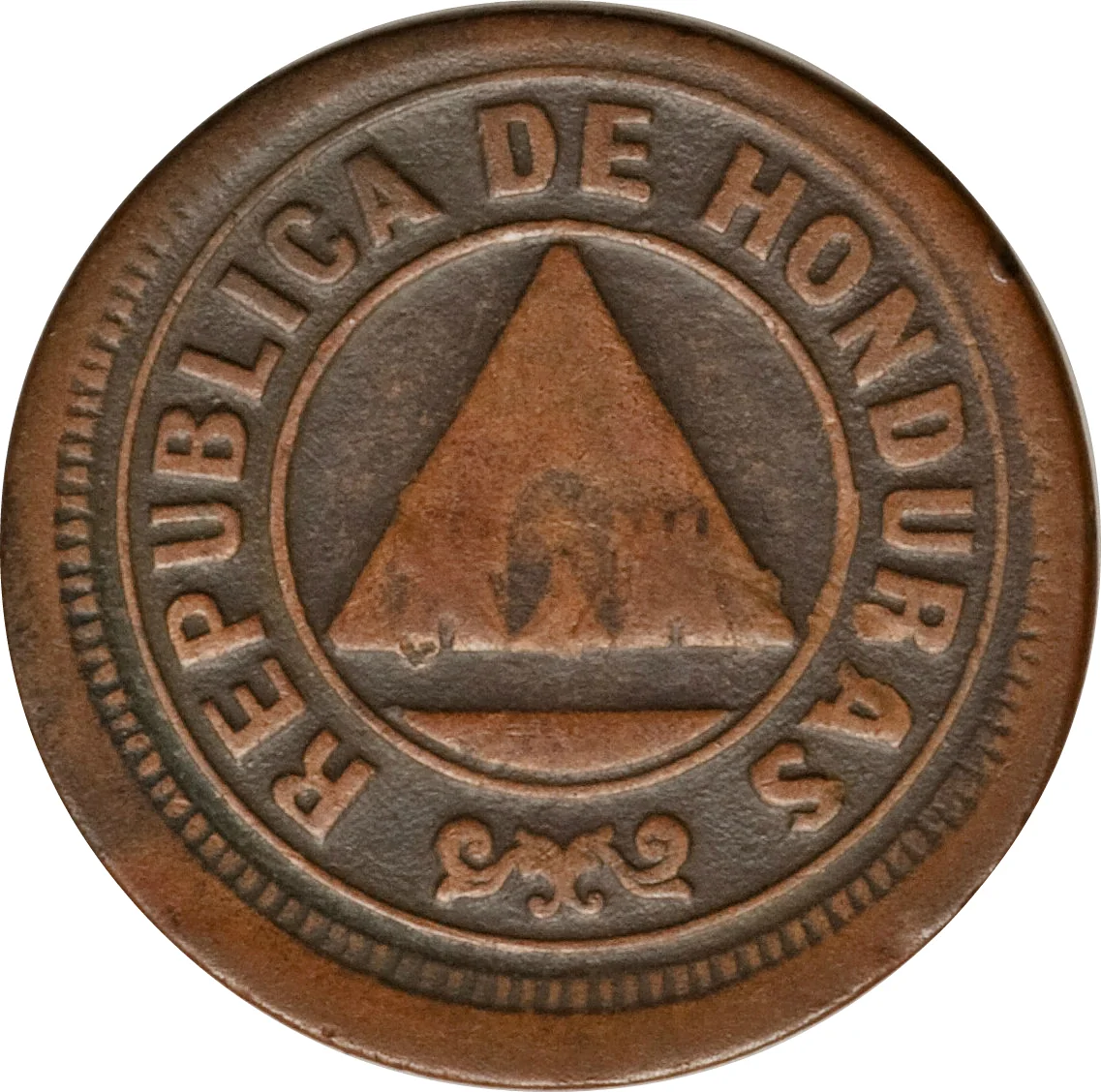
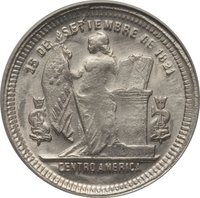
Obverse
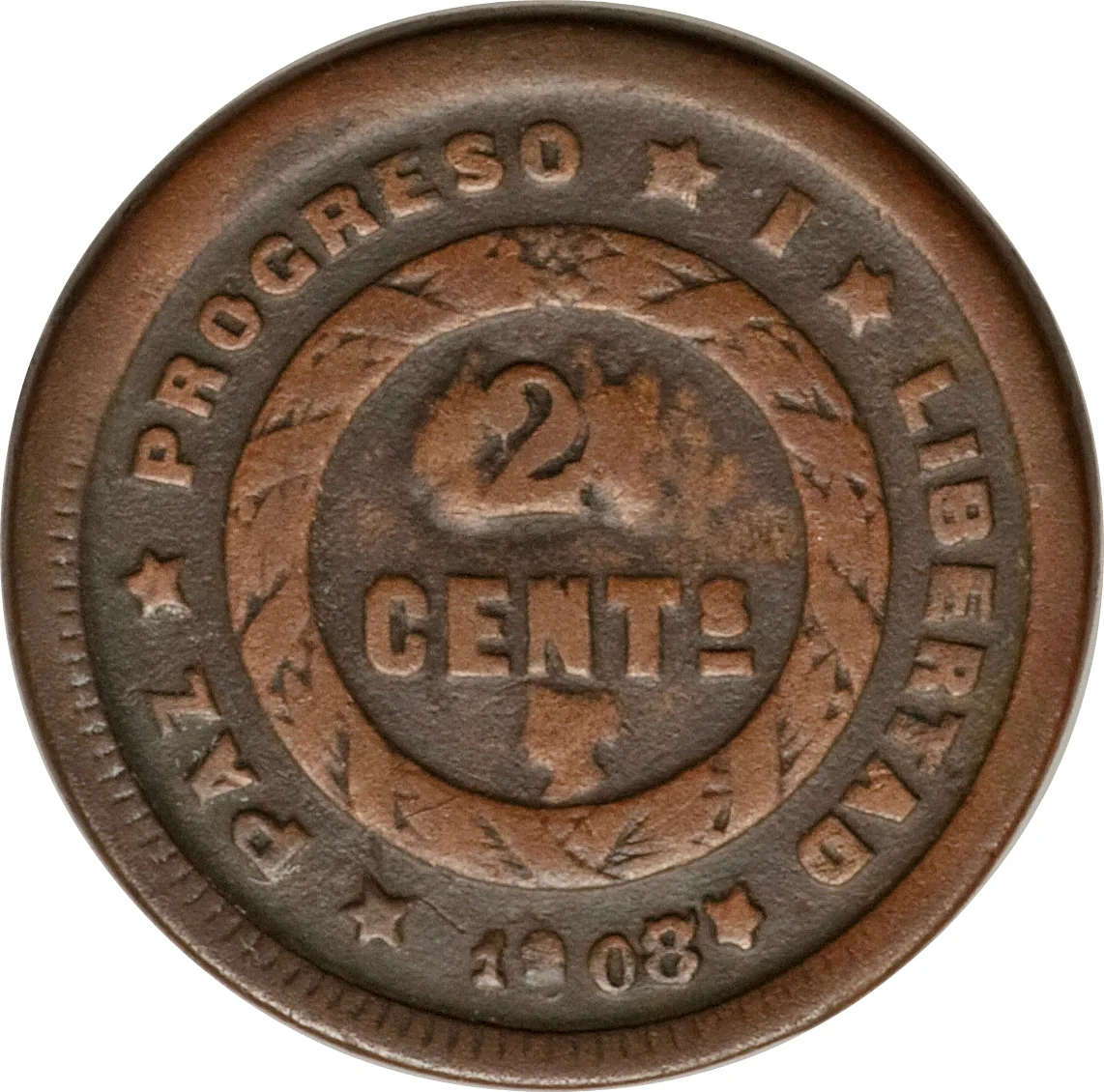
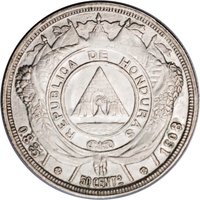
Reverse
Edge
Categories
| Symbols> Coat of Arms |
| Symbol> Wreath |
Mints
| Name | Mark |
|---|---|
| Casa Nacional de la Moneda | — |
Mintings
| Year | Mint Mark | Mintage | Quality | Collection |
|---|---|---|---|---|
| 1907 | — | — | ||
| 1908 | — | — |
Historical background
In 1907, Honduras found itself in a precarious monetary situation, characterized by a chaotic and devalued currency system that severely hampered both domestic commerce and international trade. Following decades of political instability and heavy borrowing from foreign banks, the country’s primary circulating medium was the silver Honduran peso, which had suffered significant depreciation. More problematic was the widespread circulation of a vast array of foreign coins, particularly from Peru, Bolivia, and Chile, as well as privately issued tokens from local merchants and mining companies. This created a confusing and unreliable monetary environment where the value of money was not uniform and trust in the domestic currency was low.
The root of this instability lay in the Liberal Reforms of the late 19th century, which, while modernizing the economy, also led to the issuance of large amounts of inconvertible paper money to finance infrastructure projects and cover budget deficits. By 1907, this paper money had become virtually worthless. Consequently, the economy operated on a de facto silver standard, but with a critical shortage of official Honduran coinage. The influx of debased foreign silver further drove sound money out of circulation (Gresham's Law), worsening the depreciation of the already weak national currency and creating constant difficulties in setting prices and honoring contracts.
This monetary anarchy presented a major obstacle to the government of President Miguel R. Dávila and to American banana companies, which were becoming the dominant economic force in the country. The need for a stable currency to facilitate foreign investment and regularize trade was acute. The situation in 1907 thus set the direct stage for the major monetary reform that would follow in 1912, when Honduras, under the influence of U.S. financial advisors, abandoned the silver peso and officially adopted the gold-standard lempira, named after the indigenous leader Lempira, in an effort to impose order and attract foreign capital.
The root of this instability lay in the Liberal Reforms of the late 19th century, which, while modernizing the economy, also led to the issuance of large amounts of inconvertible paper money to finance infrastructure projects and cover budget deficits. By 1907, this paper money had become virtually worthless. Consequently, the economy operated on a de facto silver standard, but with a critical shortage of official Honduran coinage. The influx of debased foreign silver further drove sound money out of circulation (Gresham's Law), worsening the depreciation of the already weak national currency and creating constant difficulties in setting prices and honoring contracts.
This monetary anarchy presented a major obstacle to the government of President Miguel R. Dávila and to American banana companies, which were becoming the dominant economic force in the country. The need for a stable currency to facilitate foreign investment and regularize trade was acute. The situation in 1907 thus set the direct stage for the major monetary reform that would follow in 1912, when Honduras, under the influence of U.S. financial advisors, abandoned the silver peso and officially adopted the gold-standard lempira, named after the indigenous leader Lempira, in an effort to impose order and attract foreign capital.
✨ Legendary