

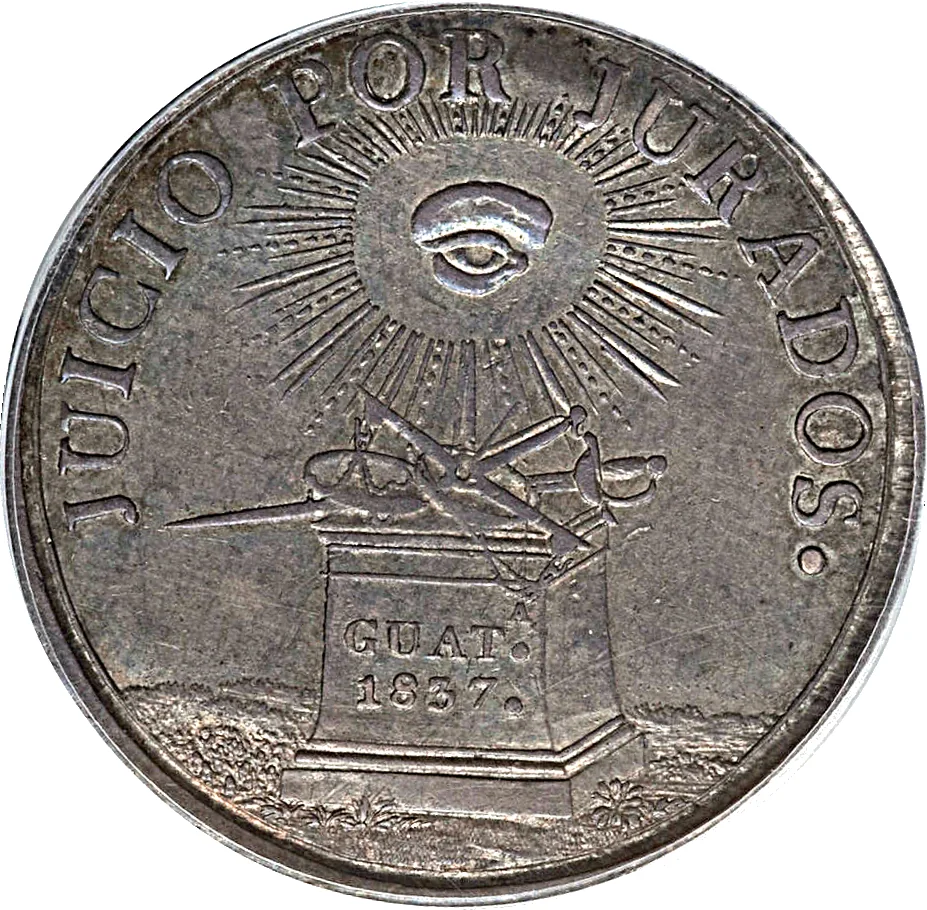
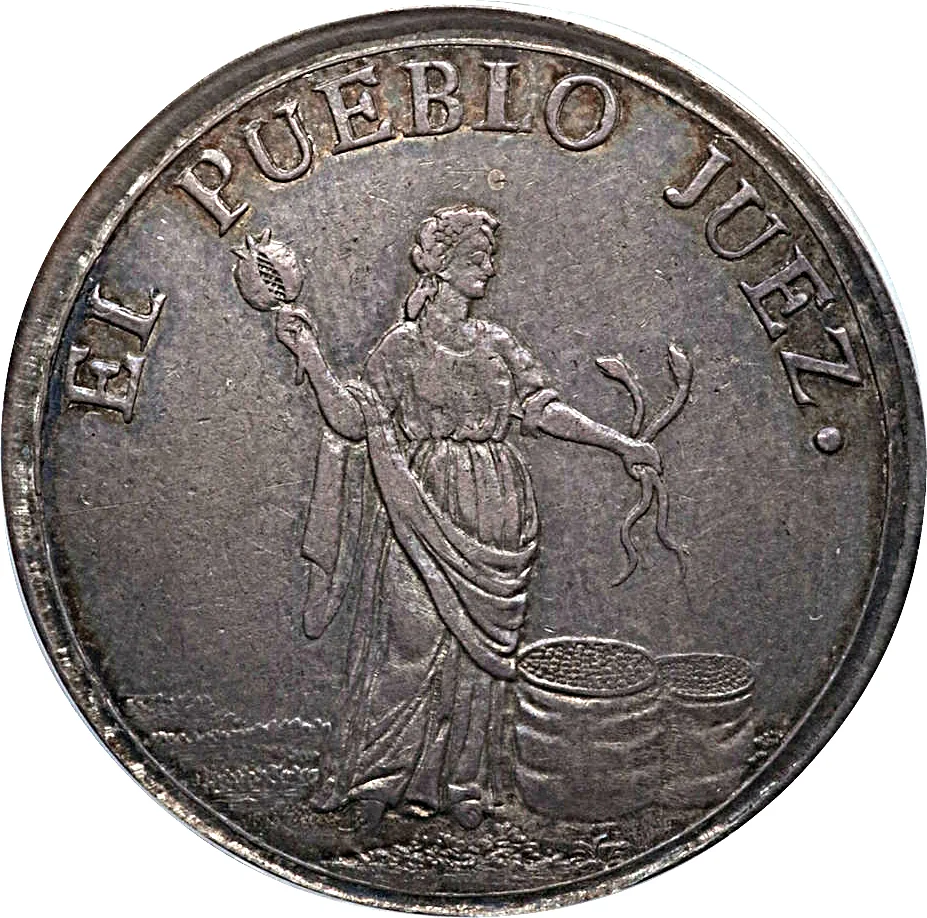
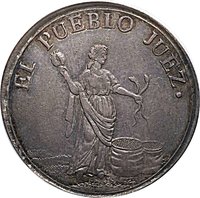
Obverse
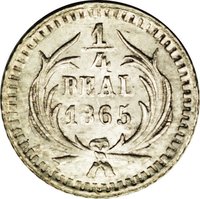
Reverse
Edge
Mintings
| Year | Mint Mark | Mintage | Quality | Collection |
|---|---|---|---|---|
| 1837 | — | — |
Historical background
In 1837, Guatemala, as the dominant state within the United Provinces of Central America, was grappling with a severe and multifaceted currency crisis. The federal government, chronically insolvent and weakened by political strife between Liberals and Conservatives, had resorted to printing vast quantities of paper money (billetes) since 1825 to cover its expenses. This unbacked fiat currency rapidly depreciated, leading to rampant inflation. By 1837, the paper peso was worth less than 5% of its face value in silver, causing widespread economic disruption, loss of public confidence, and a effective return to barter in many internal markets.
The monetary chaos intersected violently with social and political tensions. The Liberal government under Dr. Mariano Gálvez, while pursuing modernizing reforms, was seen as enforcing the use of this worthless paper money for taxes and transactions, which heavily burdened the rural and Indigenous majority. This economic grievance fused with resentment over land laws and a cholera epidemic to fuel the massive Rafael Carrera Revolt that began in 1837. Peasant rebels explicitly targeted the economic policies of the elite in Guatemala City, viewing the paper currency as a direct tool of exploitation and a symbol of a distant, oppressive government.
Consequently, the currency situation in 1837 was not merely an economic issue but a central catalyst for the civil war that would soon unravel the federation. The collapse of monetary trust accelerated the collapse of political order. By the end of the year, Carrera's forces were advancing, and the authority of the federal and state governments was crumbling. The failed paper money experiment profoundly discredited the Liberal project and contributed directly to the federation's dissolution, after which Guatemala and the other successor states would return to a silver-based currency under more conservative regimes.
The monetary chaos intersected violently with social and political tensions. The Liberal government under Dr. Mariano Gálvez, while pursuing modernizing reforms, was seen as enforcing the use of this worthless paper money for taxes and transactions, which heavily burdened the rural and Indigenous majority. This economic grievance fused with resentment over land laws and a cholera epidemic to fuel the massive Rafael Carrera Revolt that began in 1837. Peasant rebels explicitly targeted the economic policies of the elite in Guatemala City, viewing the paper currency as a direct tool of exploitation and a symbol of a distant, oppressive government.
Consequently, the currency situation in 1837 was not merely an economic issue but a central catalyst for the civil war that would soon unravel the federation. The collapse of monetary trust accelerated the collapse of political order. By the end of the year, Carrera's forces were advancing, and the authority of the federal and state governments was crumbling. The failed paper money experiment profoundly discredited the Liberal project and contributed directly to the federation's dissolution, after which Guatemala and the other successor states would return to a silver-based currency under more conservative regimes.
✨ Legendary