

500 Lire – Italy
Circulating commemorative coins
Commemoration: Italian Unification Centennial
Italy
Context
Material
References
KM: #Click to copy to clipboard99
Numista: #7345
Value
Exchange value: 500 ITL
Bullion value: $26.69
Inflation-adjusted value: 15637.60 ITL
Obverse
Description:
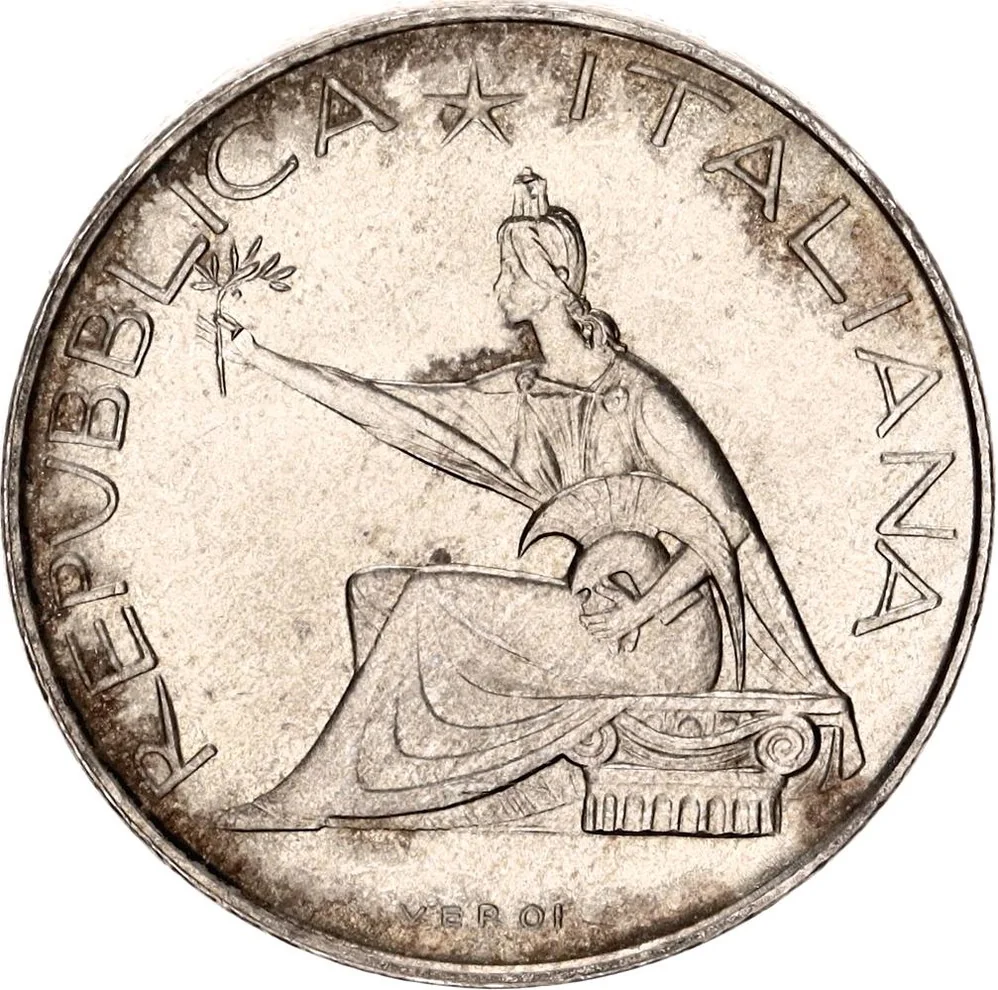
Italy seated on a capital, holding an olive branch aloft, with a helmet at her side. The engraver's name appears in the exergue.
Inscription:
REPVBBLICA*ITALIANA
VEROI
VEROI
Translation:
Italian Republic
True
True
Script: Latin
Language: Latin
Engraver: Guido Veroi
Reverse
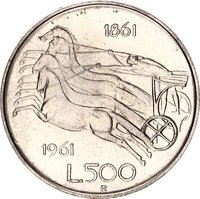
Description:
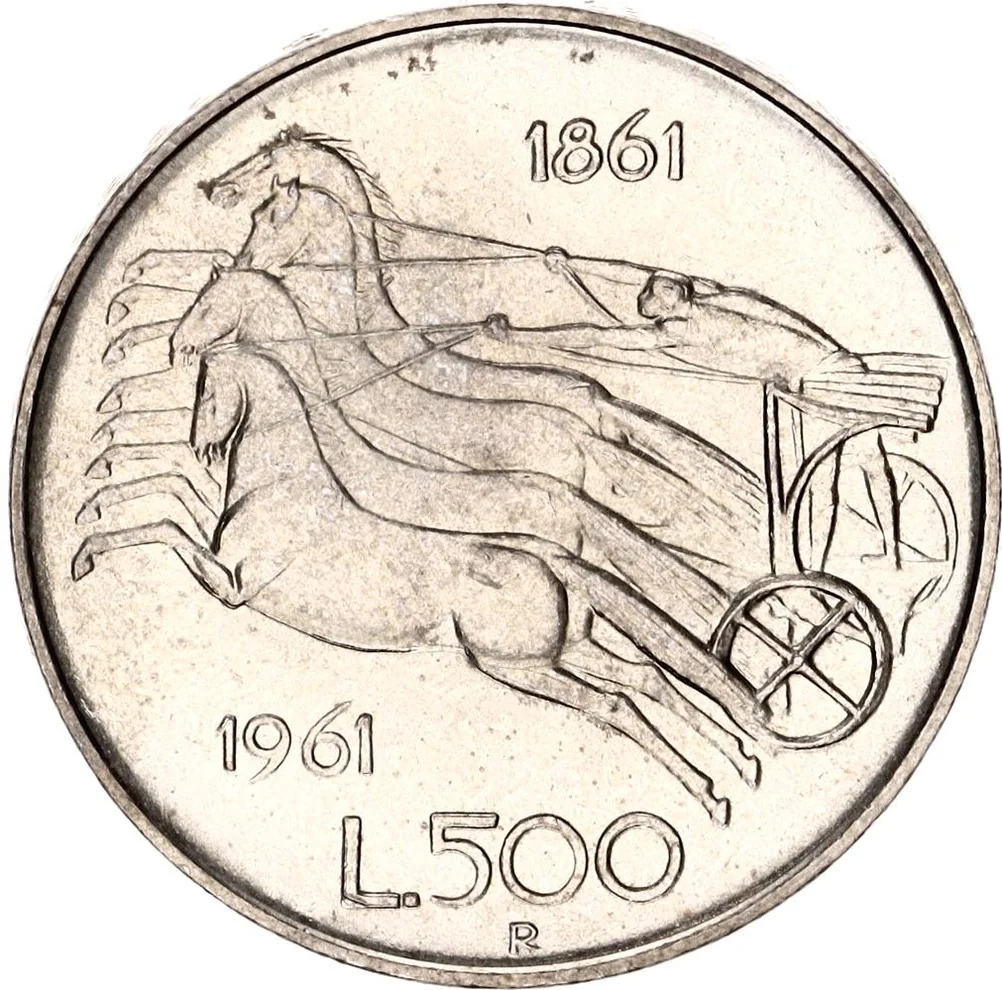
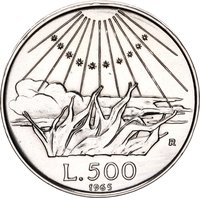
Quadriga left, dates above and below horses. Value and mintmark below.
Inscription:
1861
1961
L.500
R
1961
L.500
R
Script: Latin
Engraver: Guido Veroi
Mints
| Name | Mark |
|---|---|
| Rome | R |
Mintings
| Year | Mint Mark | Mintage | Quality | Collection |
|---|---|---|---|---|
| 1961 | R | — |
Historical background
In 1961, Italy's currency situation was fundamentally defined by its participation in the Bretton Woods international monetary system, which pegged the Italian lira to the U.S. dollar at a fixed exchange rate of 625 lire per dollar. This stability was a cornerstone of the post-war "Italian economic miracle," a period of rapid industrialization and export-led growth that transformed the nation into a major industrial power. The fixed exchange rate provided a predictable environment for trade and investment, fueling the boom that saw Italy's economy grow at an average annual rate of over 6% throughout the 1950s and early 1960s.
However, this period of stability also contained underlying pressures. The economic boom had begun to generate inflationary tendencies and a growing trade deficit, as domestic demand for imports surged. While not yet a crisis in 1961, these factors placed gradual strain on the lira's fixed parity. Furthermore, Italy was an active participant in the European Payments Union and was moving toward greater European economic integration, having helped establish the European Economic Community in 1957. This commitment required maintaining currency convertibility and disciplined economic policies to align with its European partners.
Consequently, the primary focus for Italian monetary authorities in 1961 was one of vigilant management rather than dramatic reform. The Bank of Italy, under Governor Guido Carli (appointed in 1960), worked to defend the lira's peg through monetary policy and the management of foreign exchange reserves. The year represented a high point of the fixed-rate system's success for Italy, but also the calm before coming storms. Within a few years, the cumulative pressures of inflation, wage demands, and social unrest would challenge the lira's stability, leading to periods of devaluation and eventually contributing to the breakdown of the Bretton Woods system itself in the early 1970s.
However, this period of stability also contained underlying pressures. The economic boom had begun to generate inflationary tendencies and a growing trade deficit, as domestic demand for imports surged. While not yet a crisis in 1961, these factors placed gradual strain on the lira's fixed parity. Furthermore, Italy was an active participant in the European Payments Union and was moving toward greater European economic integration, having helped establish the European Economic Community in 1957. This commitment required maintaining currency convertibility and disciplined economic policies to align with its European partners.
Consequently, the primary focus for Italian monetary authorities in 1961 was one of vigilant management rather than dramatic reform. The Bank of Italy, under Governor Guido Carli (appointed in 1960), worked to defend the lira's peg through monetary policy and the management of foreign exchange reserves. The year represented a high point of the fixed-rate system's success for Italy, but also the calm before coming storms. Within a few years, the cumulative pressures of inflation, wage demands, and social unrest would challenge the lira's stability, leading to periods of devaluation and eventually contributing to the breakdown of the Bretton Woods system itself in the early 1970s.
🌱 Very Common