

25 Escudos (Alexandre Herculano) – Portugal
Circulating commemorative coins
Commemoration: 100th Anniversary of the Death of Alexandre Herculano
Series: System 1969-1980
Portugal
Context
Year: 1977
Issuer: Portugal 
Period:
(since 1974)
Currency:
(1911—2001)
Demonetization: 2002
Total mintage: 6,000,000
Material
Diameter: 26.5 mm
Weight: 9.5 g
Thickness: 2.4 mm
Shape: Round
Composition: Copper-nickel
Technique: Milled
Alignment: Coin alignment
flip
References
KM: #Click to copy to clipboard608
Numista: #7338
Value
Exchange value: 25 PTE
Inflation-adjusted value: 717.11 PTE
Obverse
Description:
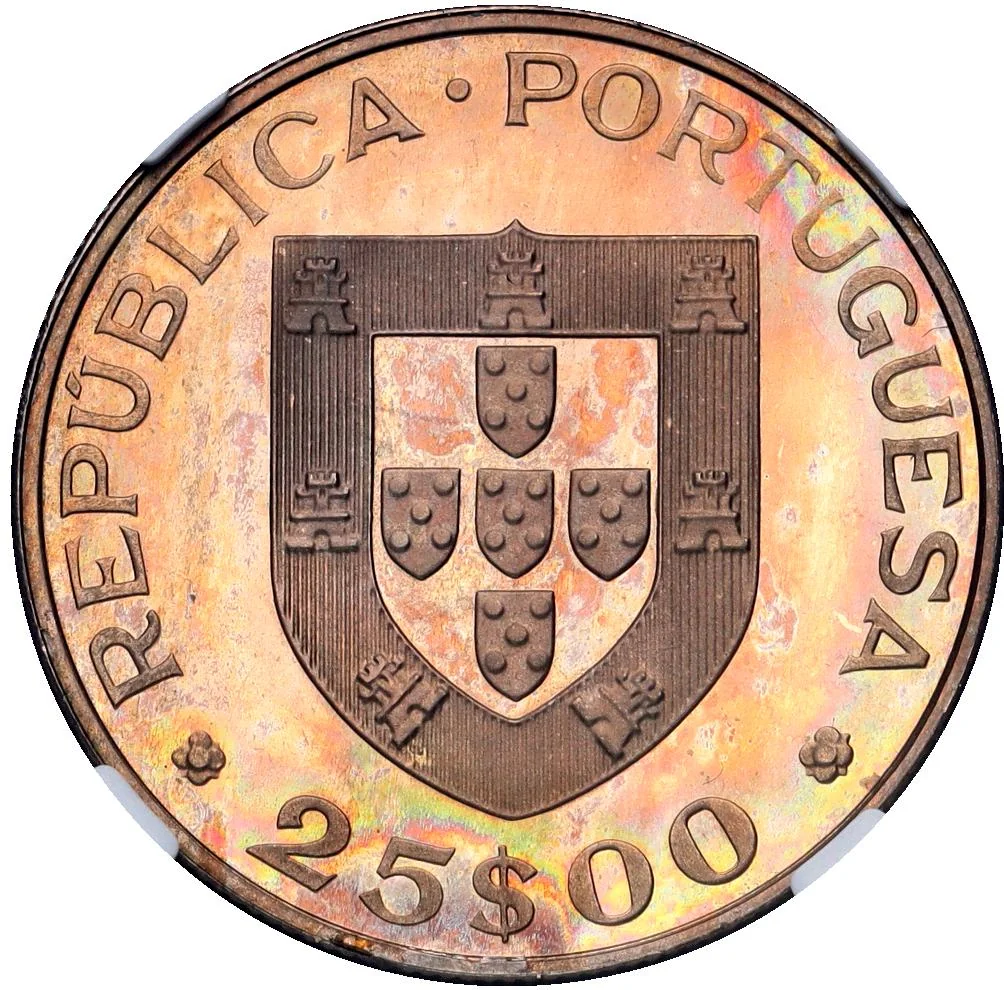
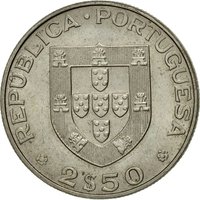
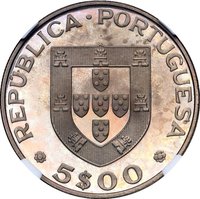
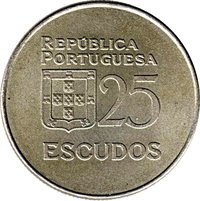
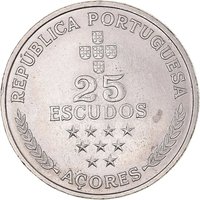
Portuguese coat of arms
Inscription:
REPUBLICA·PORTUGUESA
* 25$00 *
* 25$00 *
Translation:
PORTUGUESE REPUBLIC
* 25$00 *
* 25$00 *
Script: Latin
Language: Portuguese
Engraver: Marcelino Norte de Almeida
Reverse
Description:
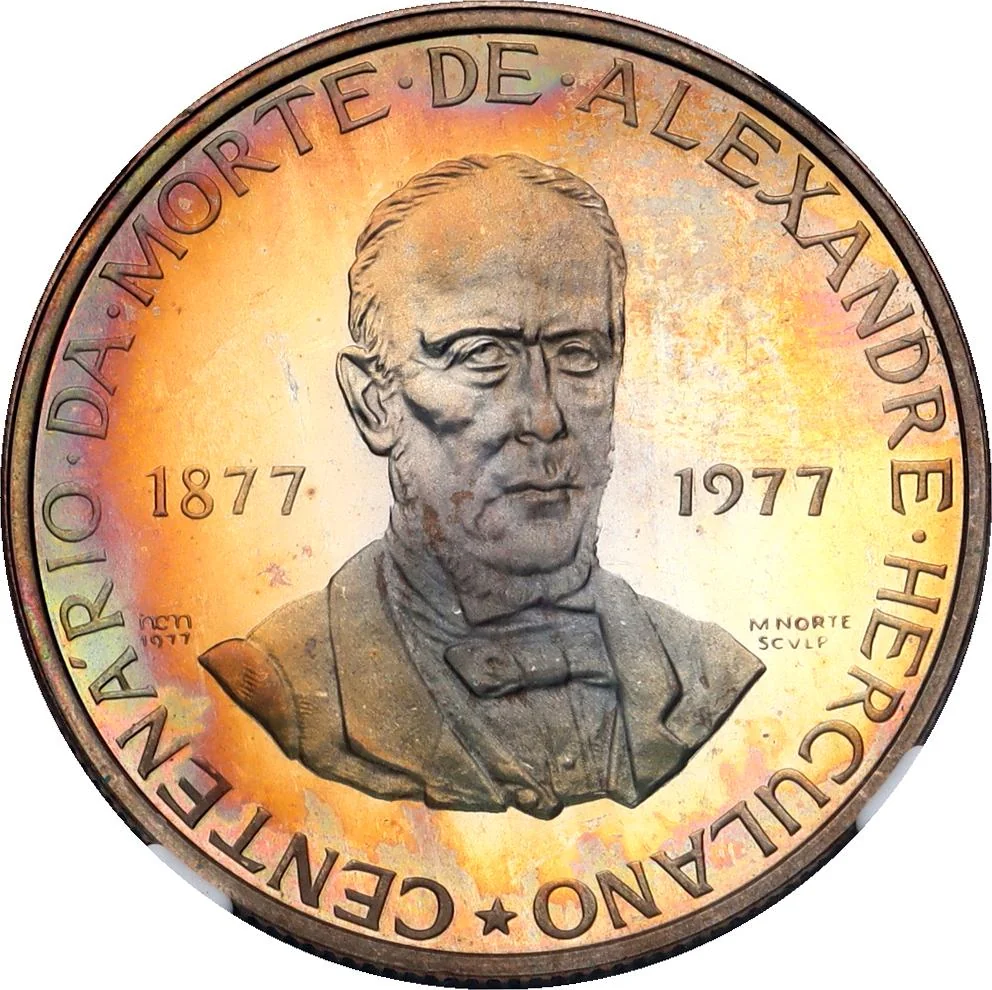
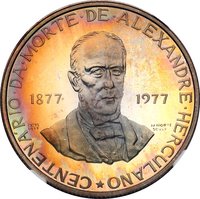
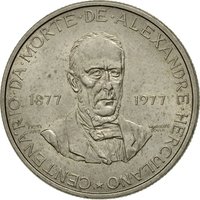
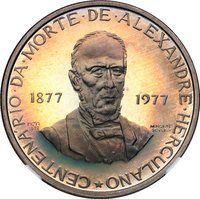
Portrait of Portuguese writer and poet Alexandre Herculano.
Inscription:
CENTENÁRIO·DA·MORTE·DE·ALEXANDRE·HERCULANO *
1877 1977
incm 1977
M.NORTE SC VLP
1877 1977
incm 1977
M.NORTE SC VLP
Translation:
Centenary of the Death of Alexandre Herculano
1877 1977
National Mint of Portugal 1977
M. Norte SC VLP
1877 1977
National Mint of Portugal 1977
M. Norte SC VLP
Script: Latin
Languages: Latin, Portuguese
Engraver: Marcelino Norte de Almeida
Edge
Reeded
Categories
| Symbols> Coat of Arms |
| Art> Literature |
| Event> Death anniversary |
Mints
| Name | Mark |
|---|---|
| Imprensa Nacional - Casa da Moeda | — |
Mintings
| Year | Mint Mark | Mintage | Quality | Collection |
|---|---|---|---|---|
| 1977 | — | 10,000 | Proof | |
| 1977 | — | 5,990,000 |
Historical background
In 1977, Portugal was navigating the turbulent aftermath of the 1974 Carnation Revolution, which had ended decades of dictatorship. The new democratic government inherited an economy in severe distress, characterized by high inflation, large public deficits, and a significant balance of payments crisis. A key aspect of this was the currency situation: the Portuguese escudo was under intense pressure, its value eroding rapidly due to loss of confidence, capital flight, and the costly nationalizations and social spending of the revolutionary period.
The government, led by Prime Minister Mário Soares, turned to the International Monetary Fund (IMF) for assistance. In 1977, Portugal entered into a standby agreement with the IMF, which mandated a strict stabilization program. The conditions included a sharp devaluation of the escudo to boost exports, the implementation of austerity measures to curb inflation and the budget deficit, and tight controls on credit and money supply. This marked a decisive, albeit painful, shift away from the expansive socialist policies of the immediate post-revolution years toward economic orthodoxy.
Consequently, 1977 was a pivotal year of transition and contraction. The escudo devaluation, while aimed at correcting external imbalances, immediately increased the cost of imports and contributed to a decline in living standards. The IMF program successfully stabilized the currency in the short term and restored some international credibility, but it came at a significant social cost, sparking public protests and political tension. This period laid the groundwork for Portugal’s eventual economic restructuring and its path toward European Community integration in the following decade.
The government, led by Prime Minister Mário Soares, turned to the International Monetary Fund (IMF) for assistance. In 1977, Portugal entered into a standby agreement with the IMF, which mandated a strict stabilization program. The conditions included a sharp devaluation of the escudo to boost exports, the implementation of austerity measures to curb inflation and the budget deficit, and tight controls on credit and money supply. This marked a decisive, albeit painful, shift away from the expansive socialist policies of the immediate post-revolution years toward economic orthodoxy.
Consequently, 1977 was a pivotal year of transition and contraction. The escudo devaluation, while aimed at correcting external imbalances, immediately increased the cost of imports and contributed to a decline in living standards. The IMF program successfully stabilized the currency in the short term and restored some international credibility, but it came at a significant social cost, sparking public protests and political tension. This period laid the groundwork for Portugal’s eventual economic restructuring and its path toward European Community integration in the following decade.
Series: System 1969-1980
🌱 Very Common