

100 Escudos – Portugal
Portugal
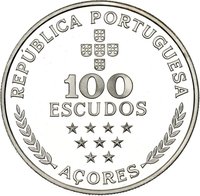
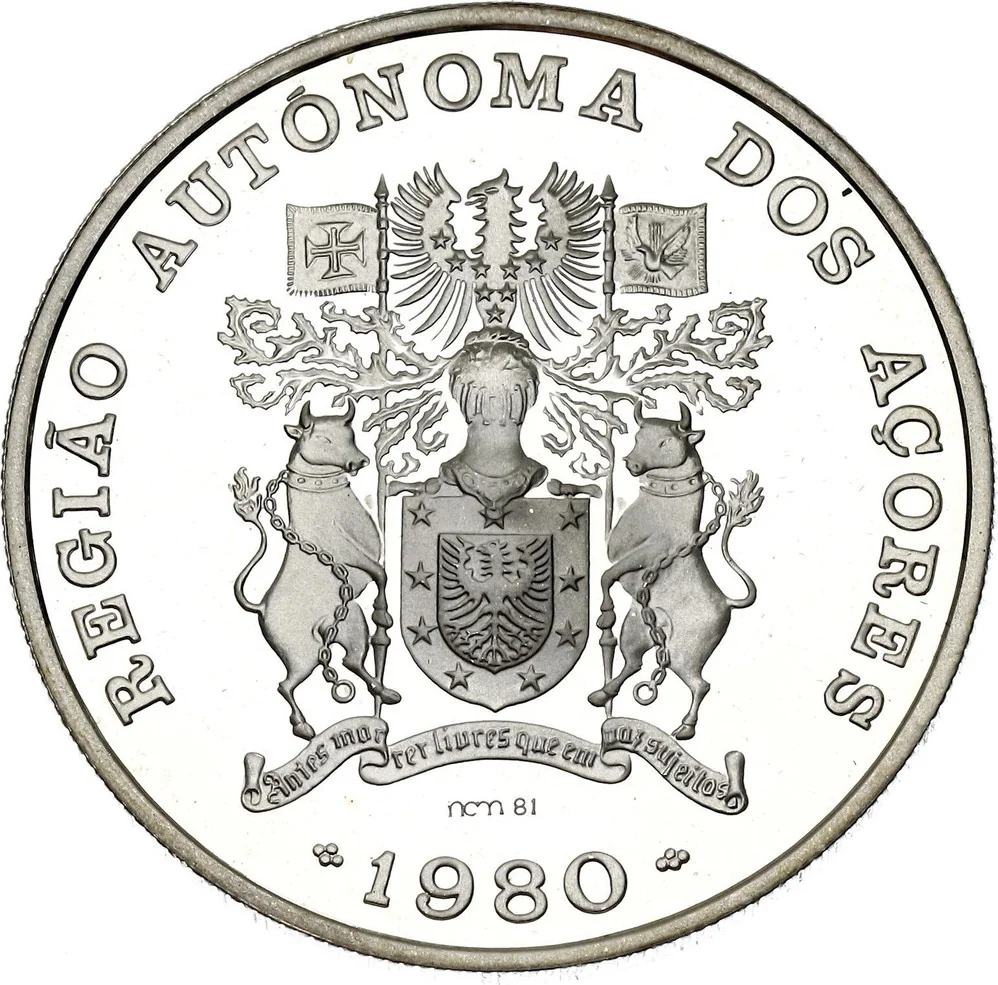
Obverse
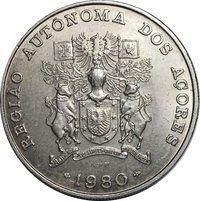
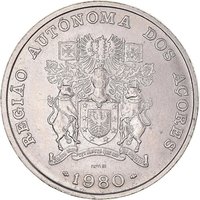
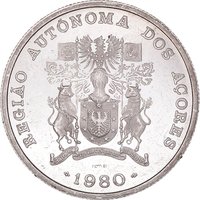
Description:
Face value, Portugal's coat of arms.
Inscription:
REGIAO AUTONOMA DES ACORES 1980
Translation:
Autonomous Region of the Azores 1980
Script: Latin
Language: Portuguese
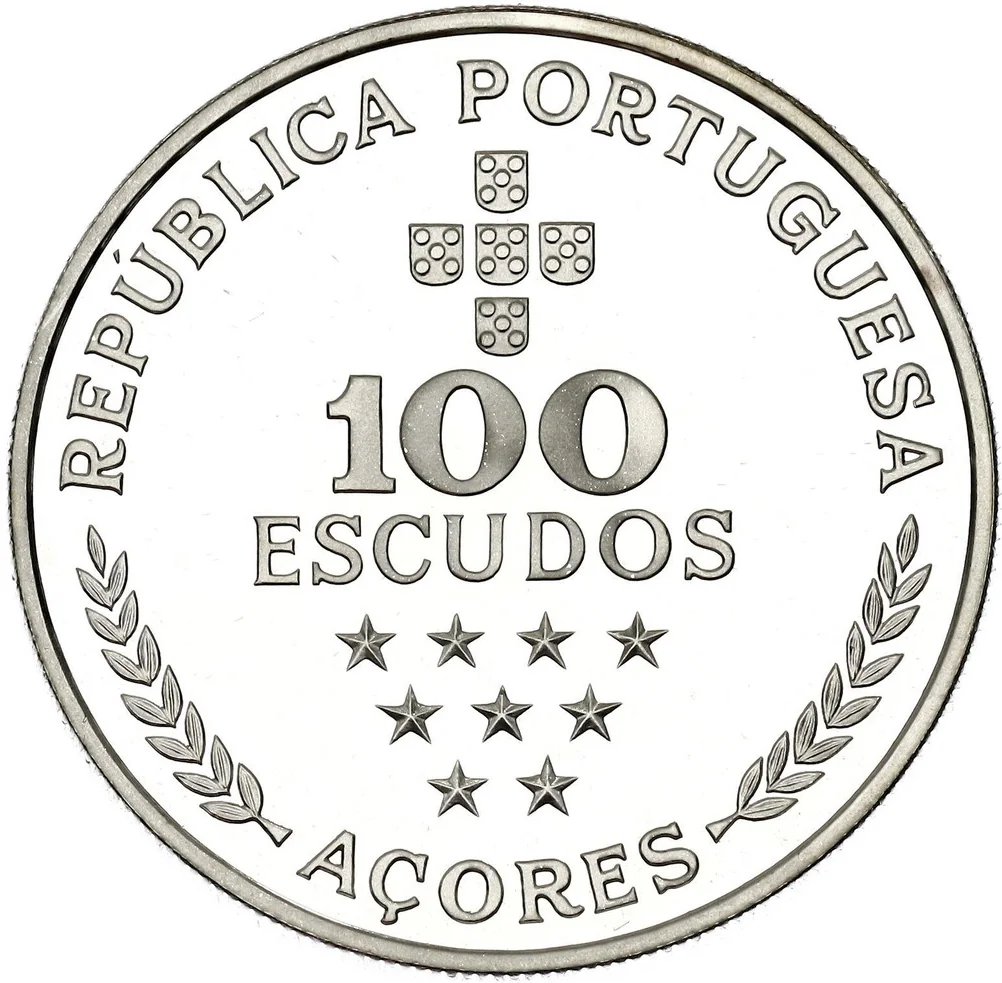
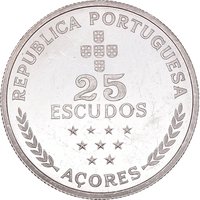
Reverse
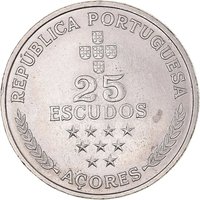
Description:
Azores weaponry.
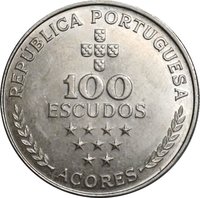
Inscription:
REPÚBLICA PORTUGUESA
100 ESCUDOS
AÇORES
100 ESCUDOS
AÇORES
Translation:
PORTUGUESE REPUBLIC
100 ESCUDOS
AZORES
100 ESCUDOS
AZORES
Script: Latin
Language: Portuguese
Edge
Locks
Mints
| Name | Mark |
|---|---|
| Imprensa Nacional - Casa da Moeda | incm |
Mintings
| Year | Mint Mark | Mintage | Quality | Collection |
|---|---|---|---|---|
| 1980 | — | 12,000 | Proof |
Historical background
In 1980, Portugal's currency situation was defined by the escudo navigating a complex period of economic transition and political change. Following the 1974 Carnation Revolution, the country grappled with the economic fallout of decolonization, nationalizations, and significant social upheaval, which led to high inflation, large public deficits, and a growing external debt. The escudo, while not freely convertible, was managed within a crawling peg system, where its value was periodically devalued against a basket of currencies to maintain export competitiveness, albeit at the cost of imported inflation.
This monetary policy occurred under the auspices of the International Monetary Fund (IMF), as Portugal had entered its first IMF stabilization program in 1977 and a second in 1978. These programs imposed strict austerity measures, including credit ceilings and fiscal discipline, in exchange for financial assistance to address balance of payments crises. Consequently, the Central Bank of Portugal's control over the escudo was heavily influenced by the need to meet IMF targets, limiting domestic policy flexibility and keeping interest rates high to attract foreign capital and support the currency.
Looking forward, the currency landscape was also being shaped by Portugal's geopolitical aspirations. Having applied for membership in the European Economic Community (EEC) in 1977, policymakers were already looking toward eventual European Monetary System (EMS) participation and the long-term goal of exchange rate stability within Europe. Thus, the escudo's management in 1980 was a balancing act between immediate crisis containment under IMF guidance and the nascent preparations for deeper European integration, which would ultimately redefine Portugal's monetary future.
This monetary policy occurred under the auspices of the International Monetary Fund (IMF), as Portugal had entered its first IMF stabilization program in 1977 and a second in 1978. These programs imposed strict austerity measures, including credit ceilings and fiscal discipline, in exchange for financial assistance to address balance of payments crises. Consequently, the Central Bank of Portugal's control over the escudo was heavily influenced by the need to meet IMF targets, limiting domestic policy flexibility and keeping interest rates high to attract foreign capital and support the currency.
Looking forward, the currency landscape was also being shaped by Portugal's geopolitical aspirations. Having applied for membership in the European Economic Community (EEC) in 1977, policymakers were already looking toward eventual European Monetary System (EMS) participation and the long-term goal of exchange rate stability within Europe. Thus, the escudo's management in 1980 was a balancing act between immediate crisis containment under IMF guidance and the nascent preparations for deeper European integration, which would ultimately redefine Portugal's monetary future.
Series: System 1969-1980
⭐ Rare