

200 Euro – Greece
Non-circulating coins
Commemoration: Greek Culture - Philosophers
Greece
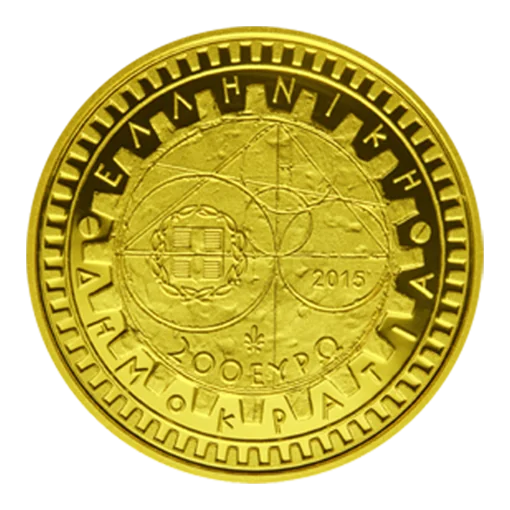
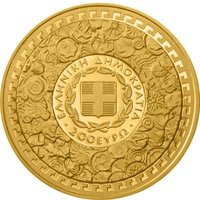
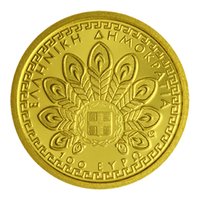
Obverse
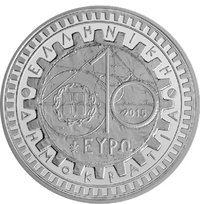
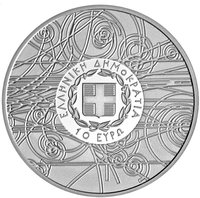
Description:
Geometric designs
Inscription:
ΕΛΛΗΝΙΚΗ ΔΗΜΟΚΡΑΤΙΑ
200 ΕΥΡΩ
2015
200 ΕΥΡΩ
2015
Translation:
HELLENIC REPUBLIC
200 EURO
2015
200 EURO
2015
Script: Greek
Language: Greek
Engraver: Geórgios Stamatópoulos
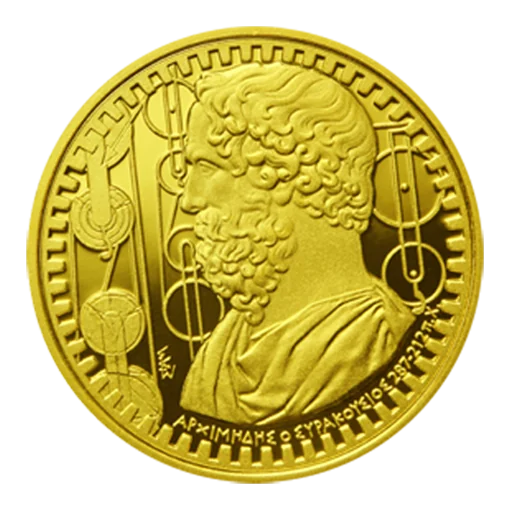
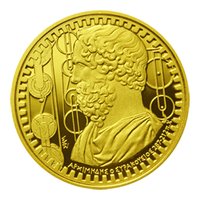
Reverse
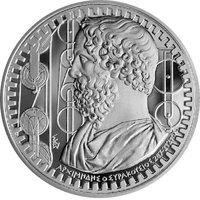
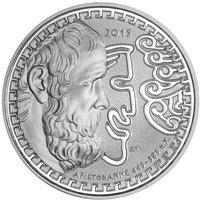
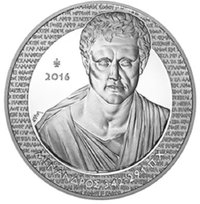
Description:
Archimedes' portrait
Inscription:
ΑΡΧΙΜΗΔΗΣ Ο ΣΥΡΑΚΟΥΣΙΟΣ 287-212 π.Χ.
Translation:
Archimedes the Syracusan 287-212 BC
Script: Greek
Language: Greek
Engraver: Geórgios Stamatópoulos
Edge
Plain
Categories
| Symbols> Coat of Arms |
| Person> Scientist |
Mints
| Name | Mark |
|---|---|
| National Mint of the Bank of Greece | — |
Mintings
| Year | Mint Mark | Mintage | Quality | Collection |
|---|---|---|---|---|
| 2015 | — | 750 | Proof |
Historical background
The currency situation in Greece in 2015 was a period of extreme financial and political crisis, centered on the acute fear of a forced exit from the Eurozone, commonly termed "Grexit." Years of austerity measures imposed after the 2010 and 2012 international bailouts had failed to revive the economy, leading to widespread social hardship. In January 2015, the anti-austerity Syriza party was elected, and by the summer, negotiations between the new Greek government and its international creditors (the European Commission, European Central Bank, and International Monetary Fund) had completely broken down over the terms of a new bailout. This impasse pushed Greece to the brink of sovereign default and a potential collapse of its banking system.
The crisis reached its peak in late June and early July 2015. To prevent a bank run, the government was forced to impose strict capital controls, closing banks for three weeks and limiting cash withdrawals to just €60 per day. This created a surreal environment of long queues at ATMs and a effective, if not legal, division between electronic euros trapped in the Greek banking system and physical cash. The liquidity crunch pushed the country into a deep recession and raised the very real prospect that the government might have to issue a parallel currency or IOUs (scrip) to pay domestic bills, a first step toward a de facto return to a national currency like the drachma.
The immediate currency crisis was narrowly averted on July 13, 2015, after a marathon Eurozone summit. Faced with the imminent collapse of the financial system, the Greek government, despite a resounding "No" vote in a referendum on creditor demands just days prior, accepted a harsh new bailout package with even more stringent austerity conditions. This third bailout released the funds needed to recapitalize the banks and allowed for the gradual lifting of capital controls. While Grexit was avoided and the euro remained the official currency, the episode left deep scars on the Greek economy and society, and fundamentally tested the political cohesion of the Eurozone.
The crisis reached its peak in late June and early July 2015. To prevent a bank run, the government was forced to impose strict capital controls, closing banks for three weeks and limiting cash withdrawals to just €60 per day. This created a surreal environment of long queues at ATMs and a effective, if not legal, division between electronic euros trapped in the Greek banking system and physical cash. The liquidity crunch pushed the country into a deep recession and raised the very real prospect that the government might have to issue a parallel currency or IOUs (scrip) to pay domestic bills, a first step toward a de facto return to a national currency like the drachma.
The immediate currency crisis was narrowly averted on July 13, 2015, after a marathon Eurozone summit. Faced with the imminent collapse of the financial system, the Greek government, despite a resounding "No" vote in a referendum on creditor demands just days prior, accepted a harsh new bailout package with even more stringent austerity conditions. This third bailout released the funds needed to recapitalize the banks and allowed for the gradual lifting of capital controls. While Grexit was avoided and the euro remained the official currency, the episode left deep scars on the Greek economy and society, and fundamentally tested the political cohesion of the Eurozone.
💎 Extremely Rare