

10 centesimi – Italy
Add to wishlist
Italy

Obverse
Description:
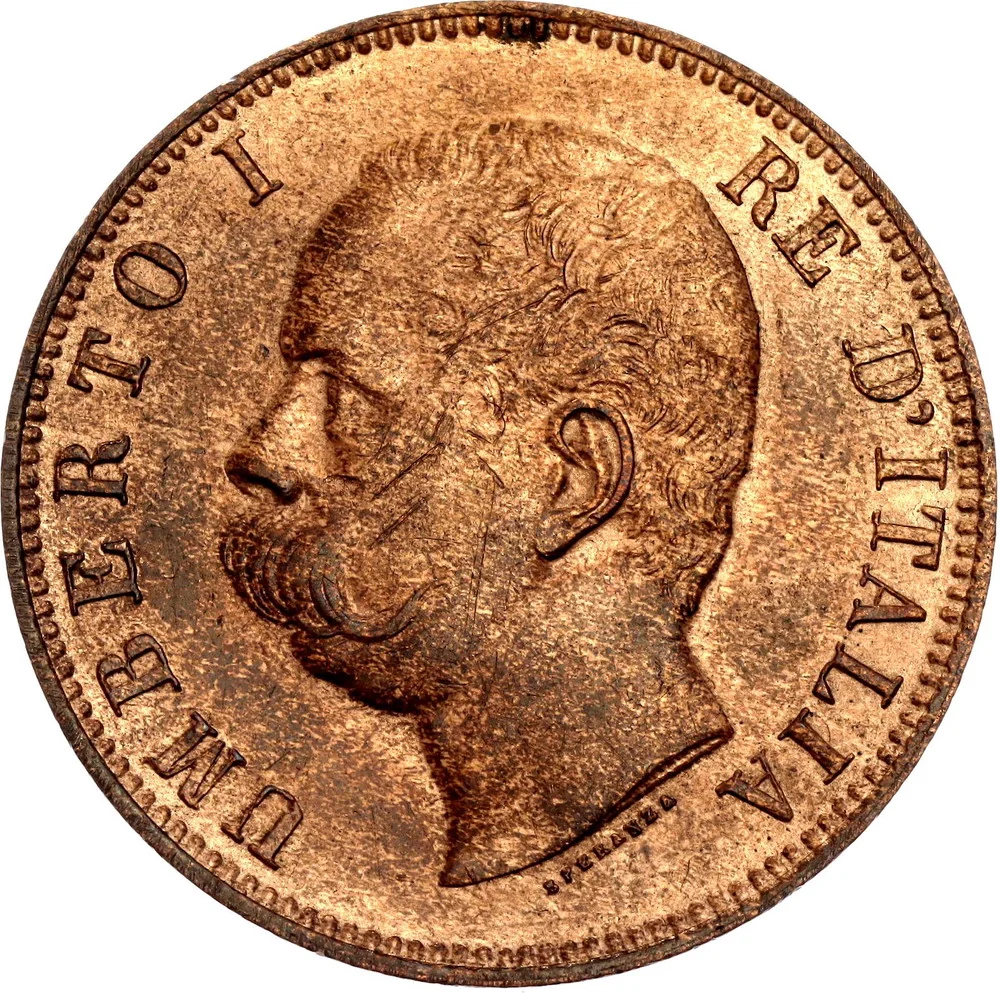
King Umberto I facing left, engraver's name below neck.
Inscription:
UMBERTO I RE D'ITALIA
SPERANZA
SPERANZA
Translation:
Umberto I King of Italy
Hope
Hope
Script: Latin
Language: Italian
Engraver: Filippo Speranza
Reverse
Description:
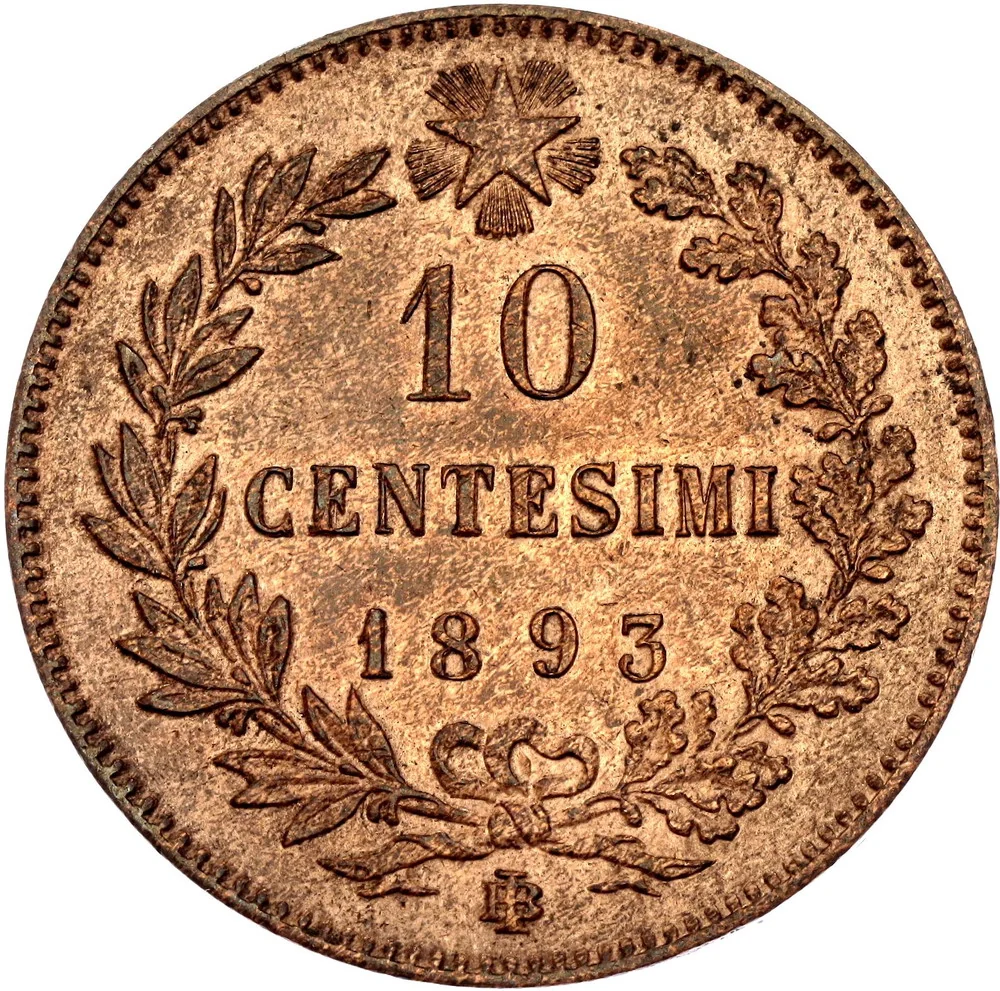
Value and date within laurel and oak branches, above the Star of Italy and mintmark.
Inscription:
10 CENTESIMI
1893
BI
1893
BI
Script: Latin
Engraver: Filippo Speranza
Edge
Plain
Mints
| Name | Mark |
|---|---|
| Heaton and Sons / The Mint Birmingham | BI |
| Rome | R |
Mintings
Historical background
In 1893, Italy faced a severe currency crisis rooted in the excessive issuance of paper money by the Banca Romana, one of six banks authorized to issue legal tender. This crisis was the culmination of decades of fiscal mismanagement following unification, as successive governments financed large budget deficits and ambitious public works not through taxes but by borrowing heavily from the note-issuing banks. The Banca Romana, in particular, had printed far more currency than its gold reserves could support, a scandal exposed in 1892–93, revealing widespread corruption that implicated prominent politicians and bankers.
The immediate consequence was a collapse in public confidence, leading to a run on banks and the rapid depreciation of Italy's paper lira against gold-backed currencies. The country risked a complete suspension of convertibility, which would have severed its links to the international gold standard and isolated its economy. This financial panic occurred against a backdrop of social unrest and a deep economic recession, threatening both the stability of the state and the savings of the burgeoning middle class.
In response, Prime Minister Giovanni Giolitti pushed through the landmark Banking Law of 1893. This legislation initiated a crucial restructuring by liquidating the Banca Romana and consolidating the remaining five note-issuing banks into a new, more conservative Bank of Italy (Banca d'Italia). While not yet a full central bank with a monopoly on issuance, this reform marked the beginning of modern monetary stability in Italy, curbing irresponsible lending, restoring confidence, and laying the institutional groundwork for the eventual return to gold convertibility at the century's end.
The immediate consequence was a collapse in public confidence, leading to a run on banks and the rapid depreciation of Italy's paper lira against gold-backed currencies. The country risked a complete suspension of convertibility, which would have severed its links to the international gold standard and isolated its economy. This financial panic occurred against a backdrop of social unrest and a deep economic recession, threatening both the stability of the state and the savings of the burgeoning middle class.
In response, Prime Minister Giovanni Giolitti pushed through the landmark Banking Law of 1893. This legislation initiated a crucial restructuring by liquidating the Banca Romana and consolidating the remaining five note-issuing banks into a new, more conservative Bank of Italy (Banca d'Italia). While not yet a full central bank with a monopoly on issuance, this reform marked the beginning of modern monetary stability in Italy, curbing irresponsible lending, restoring confidence, and laying the institutional groundwork for the eventual return to gold convertibility at the century's end.

🌱 Very Common