

50 centesimi – Italy
Add to wishlist
Italy
Context
Material
References
KM: #
Numista: #21246
Value
Exchange value: 0.50 ITL
Bullion value: $5.35
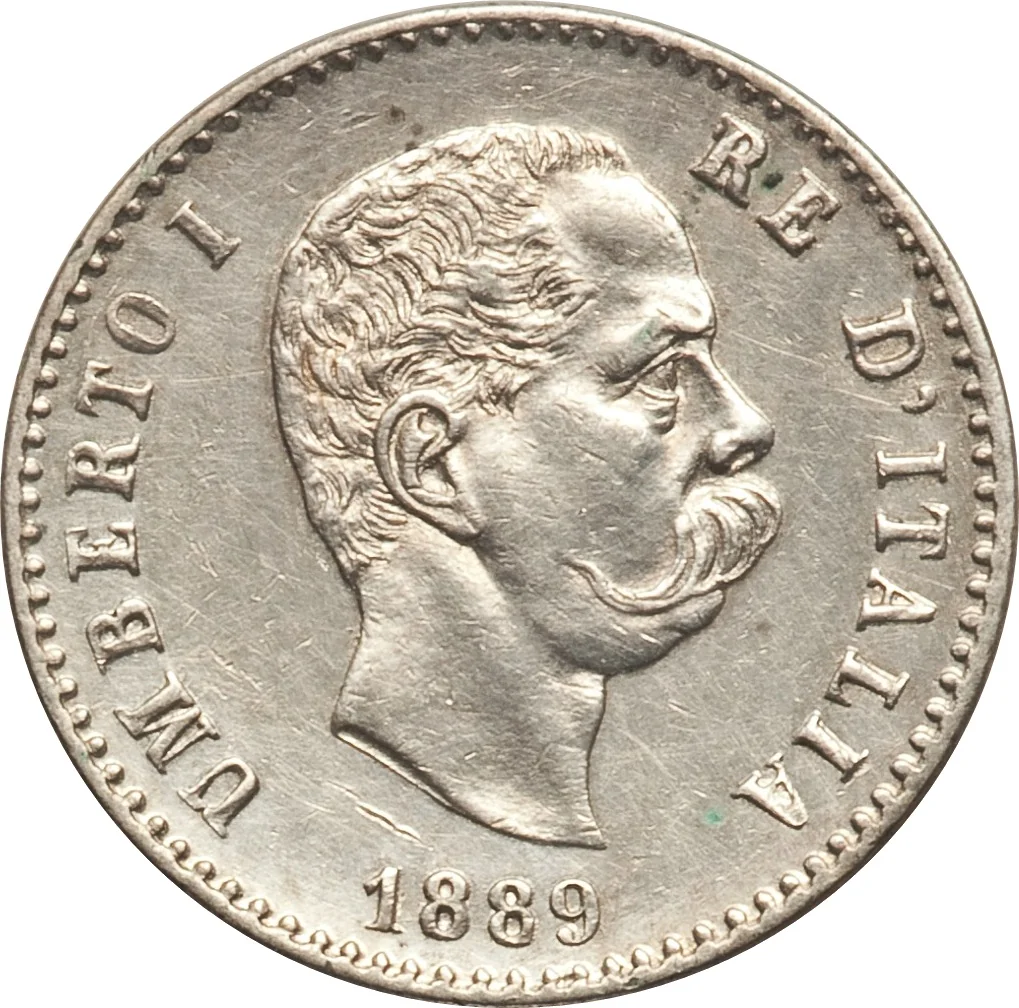
Obverse
Description:
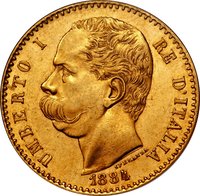
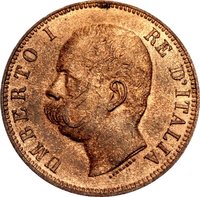
King Umberto I facing right, date below.
Inscription:
UMBERTO I RE D'ITALIA
1889
1889
Script: Latin
Engraver: Filippo Speranza
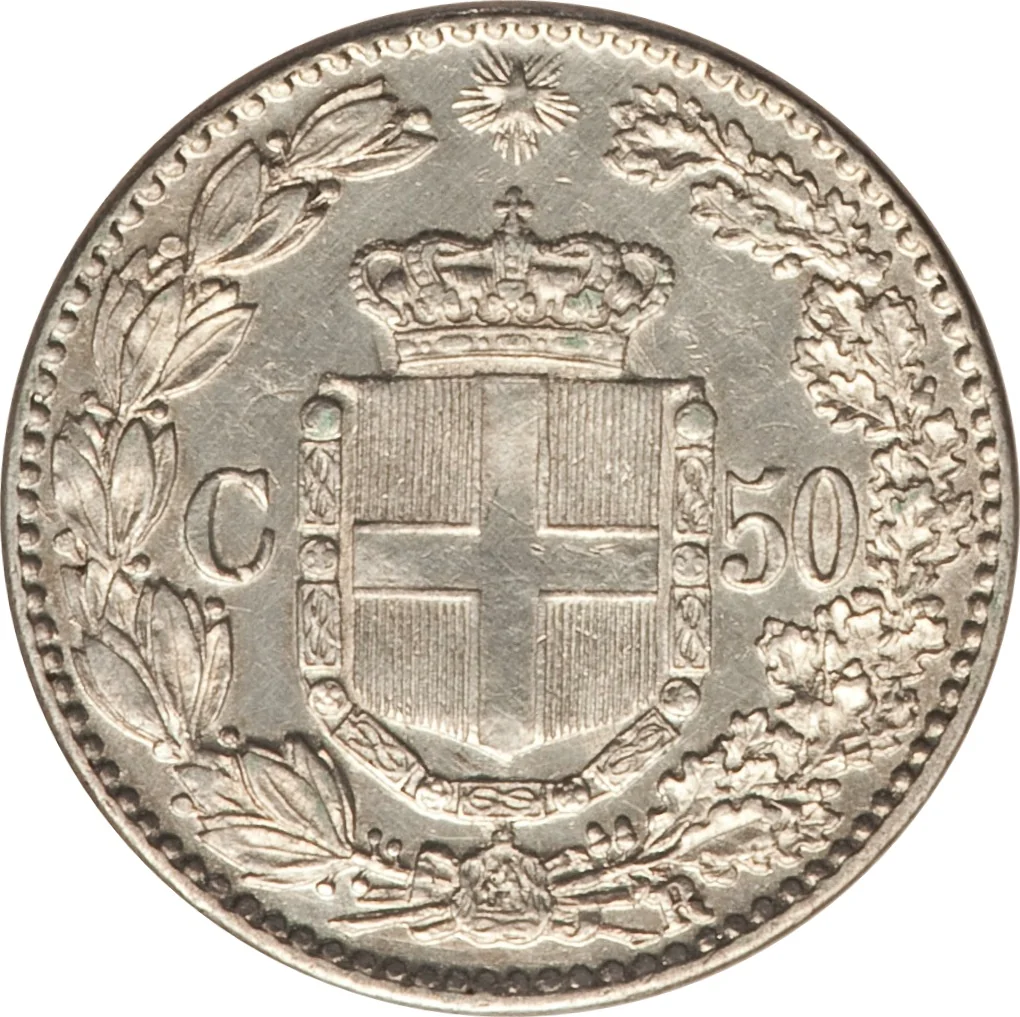
Reverse
Description:
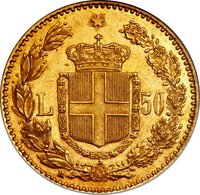
Crowned Savoy arms with the Annunziata collar, flanked by laurel and oak branches. The Star of Italy is above the shield; the mintmark is below the wreath on the right.
Inscription:
C 50
R
R
Script: Latin
Engraver: Filippo Speranza
Edge
Plain
Mintings
| Year | Mint Mark | Mintage | Quality | Collection |
|---|---|---|---|---|
| 1889 | R | 635,231 | ||
| 1892 | R | 148,333 |
Historical background
In 1889, Italy's currency situation was defined by its membership in the Latin Monetary Union (LMU), a continental system it had co-founded in 1865. The country operated on a bimetallic standard (gold and silver), with the lira as its unit of currency. However, Italy's fiscal position was precarious, having run persistent budget deficits since unification, largely financed by excessive paper money issuance. This led to a critical divergence: while the law defined the lira's value in precious metal, the actual paper currency in circulation, the carta moneta, was inconvertible and traded at a significant discount against gold and even against the coins of its LMU partners like France.
This state of "forced circulation" created a dual system. Gold coins, adhering to the LMU standard, were hoarded or exported, while depreciated paper notes and token silver coins fueled domestic transactions. The government, under Finance Minister Giovanni Giolitti, was engaged in a protracted struggle to restore convertibility and stabilize the lira's value, a policy known as il risanamento (the restoration). This required severe austerity, tax increases, and the accumulation of gold reserves, which were socially and politically painful, slowing economic growth and sparking public discontent.
Consequently, 1889 found Italy in a transitional and unstable monetary phase. It was legally bound to an international metallic standard it could not practically honor, creating a gap between its nominal and real monetary systems. The year fell within a decades-long effort to achieve fiscal discipline and monetary orthodoxy, a goal that would remain elusive for years to come, with full convertibility only being achieved—and briefly—in the late 1890s.
This state of "forced circulation" created a dual system. Gold coins, adhering to the LMU standard, were hoarded or exported, while depreciated paper notes and token silver coins fueled domestic transactions. The government, under Finance Minister Giovanni Giolitti, was engaged in a protracted struggle to restore convertibility and stabilize the lira's value, a policy known as il risanamento (the restoration). This required severe austerity, tax increases, and the accumulation of gold reserves, which were socially and politically painful, slowing economic growth and sparking public discontent.
Consequently, 1889 found Italy in a transitional and unstable monetary phase. It was legally bound to an international metallic standard it could not practically honor, creating a gap between its nominal and real monetary systems. The year fell within a decades-long effort to achieve fiscal discipline and monetary orthodoxy, a goal that would remain elusive for years to come, with full convertibility only being achieved—and briefly—in the late 1890s.
⭐ Rare