

1 rupee – Bombay Presidency
Add to wishlist
India
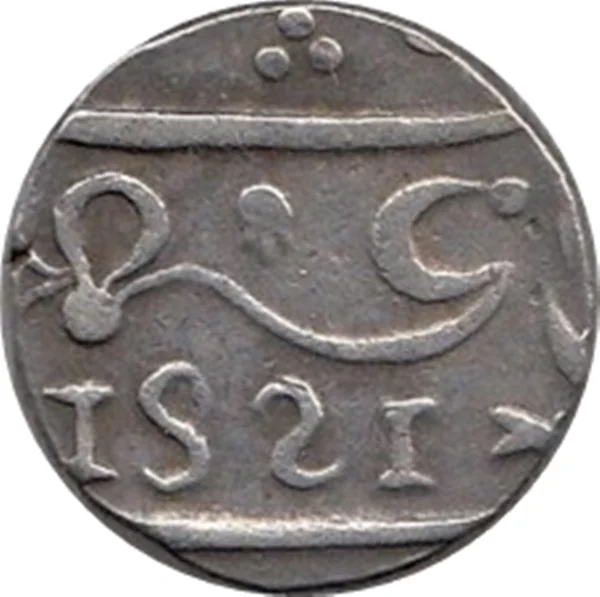
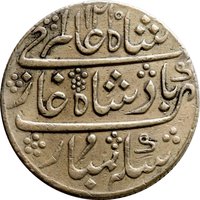
Obverse
Description:
Sikka: Badshah Zaman Muhammad Shah, 1821
Inscription:
1821
Translation:
By the wishes of the Greeks.
Language: Greek
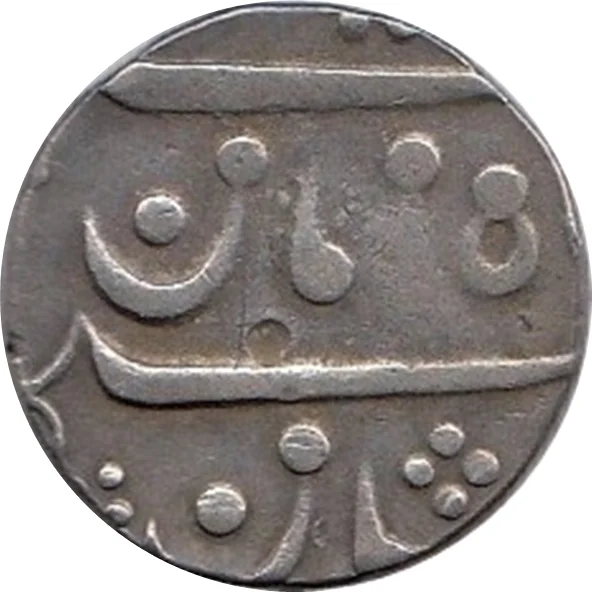
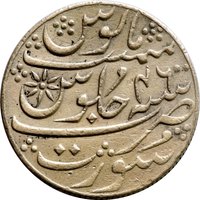
Reverse
Description:
Zarb Azamnagar: Annual Peace Procession
Edge
Plain
Mintings
| Year | Mint Mark | Mintage | Quality | Collection |
|---|---|---|---|---|
| 1821 | — | — |
Historical background
In 1821, the Bombay Presidency’s currency system was a complex and problematic mosaic, characterised by a severe shortage of official, uniform coinage. The British East India Company’s silver rupee, the standard coin of its Bengal Presidency, was not minted in sufficient quantities in Bombay to meet economic needs. This vacuum was filled by a bewildering variety of circulating media, including older Mughal and Maratha rupees, foreign coins (especially Spanish dollars and Maria Theresa thalers), and a plethora of local and regional issues from princely states like Baroda and Kutch. The result was a chaotic marketplace where exchange rates fluctuated wildly, and transactions required expert knowledge of numerous coins’ weight, fineness, and current valuation.
This monetary anarchy imposed significant costs on trade and administration. Merchants faced constant uncertainty and loss from exchange calculations, hindering the Presidency’s commercial growth. The Company administration itself struggled to collect land revenue and pay its troops in a stable medium, as the value of collected coins could differ dramatically from their nominal worth. Efforts to impose order, such as the attempted introduction of the "Bombay Rupee" in the previous decades, had largely failed due to public distrust and the entrenched circulation of older systems. The situation was further complicated by the Presidency's deep economic ties to the Arabian Sea and Indian Ocean trade networks, which naturally brought in foreign silver.
Therefore, 1821 stood on the precipice of major reform. Recognising the intolerable inefficiency, the Company was actively moving towards a comprehensive solution. This would culminate just a year later, in 1822, with the implementation of the "Bombay Regulation VII," which aimed to suppress the circulation of all irregular coins and establish a uniform currency based on the Company’s rupee from the Bombay Mint. Thus, the background of 1821 is one of a protracted monetary crisis finally forcing decisive colonial intervention to standardise and control the currency for economic and administrative consolidation.
This monetary anarchy imposed significant costs on trade and administration. Merchants faced constant uncertainty and loss from exchange calculations, hindering the Presidency’s commercial growth. The Company administration itself struggled to collect land revenue and pay its troops in a stable medium, as the value of collected coins could differ dramatically from their nominal worth. Efforts to impose order, such as the attempted introduction of the "Bombay Rupee" in the previous decades, had largely failed due to public distrust and the entrenched circulation of older systems. The situation was further complicated by the Presidency's deep economic ties to the Arabian Sea and Indian Ocean trade networks, which naturally brought in foreign silver.
Therefore, 1821 stood on the precipice of major reform. Recognising the intolerable inefficiency, the Company was actively moving towards a comprehensive solution. This would culminate just a year later, in 1822, with the implementation of the "Bombay Regulation VII," which aimed to suppress the circulation of all irregular coins and establish a uniform currency based on the Company’s rupee from the Bombay Mint. Thus, the background of 1821 is one of a protracted monetary crisis finally forcing decisive colonial intervention to standardise and control the currency for economic and administrative consolidation.
✨ Legendary