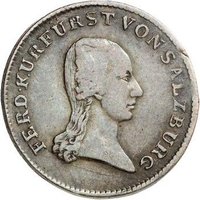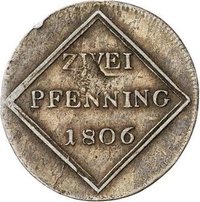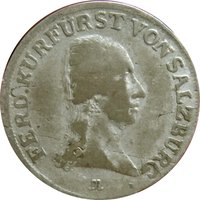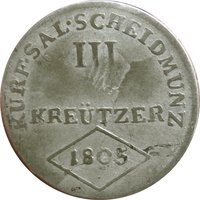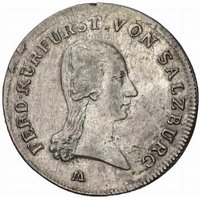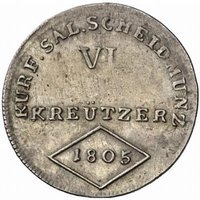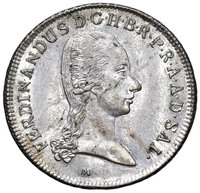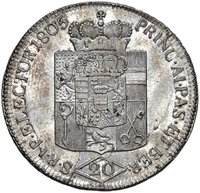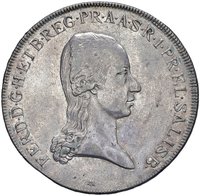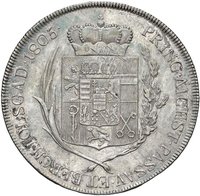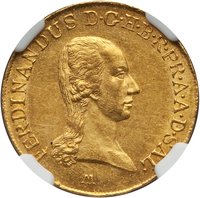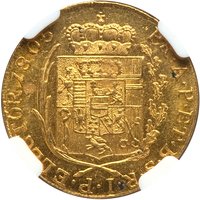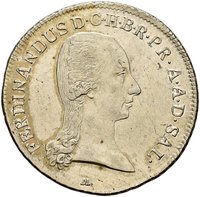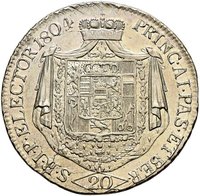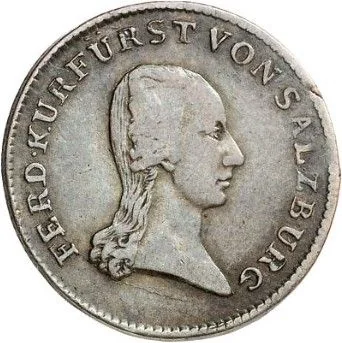
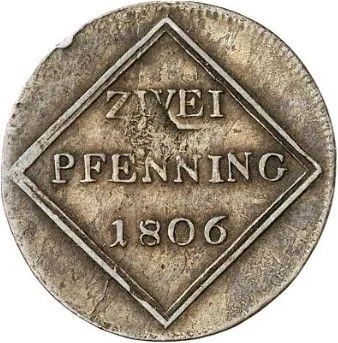
In 1805, the Bishopric of Salzburg found itself in a precarious monetary situation, caught between collapsing old structures and the imposition of a new political order. For centuries, Salzburg had minted its own distinctive coinage, the Salzburg Gulden, divided into 60 Kreuzer. However, the financial demands of the Napoleonic Wars had strained its resources. Furthermore, the bishopric was deeply embedded in the complex economic sphere of the Holy Roman Empire, where a multitude of regional currencies circulated, leading to chronic issues of exchange rate instability and debasement.
The currency situation was abruptly resolved by political conquest. In the aftermath of the War of the Third Coalition and the decisive French victory at Austerlitz, the Peace of Pressburg (December 26, 1805) dictated the total dissolution of the centuries-old Prince-Archbishopric. Salzburg was annexed by the Austrian Empire, and by 1806, its sovereign monetary rights were extinguished. The legal tender became the Austrian Conventionsthaler and Gulden, systematically replacing local coinage.
Therefore, the year 1805 represents a final, transitional moment. While Salzburg's own coins were still in circulation, their future was already sealed by the geopolitical upheaval. The currency situation shifted from one of semi-autonomous struggle within the Empire to one of forced integration into the Austrian monetary system, marking the definitive end of Salzburg's numismatic history as an independent ecclesiastical state.