

2 Pesetas – Spain
Spain
Context
Years: 1879–1884
Issuer: Spain 
Ruler: Alfonso XII
Currency:
(1868—2001)
Demonetization: 20 February 1939
Total mintage: 6,157,137
Material
References
KM: #Click to copy to clipboard678
Numista: #7151
Value
Exchange value: 2 ESP
Bullion value: $24.15
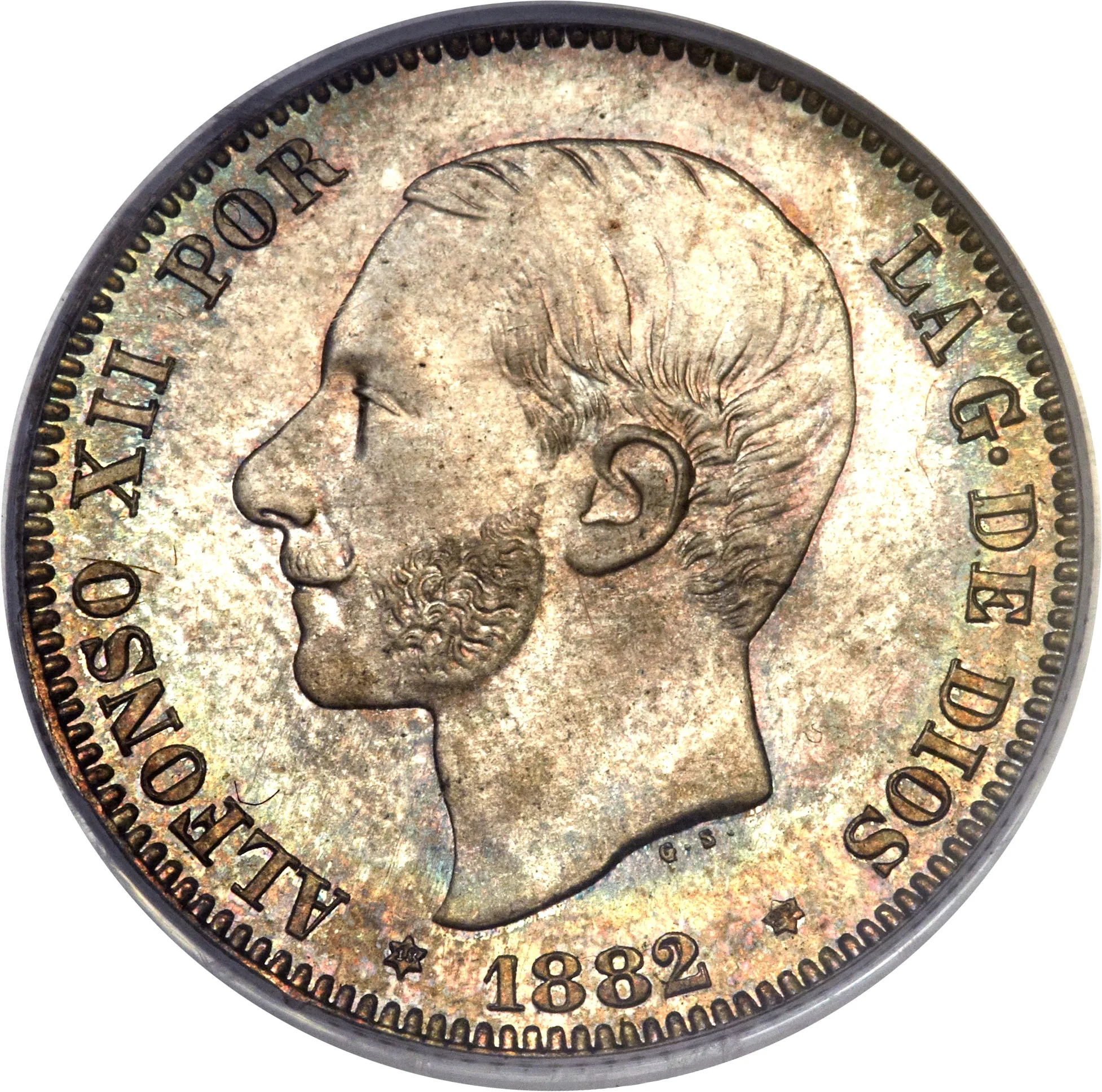
Obverse
Description:
King Alfonso XII facing left.
Inscription:
ALFONSO XII POR LA G· DE DIOS
G· S·
🟌 1882 🟌
G· S·
🟌 1882 🟌
Translation:
By the grace of God, Alfonso XII
King of Spain, 1882
King of Spain, 1882
Script: Latin
Language: Spanish
Engraver: Gregorio Sellán y González
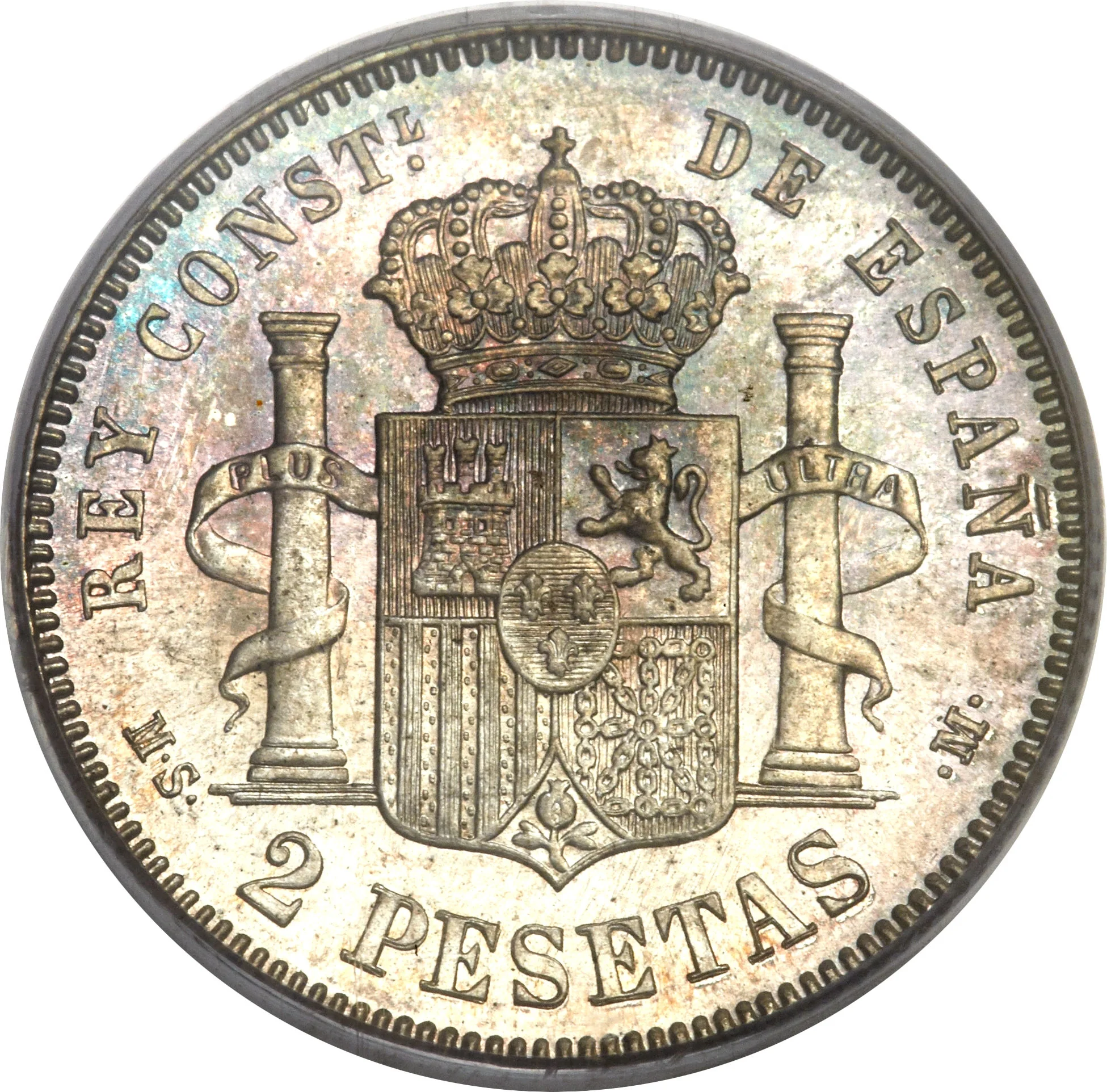
Reverse
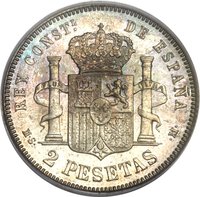
Description:
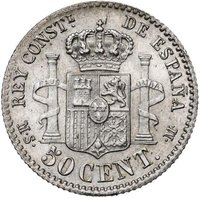
Spanish coat of arms with the Pillars of Hercules.
Inscription:
REY CONSTL. DE ESPAÑA
PLUS ULTRA
M·S· 2 PESETAS ·M·
PLUS ULTRA
M·S· 2 PESETAS ·M·
Translation:
KING CONSTITUTIONAL OF SPAIN
MORE BEYOND
M·S· 2 PESETAS ·M·
MORE BEYOND
M·S· 2 PESETAS ·M·
Script: Latin
Engraver: Gregorio Sellán y González
Edge
Reeded
Categories
| Person> Monarch |
| Symbols> Coat of Arms |
Mints
| Name | Mark |
|---|---|
| Royal Mint of Madrid | (🟌) |
Mintings
| Year | Mint Mark | Mintage | Quality | Collection |
|---|---|---|---|---|
| 1879 | 🟌 | — | ||
| 1881 | 🟌 | — | ||
| 1882 | 🟌 | — | ||
| 1883 | 🟌 | 3,318,205 | ||
| 1884 | 🟌 | 2,838,932 |
Historical background
In 1879, Spain was in the midst of a prolonged and complex monetary transition, caught between its historical bimetallic system and the emerging global shift toward the gold standard. The nation's official currency was the silver peseta, established in 1868 as part of the Latin Monetary Union-inspired reforms following the Glorious Revolution. However, the international phenomenon known as the "crime of 1873"—where major European nations like Germany demonetized silver in favor of gold—caused the global price of silver to plummet. This devalued Spain's silver-based peseta against gold-backed currencies like the British pound and French franc, leading to exchange rate instability and a worrying outflow of gold from the country.
Domestically, this period was characterized by a chaotic circulation of diverse coinage. While the silver peseta was the unit of account, older coins like the duro (the five-peseta silver piece) and even pre-1868 regional and monarchical coins remained in widespread use, creating confusion. More critically, the state, burdened by debt from the Third Carlist War (ended 1876) and colonial conflicts, increasingly relied on issuing inconvertible paper money. Banknotes, issued by the Bank of Spain (which held a monopoly since 1874), were not redeemable for precious metal, leading to a disparity between their face value and their real, depreciated market value.
Consequently, Spain operated under a de facto fiduciary system by 1879, with an inconvertible paper currency loosely based on a silver standard that was collapsing internationally. The government faced intense debate between platinistas (advocates for a switch to a gold standard) and argentistas (defenders of silver), but political instability prevented decisive action. This monetary ambiguity eroded international financial confidence, hampered trade, and contributed to domestic inflation, setting the stage for the severe currency crises and debates that would dominate Spanish economic policy in the 1880s and 1890s.
Domestically, this period was characterized by a chaotic circulation of diverse coinage. While the silver peseta was the unit of account, older coins like the duro (the five-peseta silver piece) and even pre-1868 regional and monarchical coins remained in widespread use, creating confusion. More critically, the state, burdened by debt from the Third Carlist War (ended 1876) and colonial conflicts, increasingly relied on issuing inconvertible paper money. Banknotes, issued by the Bank of Spain (which held a monopoly since 1874), were not redeemable for precious metal, leading to a disparity between their face value and their real, depreciated market value.
Consequently, Spain operated under a de facto fiduciary system by 1879, with an inconvertible paper currency loosely based on a silver standard that was collapsing internationally. The government faced intense debate between platinistas (advocates for a switch to a gold standard) and argentistas (defenders of silver), but political instability prevented decisive action. This monetary ambiguity eroded international financial confidence, hampered trade, and contributed to domestic inflation, setting the stage for the severe currency crises and debates that would dominate Spanish economic policy in the 1880s and 1890s.
🌱 Common