

1 Franc – Belgium
Belgium
Context
Years: 1886–1887
Issuer: Belgium 
Ruler: Leopold II
Currency:
(1832—2001)
Demonetization: 30 July 1932
Total mintage: 1,026,000
Material
References
KM: #Click to copy to clipboard29
Numista: #7140
Value
Exchange value: 1 BEF
Bullion value: $12.11
Obverse
Description:
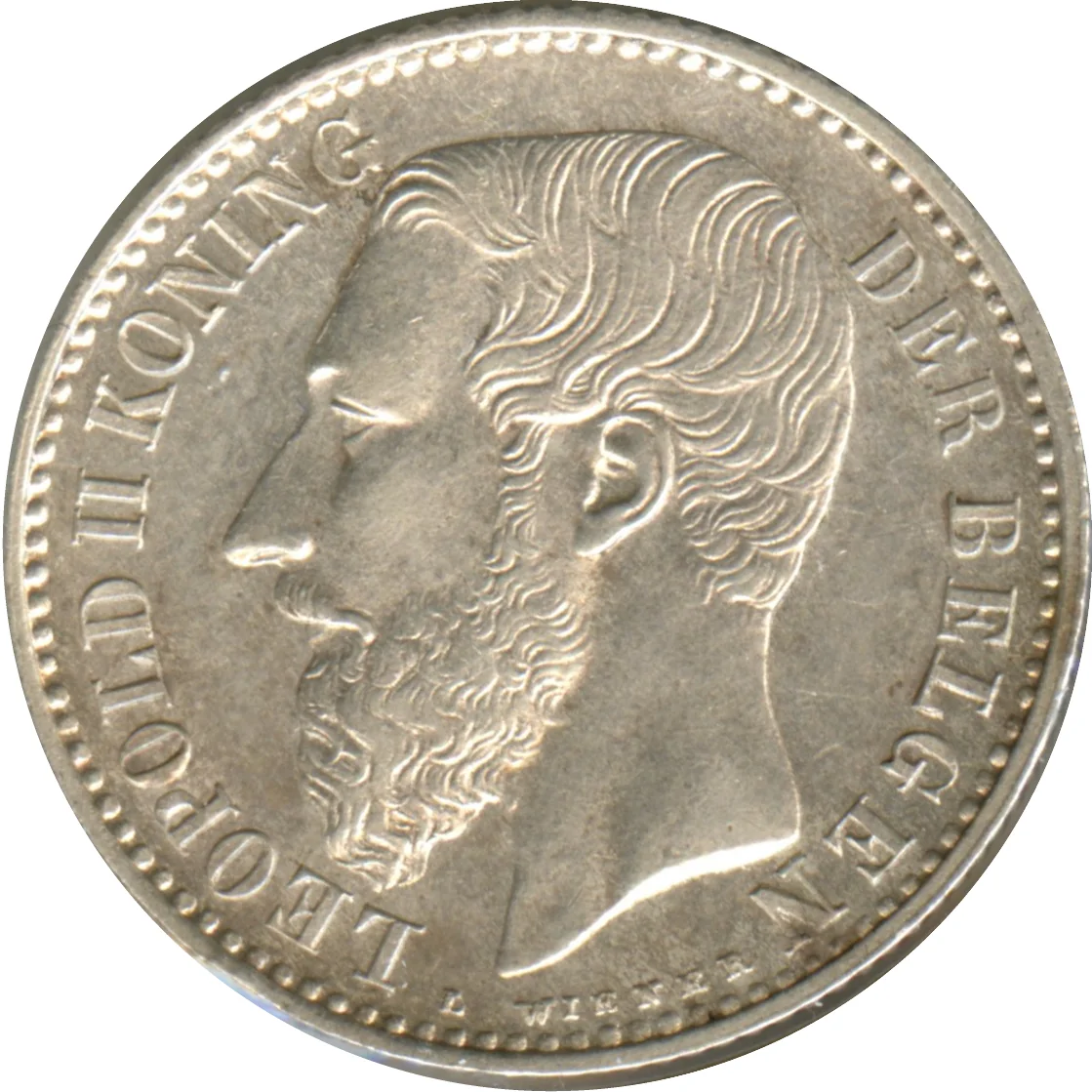
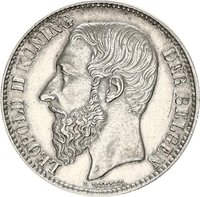
King Leopold II of Belgium facing left, encircled by the Dutch motto, with the designer's name below.
Inscription:
LEOPOLD II KONING DER BELGEN
L.WIENER
L.WIENER
Translation:
Leopold II King of the Belgians
L. Wiener
L. Wiener
Script: Latin
Language: Dutch
Engraver: Léopold Wiener
Reverse
Description:
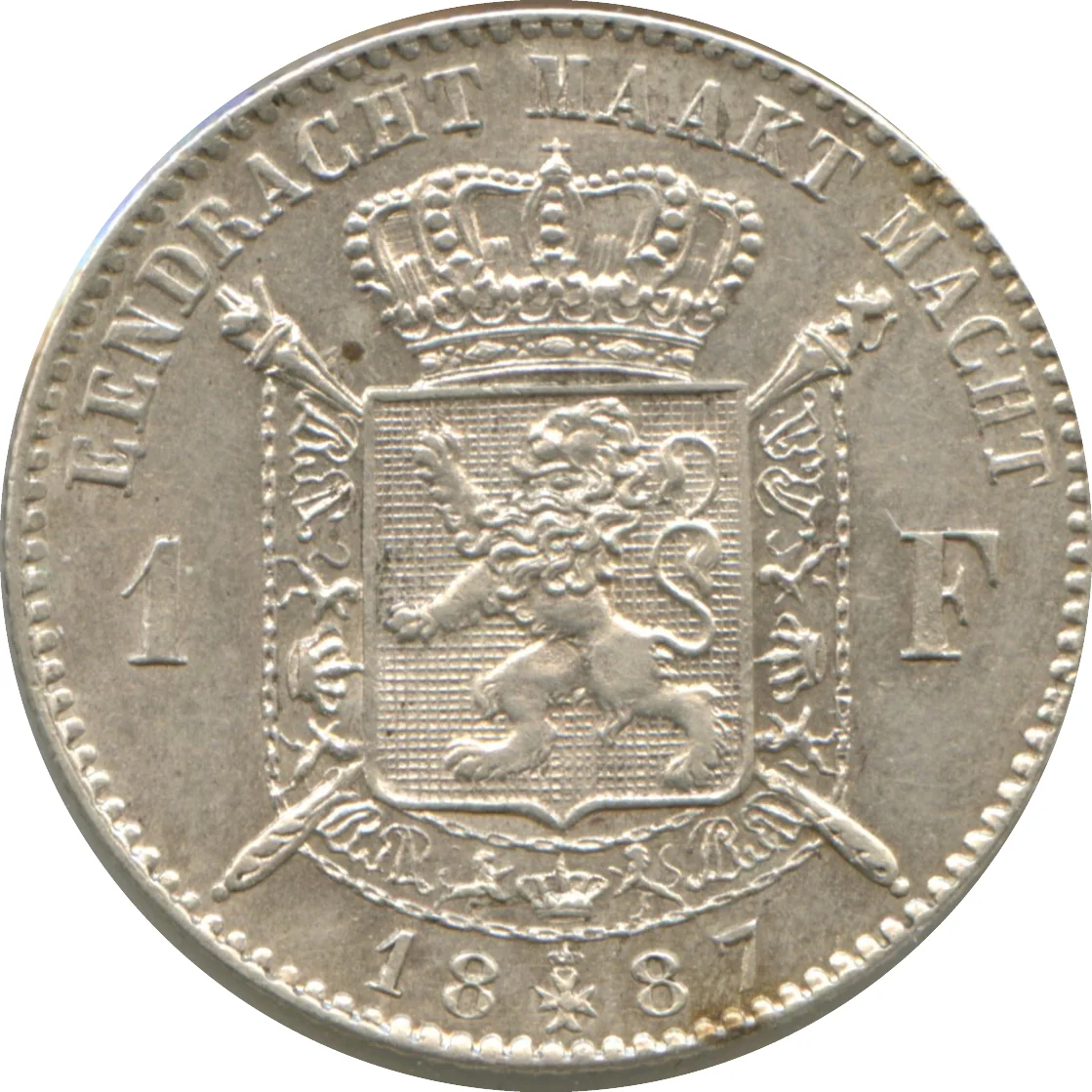
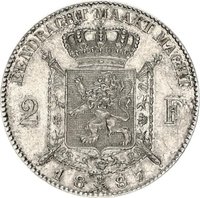
The Belgian coat of arms features the motto in Dutch above and the date below.
Inscription:
EENDRACHT MAAKT MACHT
1 F
1887
1 F
1887
Translation:
Unity makes strength
1 F
1887
1 F
1887
Script: Latin
Language: Dutch
Engraver: Léopold Wiener
Edge
Reeded
Categories
| Symbol> Crown |
| Symbols> Coat of Arms |
Mints
| Name | Mark |
|---|---|
| Royal Mint of Belgium | — |
Mintings
| Year | Mint Mark | Mintage | Quality | Collection |
|---|---|---|---|---|
| 1886 | — | 1,026,000 | ||
| 1887 | — | — |
Historical background
In 1886, Belgium operated under a bimetallic monetary system, legally established in 1832, which pegged both gold and silver to the Belgian franc at a fixed ratio. This system aimed to provide stability, but by the 1880s, it was under severe international strain. The discovery of vast silver deposits, particularly in the Americas, caused the global market value of silver to fall dramatically. Consequently, the fixed legal ratio in Belgium made silver coins undervalued as metal, leading to their export and melting, while gold coins became overvalued and were hoarded or exported—a classic manifestation of Gresham's Law ("bad money drives out good").
This monetary instability coincided with a period of profound social and economic crisis. The Long Depression of the 1870s-1890s had hit Belgium's heavily industrialized economy hard, leading to widespread unemployment and falling wages. The flight of sound gold currency exacerbated economic anxieties, creating a climate of uncertainty for both businesses and workers. The situation came to a head in 1886 with a series of violent workers' revolts in the industrial basins of Liège and Hainaut, which were brutally suppressed. While rooted in social inequality, the monetary disorder contributed to the general sense of economic precariousness and loss of confidence during this turbulent year.
The crises of 1886 acted as a catalyst for monetary reform. The impracticality of maintaining bimetallism in a world moving toward a gold standard became undeniable. Following the recommendations of a special commission, Belgium formally abandoned bimetallism in 1878 for all but small-change coinage, but the full transition was solidified later. By 1892, the government passed a law definitively placing Belgium on the gold standard, which took full effect in the subsequent years. Thus, the currency situation of 1886 represents the final, turbulent chapter of Belgium's bimetallic experiment, pressured by global market forces and domestic social upheaval.
This monetary instability coincided with a period of profound social and economic crisis. The Long Depression of the 1870s-1890s had hit Belgium's heavily industrialized economy hard, leading to widespread unemployment and falling wages. The flight of sound gold currency exacerbated economic anxieties, creating a climate of uncertainty for both businesses and workers. The situation came to a head in 1886 with a series of violent workers' revolts in the industrial basins of Liège and Hainaut, which were brutally suppressed. While rooted in social inequality, the monetary disorder contributed to the general sense of economic precariousness and loss of confidence during this turbulent year.
The crises of 1886 acted as a catalyst for monetary reform. The impracticality of maintaining bimetallism in a world moving toward a gold standard became undeniable. Following the recommendations of a special commission, Belgium formally abandoned bimetallism in 1878 for all but small-change coinage, but the full transition was solidified later. By 1892, the government passed a law definitively placing Belgium on the gold standard, which took full effect in the subsequent years. Thus, the currency situation of 1886 represents the final, turbulent chapter of Belgium's bimetallic experiment, pressured by global market forces and domestic social upheaval.
🌱 Common