

25 centimes – France
Add to wishlist
France
Context
Years: 1917–1937
Issuer: France
Period:
(1870—1940)
Currency:
(1795—1959)
Demonetization: 30 January 1942
Total mintage: 261,256,663
Material
Diameter: 24 mm
Weight: 5 g
Thickness: 1.64 mm
Shape: Round with a round hole
Composition: Copper-nickel
Technique: Milled
Alignment: Coin alignment
flip
References
KM: #
Numista: #710
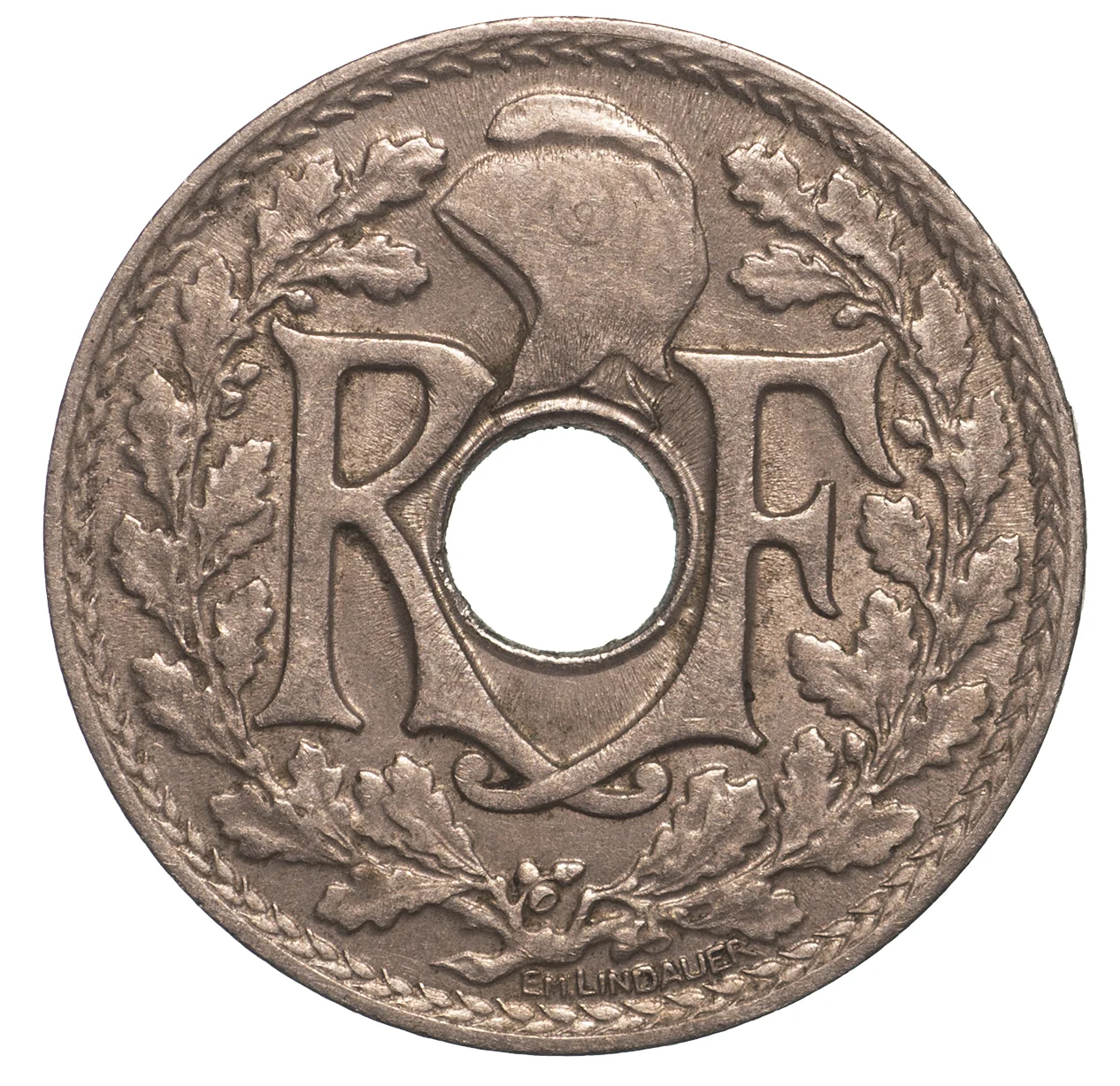
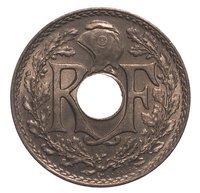
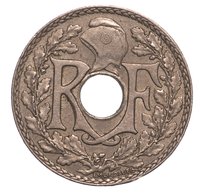
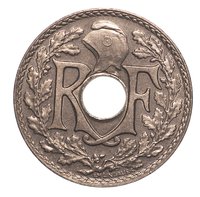
Obverse
Description:
Monogram flanking liberty cap, encircled by wreath.
Inscription:
RF
EM LINDAUER
EM LINDAUER
Script: Latin
Engraver: Edmond-Émile Lindauer
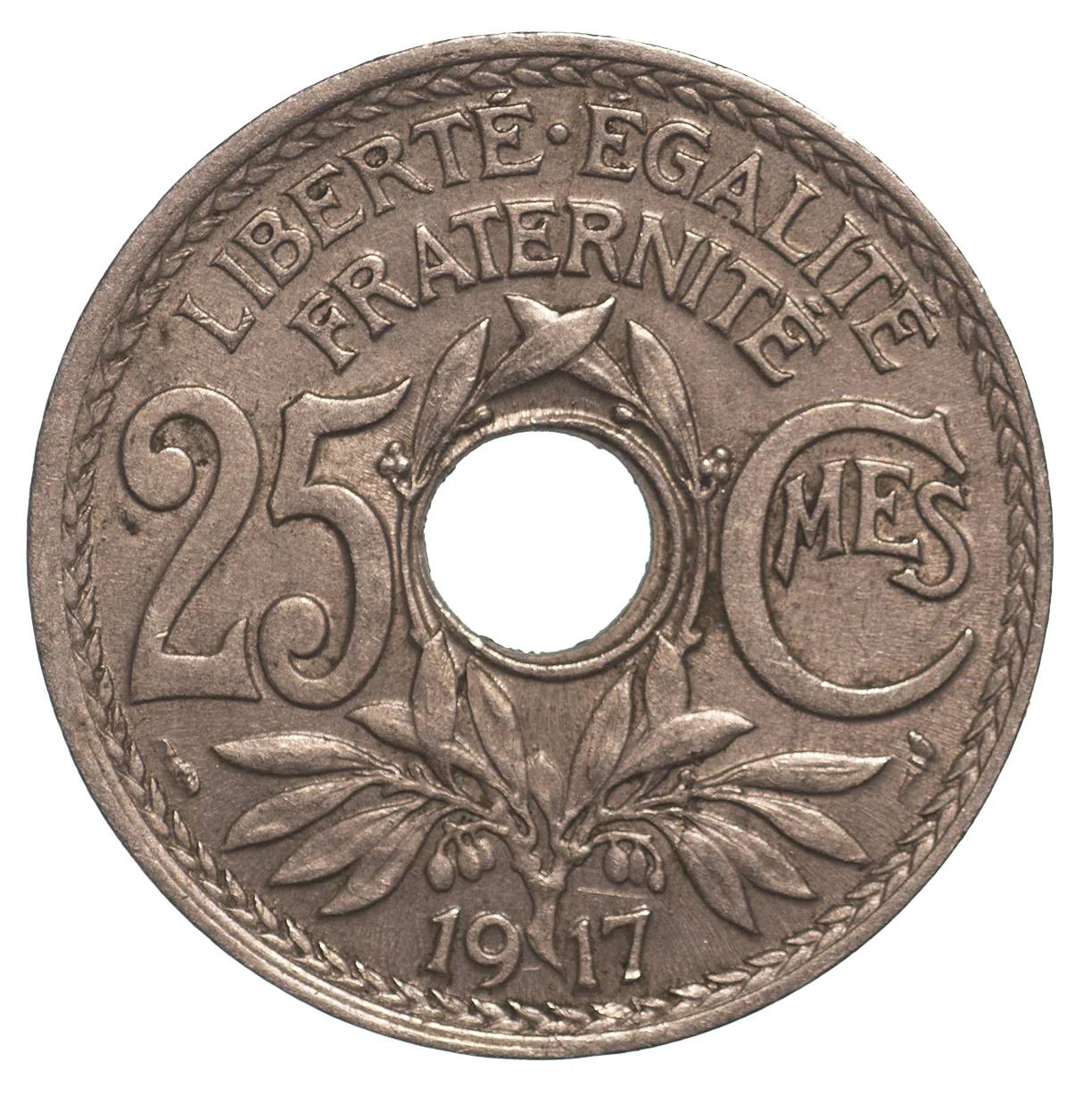
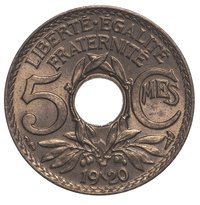
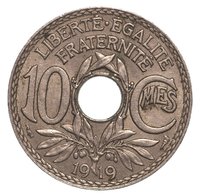
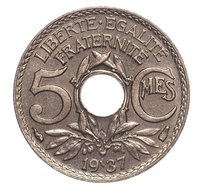
Reverse
Description:
"CMES" (centimes) above the center hole, French motto above, date below. No dash under "MES".
Inscription:
LIBERTE·EGALITE
FRATERNITE
25 CMES
1917
FRATERNITE
25 CMES
1917
Translation:
LIBERTY EQUALITY
FRATERNITY
25 CENTIMES
1917
FRATERNITY
25 CENTIMES
1917
Script: Latin
Language: French
Engraver: Edmond-Émile Lindauer
Edge
Plain
Categories
| Symbol> Phrygian cap |
Mints
| Name | Mark |
|---|---|
| Monnaie de Paris | — |
Mintings
| Year | Mint Mark | Mintage | Quality | Collection |
|---|---|---|---|---|
| 1917 | — | 3,084,721 | ||
| 1918 | — | 18,329,894 | ||
| 1919 | — | 5,106,398 | ||
| 1920 | — | — | ||
| 1921 | — | 18,531,221 | ||
| 1922 | — | 17,766,341 | ||
| 1923 | — | 19,718,498 | ||
| 1924 | — | 24,534,899 | ||
| 1925 | — | 17,807,055 | ||
| 1926 | — | 13,226,392 | ||
| 1927 | — | 13,464,651 | ||
| 1928 | — | 9,959,805 | ||
| 1929 | — | — | ||
| 1930 | — | 28,362,913 | ||
| 1931 | — | — | ||
| 1932 | — | 30,363,976 | ||
| 1933 | — | 28,562,167 | ||
| 1936 | — | 4,657,312 | ||
| 1937 | — | 7,780,420 |
Historical background
By 1917, France's currency situation was under severe strain due to the immense financial demands of the First World War. The government, having abandoned the gold standard in 1914, financed the conflict primarily through borrowing from the Bank of France and issuing short-term debt, rather than through significant tax increases. This led to a massive expansion of the money supply, as the Bank of France provided direct advances to the state, effectively printing money to cover budgetary shortfalls. The result was a classic case of wartime inflation, where a growing volume of paper banknotes chased a shrinking supply of civilian goods, leading to steadily rising prices that eroded purchasing power.
The inflationary pressure was acutely felt on the home front, creating social and economic hardship. With industrial production overwhelmingly directed toward the war effort, shortages of everyday consumer goods became commonplace. This scarcity, combined with the increased money supply, caused the cost of living to soar, particularly for food and fuel. The situation fueled social unrest, most notably the widespread strikes and murmurs of mutiny in the spring of 1917, where wages failing to keep pace with inflation was a key grievance among workers and soldiers alike. The government attempted to manage the crisis through price controls and rationing, but these measures were often ineffective and circumvented by a growing black market.
Internationally, the franc came under significant pressure. France relied heavily on imports, especially from the United States, for essential war materials and food, requiring vast amounts of foreign currency, particularly dollars and sterling. To obtain this, the French government sold off gold reserves and borrowed extensively from its allies, most crucially from the United States after its entry into the war in April 1917. While this Allied financial support prevented a collapse, it also increased France's staggering national debt and future dependency. Thus, by late 1917, the French franc was a currency sustained more by political will and allied credit than by underlying economic strength, setting the stage for severe monetary challenges in the postwar period.
The inflationary pressure was acutely felt on the home front, creating social and economic hardship. With industrial production overwhelmingly directed toward the war effort, shortages of everyday consumer goods became commonplace. This scarcity, combined with the increased money supply, caused the cost of living to soar, particularly for food and fuel. The situation fueled social unrest, most notably the widespread strikes and murmurs of mutiny in the spring of 1917, where wages failing to keep pace with inflation was a key grievance among workers and soldiers alike. The government attempted to manage the crisis through price controls and rationing, but these measures were often ineffective and circumvented by a growing black market.
Internationally, the franc came under significant pressure. France relied heavily on imports, especially from the United States, for essential war materials and food, requiring vast amounts of foreign currency, particularly dollars and sterling. To obtain this, the French government sold off gold reserves and borrowed extensively from its allies, most crucially from the United States after its entry into the war in April 1917. While this Allied financial support prevented a collapse, it also increased France's staggering national debt and future dependency. Thus, by late 1917, the French franc was a currency sustained more by political will and allied credit than by underlying economic strength, setting the stage for severe monetary challenges in the postwar period.
Series: 1917 France circulation coins
🌱 Very Common