

1 franc – France
Add to wishlist
France
Context
Years: 1931–1941
Issuer: France
Period:
(1870—1940)
Currency:
(1795—1959)
Demonetization: 5 August 1949
Total mintage: 297,078,579
Material
References
KM: #
Numista: #707
Obverse
Description:
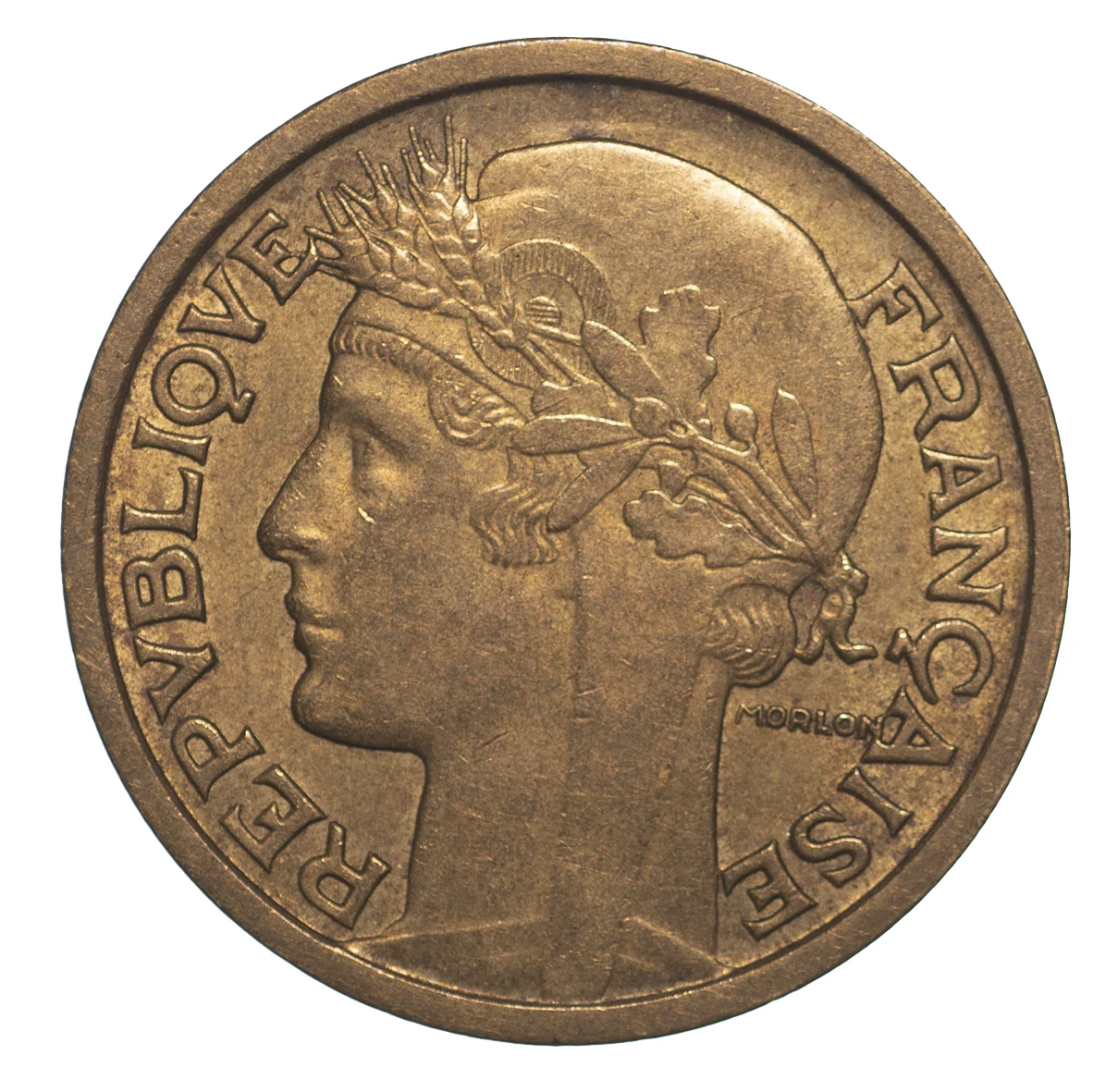
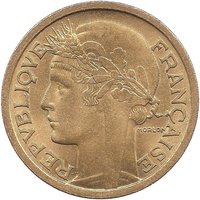
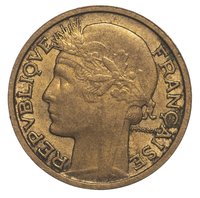
Marianne's head in a Phrygian cap adorned with a wreath of olive, oak, and wheat leaves.
Inscription:
REPVBLIQVE FRANÇAISE
MORLON
MORLON
Translation:
FRENCH REPUBLIC
MORLON
MORLON
Script: Latin
Language: French
Engraver: Pierre-Alexandre Morlon
Reverse
Description:
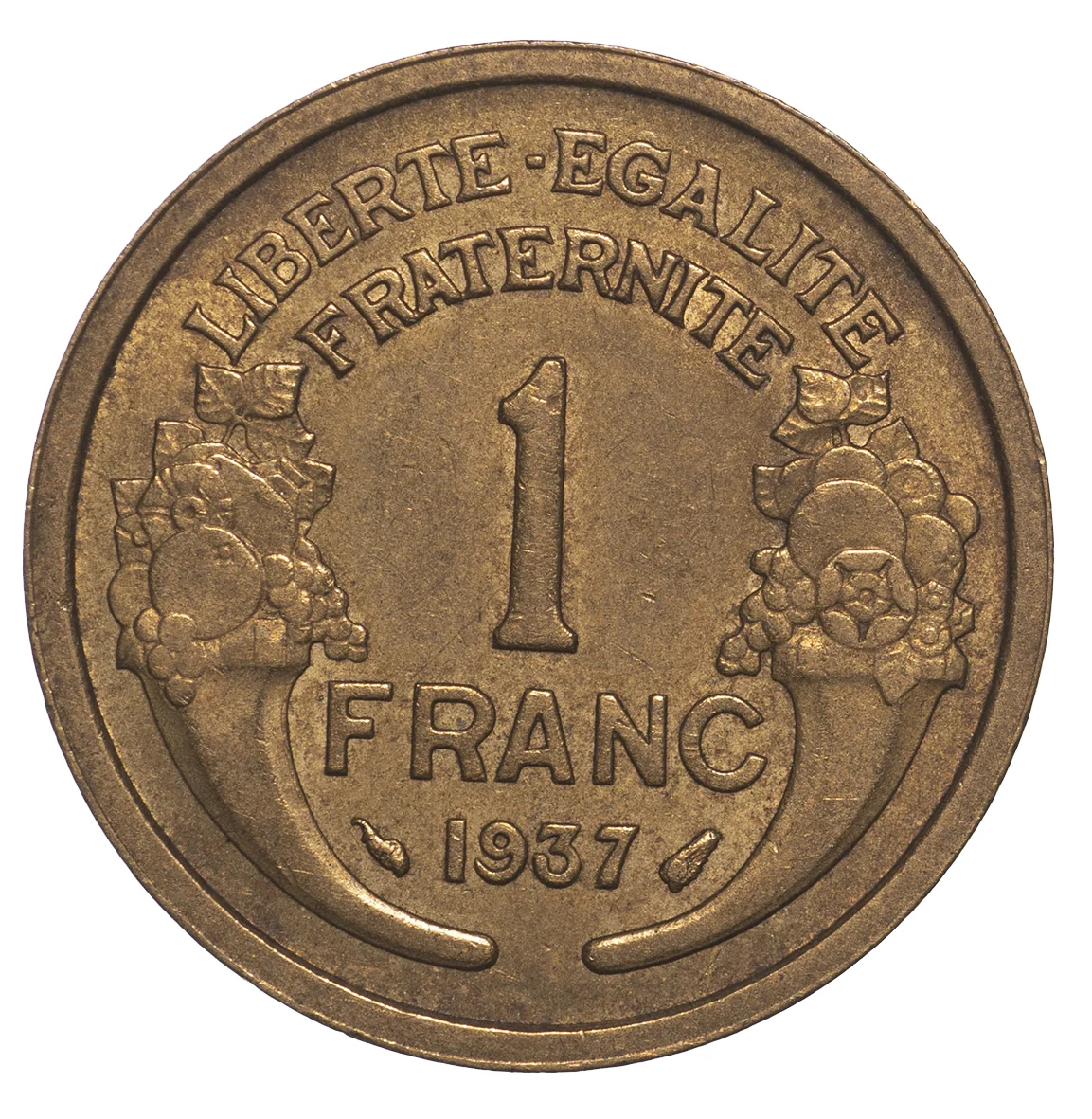
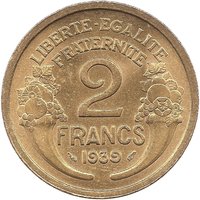
Value flanked by Cornucopias.
Inscription:
LIBERTE-EGALITE
FRATERNITE
1
FRANC
1939
FRATERNITE
1
FRANC
1939
Translation:
LIBERTY-EQUALITY
FRATERNITY
1
FRANC
1939
FRATERNITY
1
FRANC
1939
Script: Latin
Language: French
Engraver: Pierre-Alexandre Morlon
Edge
Plain
Categories
| Symbol> Phrygian cap |
| Symbol> Cornucopia |
Mints
| Name | Mark |
|---|---|
| Monnaie de Paris | — |
Mintings
| Year | Mint Mark | Mintage | Quality | Collection |
|---|---|---|---|---|
| 1931 | — | — | ||
| 1932 | — | 29,768,441 | ||
| 1933 | — | 15,356,567 | ||
| 1934 | — | 17,285,800 | ||
| 1935 | — | 1,166,038 | ||
| 1936 | — | 23,816,782 | ||
| 1937 | — | 30,940,378 | ||
| 1938 | — | 66,164,569 | ||
| 1939 | — | 48,434,500 | ||
| 1940 | — | 29,440,012 | ||
| 1941 | — | 34,705,492 |
Historical background
In 1931, France found itself in a uniquely strong but precarious position within the global currency crisis. Unlike most major economies, France had accumulated substantial gold reserves throughout the 1920s after stabilizing the franc through the Poincaré reforms of 1926-28. This "franc fort" policy and a large gold hoard initially insulated France from the immediate bank collapses and capital flight plaguing Germany, Austria, and Britain. Consequently, France was seen as a "safe haven" for gold, which further strengthened its financial standing just as others faltered.
However, this strength was undermined by a rigid commitment to the gold standard at an overvalued parity. French insistence on maintaining its gold convertibility, combined with persistent budget deficits and a deflationary policy to protect reserves, exacerbated a global liquidity crisis. France's accumulation of gold effectively sterilized global reserves, drawing criticism that it was worsening the international deflationary spiral. This stance created significant diplomatic friction, particularly with Britain and the United States, who viewed French monetary policy as selfish and destabilizing.
The year's pivotal event was the British decision to abandon the gold standard in September 1931, which dramatically altered France's situation. While the French franc now stood as one of the last major currencies still fully convertible into gold, alongside the US dollar, it left France dangerously exposed. The overvalued franc crippled French export competitiveness, deepening an existing industrial slump and contributing to rising unemployment. By the end of 1931, France was isolated on gold, facing severe internal economic pressures and the looming threat of speculative attacks on its own currency, setting the stage for the crises of the mid-1930s.
However, this strength was undermined by a rigid commitment to the gold standard at an overvalued parity. French insistence on maintaining its gold convertibility, combined with persistent budget deficits and a deflationary policy to protect reserves, exacerbated a global liquidity crisis. France's accumulation of gold effectively sterilized global reserves, drawing criticism that it was worsening the international deflationary spiral. This stance created significant diplomatic friction, particularly with Britain and the United States, who viewed French monetary policy as selfish and destabilizing.
The year's pivotal event was the British decision to abandon the gold standard in September 1931, which dramatically altered France's situation. While the French franc now stood as one of the last major currencies still fully convertible into gold, alongside the US dollar, it left France dangerously exposed. The overvalued franc crippled French export competitiveness, deepening an existing industrial slump and contributing to rising unemployment. By the end of 1931, France was isolated on gold, facing severe internal economic pressures and the looming threat of speculative attacks on its own currency, setting the stage for the crises of the mid-1930s.

🌱 Very Common