

1000 rupiah – Indonesia
Add to wishlist
Indonesia
Context
Years: 1993–2000
Issuer: Indonesia
Issuing organization: Bank Indonesia
Period:
(since 1950)
Currency:
(since 1965)
Demonetization: 1 December 2023
Total mintage: 30,900,000
Material
References
KM: #
Numista: #7000
Value
Exchange value: 1000 IDR
Inflation-adjusted value: 11649.67 IDR
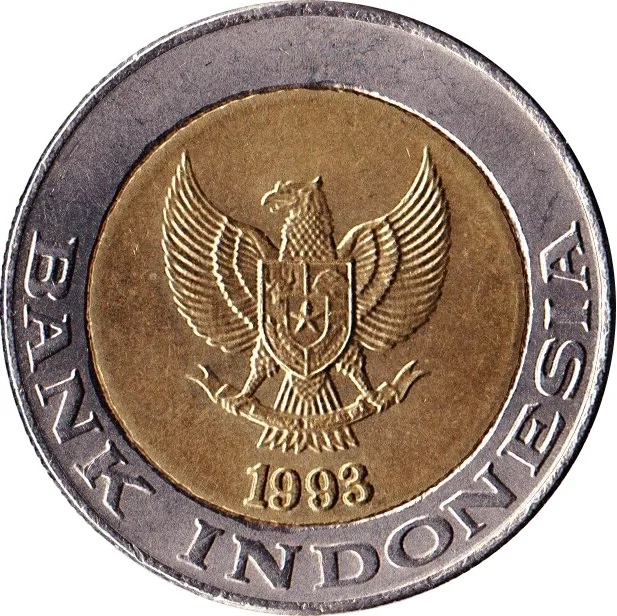
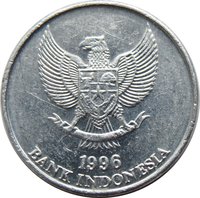
Obverse
Description:
National emblem and date within inner disc.
Inscription:
1993
BANK INDONESIA
BANK INDONESIA
Translation:
1993
BANK INDONESIA
BANK INDONESIA
Script: Latin
Languages: Indonesian, English
Reverse
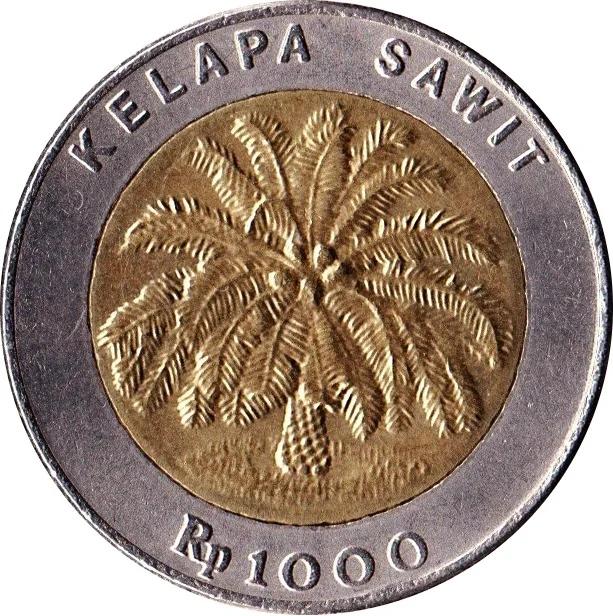
Description:
Oil palm (Elaeis guineensis)
Inscription:
KELAPA SAWIT
Rp 1000
Rp 1000
Translation:
Palm Oil
Rp 1000
Rp 1000
Script: Latin
Language: Indonesian
Edge
Mills and smooth section
Categories
| Symbols> Coat of Arms |
| Plant> Tree |
Mints
| Name | Mark |
|---|---|
| Perum Peruri | — |
Mintings
| Year | Mint Mark | Mintage | Quality | Collection |
|---|---|---|---|---|
| 1993 | — | 5,000,000 | ||
| 1994 | — | 6,000,000 | ||
| 1995 | — | 19,900,000 | ||
| 1995 | — | — | Proof | |
| 1996 | — | — | ||
| 1997 | — | — | ||
| 2000 | — | — |
Historical background
In 1993, Indonesia's currency, the rupiah (IDR), operated under a managed floating exchange rate system, a framework established in the late 1970s. The central bank, Bank Indonesia, actively intervened in the foreign exchange market to stabilize the rupiah's value against a basket of currencies of its major trading partners, though the US dollar remained the primary reference. This period was characterized by a deliberate policy of a gradual, controlled depreciation, averaging around 4-5% annually against the dollar. This "crawling peg" was engineered to maintain the international competitiveness of Indonesia's crucial export sectors, particularly oil and gas, textiles, and plywood, by offsetting higher domestic inflation relative to its trading partners.
The macroeconomic context was one of robust growth, with Indonesia in the midst of a sustained economic boom under President Suharto's New Order regime. High levels of foreign direct investment, driven by deregulation and an abundant low-cost workforce, created strong underlying demand for the rupiah. However, this growth was accompanied by persistent challenges, including a relatively high inflation rate (around 9-10% in the early 1990s) and a growing current account deficit. These factors placed consistent, albeit manageable, downward pressure on the currency, necessitating the central bank's vigilant management to maintain stability and investor confidence.
Looking forward, the situation in 1993 appeared stable on the surface, but it contained the seeds of future vulnerability. The managed regime required substantial foreign exchange reserves to defend the rupiah's band, and the financial sector was becoming increasingly exposed to short-term foreign debt. While no crisis was imminent in 1993, the system's rigidity and the underlying economic imbalances would be severely tested later in the decade, ultimately contributing to the devastating Asian Financial Crisis that forced Indonesia to adopt a free-floating exchange rate in August 1997.
The macroeconomic context was one of robust growth, with Indonesia in the midst of a sustained economic boom under President Suharto's New Order regime. High levels of foreign direct investment, driven by deregulation and an abundant low-cost workforce, created strong underlying demand for the rupiah. However, this growth was accompanied by persistent challenges, including a relatively high inflation rate (around 9-10% in the early 1990s) and a growing current account deficit. These factors placed consistent, albeit manageable, downward pressure on the currency, necessitating the central bank's vigilant management to maintain stability and investor confidence.
Looking forward, the situation in 1993 appeared stable on the surface, but it contained the seeds of future vulnerability. The managed regime required substantial foreign exchange reserves to defend the rupiah's band, and the financial sector was becoming increasingly exposed to short-term foreign debt. While no crisis was imminent in 1993, the system's rigidity and the underlying economic imbalances would be severely tested later in the decade, ultimately contributing to the devastating Asian Financial Crisis that forced Indonesia to adopt a free-floating exchange rate in August 1997.



🌱 Very Common