

1 Krone – Greenland
Denmark
Context
Year: 1957
Country: Denmark 
Issuer: Greenland
Ruler: Frederick IX
Currency:
(since 1873)
Demonetization: 1 July 1967
Total mintage: 100,209
Material
References
KM: #Click to copy to clipboard10
Numista: #6963
Value
Exchange value: 1 DKK = $0.16
Obverse
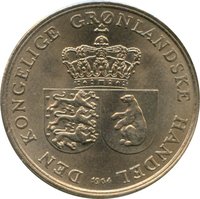
Description:
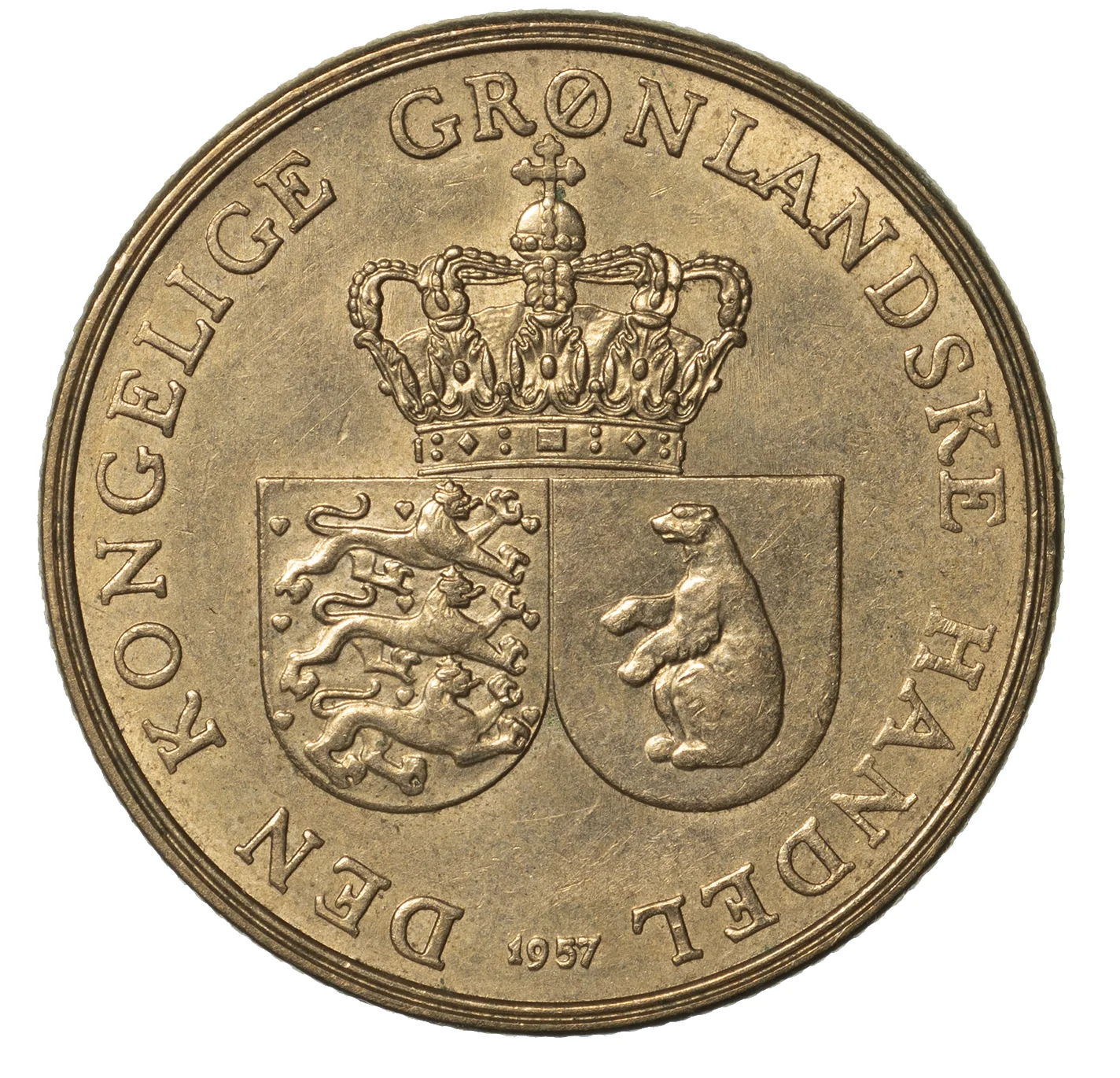
Danish and Greenlandic coats of arms, date beneath.
Inscription:
DEN KONGELIGE GRØNLANDSKE HANDEL
1957
1957
Translation:
The Royal Greenlandic Trade
1957
1957
Script: Latin
Language: Danish
Engravers: Harald Salomon, Alfred Frederik Christiansen
Reverse
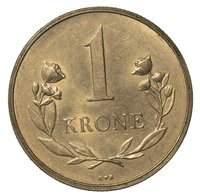
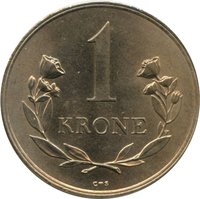
Description:
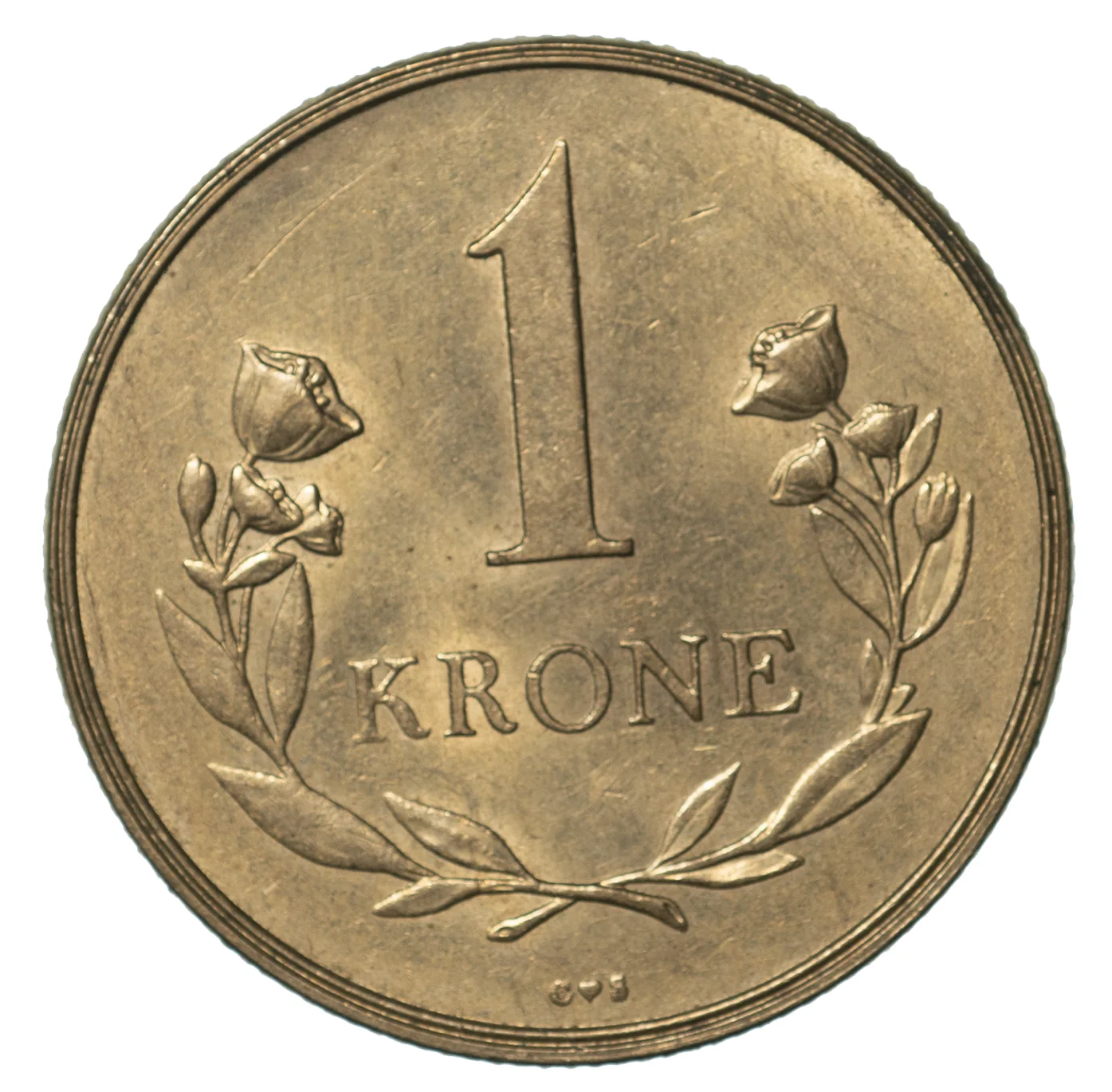
Dwarf fireweed, Greenland's national flower.
Inscription:
1
KRONE
KRONE
Script: Latin
Engravers: Harald Salomon, Alfred Frederik Christiansen
Edge
Reeded
Mints
| Name | Mark |
|---|---|
| Royal Danish Mint | — |
Mintings
| Year | Mint Mark | Mintage | Quality | Collection |
|---|---|---|---|---|
| 1957 | C♥S | 100,209 |
Historical background
In 1957, Greenland’s currency situation was fundamentally an extension of Denmark’s monetary system, as the island was an integral county of the Danish realm. The official and sole legal tender was the Danish krone (DKK), issued by Denmark's central bank, Danmarks Nationalbank. There was no separate Greenlandic currency, and all financial policy, including interest rates and money supply, was determined in Copenhagen, tightly pegged to economic conditions in metropolitan Denmark.
This arrangement reflected Greenland’s colonial history and its post-war development phase. Following World War II, Denmark ended Greenland’s isolated colonial status in 1953, making it a formal part of the kingdom. The subsequent "G50" modernization program aimed at rapid economic and social development, which increased the flow of Danish kroner into the island to fund infrastructure, housing, and a growing wage-based economy. However, the cash-based economy in settlements and the sheer geographical distance created practical challenges in currency distribution and liquidity.
The system, while ensuring stability, also highlighted Greenland’s economic dependency. The kroner in circulation were physically the same as those used in Denmark, with no distinctive local features. This seamless integration facilitated trade and subsidy transfers but meant Greenland had no autonomous monetary tools to address local economic fluctuations. The currency situation of 1957 thus embodied a period of intense transition, where Greenland was financially tethered to Denmark amidst a broader societal transformation from a traditional hunting and fishing society to a modern welfare state.
This arrangement reflected Greenland’s colonial history and its post-war development phase. Following World War II, Denmark ended Greenland’s isolated colonial status in 1953, making it a formal part of the kingdom. The subsequent "G50" modernization program aimed at rapid economic and social development, which increased the flow of Danish kroner into the island to fund infrastructure, housing, and a growing wage-based economy. However, the cash-based economy in settlements and the sheer geographical distance created practical challenges in currency distribution and liquidity.
The system, while ensuring stability, also highlighted Greenland’s economic dependency. The kroner in circulation were physically the same as those used in Denmark, with no distinctive local features. This seamless integration facilitated trade and subsidy transfers but meant Greenland had no autonomous monetary tools to address local economic fluctuations. The currency situation of 1957 thus embodied a period of intense transition, where Greenland was financially tethered to Denmark amidst a broader societal transformation from a traditional hunting and fishing society to a modern welfare state.
🌱 Fairly Common