

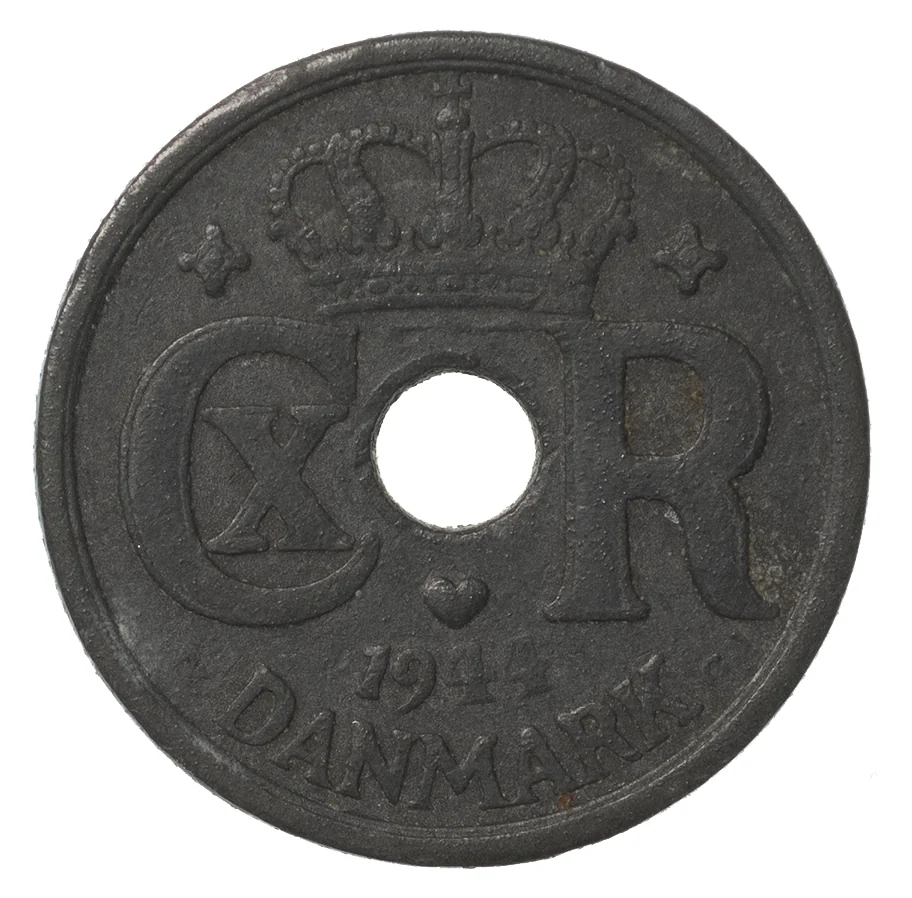
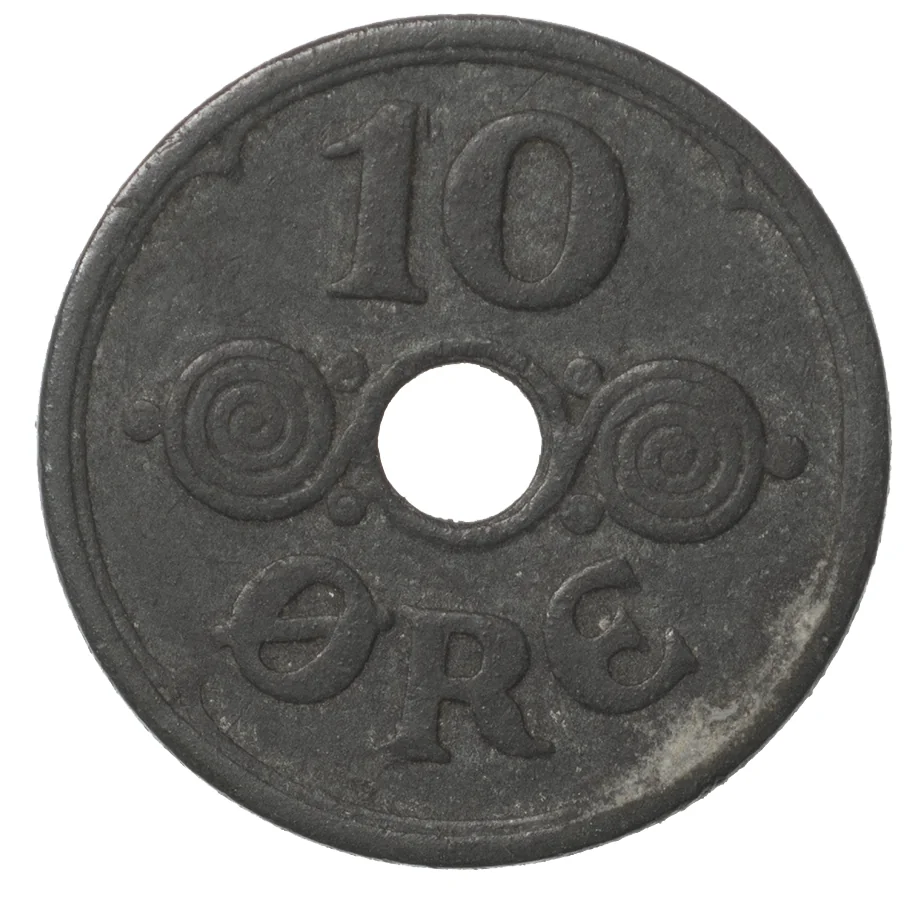
10 øre – Denmark
Add to wishlist
Denmark
Context
Years: 1941–1945
Issuer: Denmark
Ruler: Christian X
Currency:
(since 1873)
Demonetization: 30 June 1989
Total mintage: 27,837,000
Material
Diameter: 18 mm
Weight: 2.4 g
Thickness: 1.6 mm
Shape: Round with a round hole
Composition: Zinc
Magnetic: No
Technique: Milled
Alignment: Medal alignment
flip
References
KM: #
Numista: #6903
Value
Exchange value: 0.10 DKK
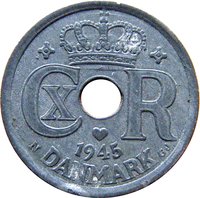
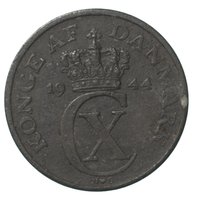
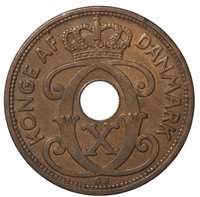
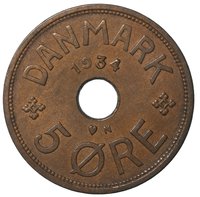
Obverse
Edge
Reeded
Mints
| Name | Mark |
|---|---|
| Royal Danish Mint | ❤︎ |
Mintings
| Year | Mint Mark | Mintage | Quality | Collection |
|---|---|---|---|---|
| 1941 | N;GJ | 7,706,000 | ||
| 1942 | N;GJ | 8,676,000 | ||
| 1943 | N;GJ | 2,181,000 | ||
| 1944 | N;GJ | 7,994,000 | ||
| 1945 | N;GJ | 1,280,000 |
Historical background
In 1941, Denmark’s currency situation was defined by its unique status as a "protected state" under Nazi German occupation, which had begun in April 1940. Unlike most occupied nations, Denmark retained its own government and a significant degree of administrative autonomy, including control over its monetary policy and the Danish central bank, Nationalbanken. This arrangement led to a formal economic policy of cooperation, where Denmark continued to use the Danish krone (DKK) and ostensibly maintained its pre-war currency parity and convertibility.
However, this surface stability was underpinned by a crippling financial arrangement known as the "occupation cost payments." Germany compelled Denmark to cover the expenses of the occupying forces, leading to massive, regular transfers of Danish kroner into special accounts at Nationalbanken, which the German authorities could then draw upon. This resulted in rampant money creation, fueling significant inflationary pressures within the Danish economy. While price controls and rationing were implemented to manage this, a growing black market emerged where goods traded at much higher real prices, effectively creating a dual currency system.
Furthermore, the krone's international value was artificially managed through a clearing agreement with Germany. Danish exports, primarily agricultural goods vital to the German war effort, were paid for in kroner credited to a clearing account, rather than in foreign exchange. This system locked Denmark into a dependent economic relationship, preventing it from earning hard currency and tying its financial fate directly to the Reichsmark. Thus, while the krone remained the official currency, its stability was an illusion, propped up by coercive economic mechanisms that drained Danish resources and linked the nation's financial health directly to the fortunes of Nazi Germany.
However, this surface stability was underpinned by a crippling financial arrangement known as the "occupation cost payments." Germany compelled Denmark to cover the expenses of the occupying forces, leading to massive, regular transfers of Danish kroner into special accounts at Nationalbanken, which the German authorities could then draw upon. This resulted in rampant money creation, fueling significant inflationary pressures within the Danish economy. While price controls and rationing were implemented to manage this, a growing black market emerged where goods traded at much higher real prices, effectively creating a dual currency system.
Furthermore, the krone's international value was artificially managed through a clearing agreement with Germany. Danish exports, primarily agricultural goods vital to the German war effort, were paid for in kroner credited to a clearing account, rather than in foreign exchange. This system locked Denmark into a dependent economic relationship, preventing it from earning hard currency and tying its financial fate directly to the Reichsmark. Thus, while the krone remained the official currency, its stability was an illusion, propped up by coercive economic mechanisms that drained Danish resources and linked the nation's financial health directly to the fortunes of Nazi Germany.
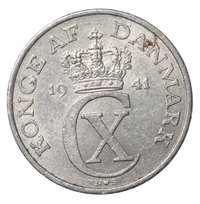
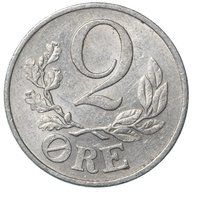
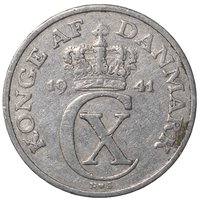
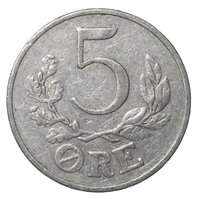
Series: 1941 Denmark circulation coins
🌱 Very Common