

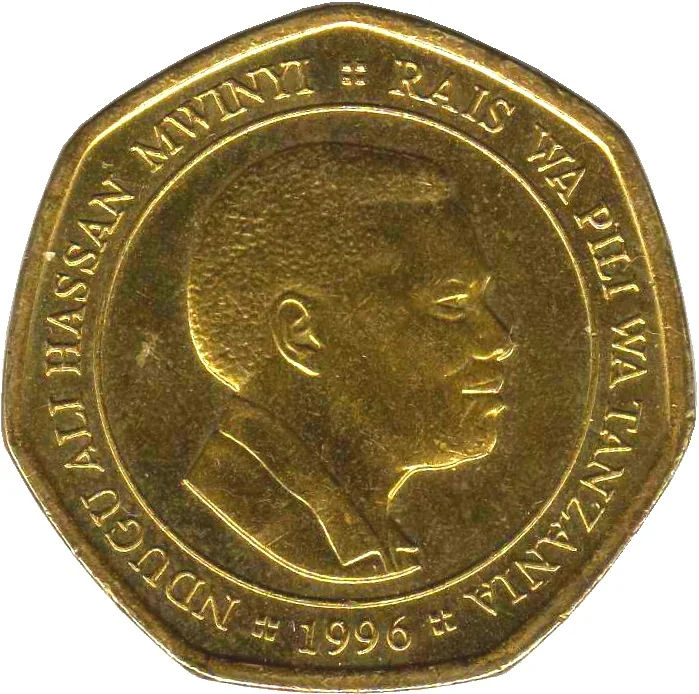
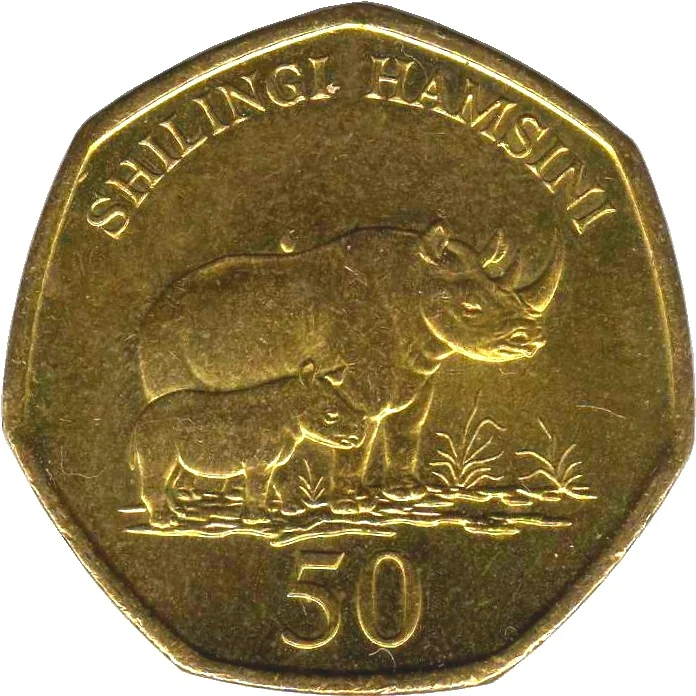
50 shilingi – Tanzania
Add to wishlist
Tanzania
Context
Material
Diameter: 22 mm
Weight: 7.91 g
Thickness: 2.9 mm
Shape: Equilateral curve heptagon
Standard: Silver quarter ounce
Technique: Milled
Alignment: Medal alignment
flip
References
KM: #
Numista: #6896
Value
Exchange value: 50 TZS
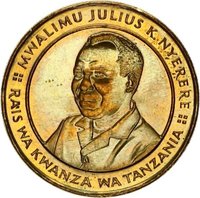
Obverse
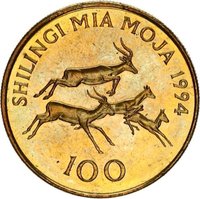
Reverse
Edge
Plain
Categories
| Animal |
| Person> Politician |
Mints
| Name | Mark |
|---|---|
| Royal Mint | — |
Mintings
| Year | Mint Mark | Mintage | Quality | Collection |
|---|---|---|---|---|
| 1996 | — | — | ||
| 2012 | — | — | ||
| 2015 | — | — |
Historical background
In 1996, Tanzania's currency situation was defined by a period of relative stability under a managed float, following the significant economic liberalization of the previous decade. The Tanzanian shilling (TZS) had undergone a major devaluation and unification process in the late 1980s and early 1990s, dismantling a complex system of fixed and preferential exchange rates. By 1996, the Bank of Tanzania was implementing a more market-oriented approach, with the shilling's value primarily determined by interbank foreign exchange markets, though with occasional central bank intervention to smooth out excessive volatility.
This stability was hard-won and crucial for the country's ongoing structural adjustment program, supervised by the International Monetary Fund (IMF) and the World Bank. The government maintained a tight fiscal and monetary policy to control inflation, which had been a historic scourge. While inflation had been reduced from the hyperinflationary levels of the early 1980s, it remained a persistent concern, averaging around 20-25% in the mid-1990s, eroding purchasing power and posing a challenge to both monetary policy and everyday economic security for citizens.
The primary focus in 1996 was less on dramatic currency reform and more on consolidating these gains to foster growth and investment. The government was working to build foreign exchange reserves, maintain export competitiveness, and further integrate into the global economy. However, the shilling still faced underlying pressures, including a reliance on a narrow base of primary commodity exports (like coffee, cotton, and gold) and a growing need for imported goods and machinery for development. Thus, while the system was more functional than in the past, the economy remained vulnerable to external shocks and the fundamental challenges of development.
This stability was hard-won and crucial for the country's ongoing structural adjustment program, supervised by the International Monetary Fund (IMF) and the World Bank. The government maintained a tight fiscal and monetary policy to control inflation, which had been a historic scourge. While inflation had been reduced from the hyperinflationary levels of the early 1980s, it remained a persistent concern, averaging around 20-25% in the mid-1990s, eroding purchasing power and posing a challenge to both monetary policy and everyday economic security for citizens.
The primary focus in 1996 was less on dramatic currency reform and more on consolidating these gains to foster growth and investment. The government was working to build foreign exchange reserves, maintain export competitiveness, and further integrate into the global economy. However, the shilling still faced underlying pressures, including a reliance on a narrow base of primary commodity exports (like coffee, cotton, and gold) and a growing need for imported goods and machinery for development. Thus, while the system was more functional than in the past, the economy remained vulnerable to external shocks and the fundamental challenges of development.
🌱 Very Common