

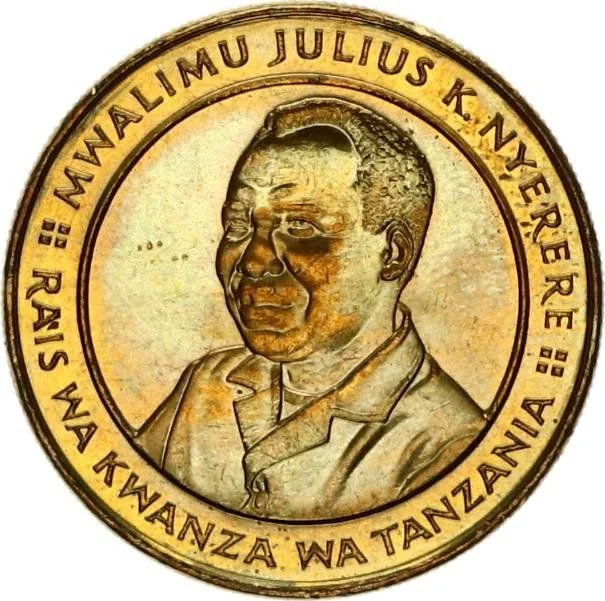
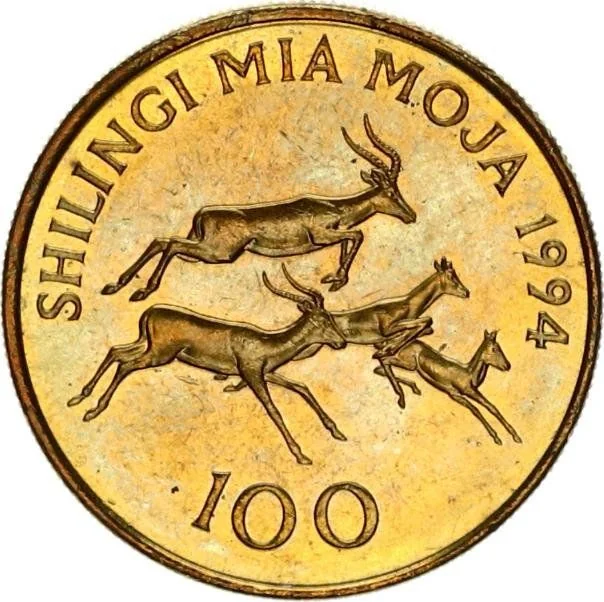
100 shilingi – Tanzania
Add to wishlist
Tanzania
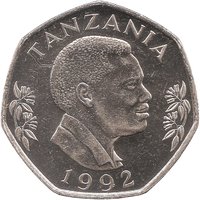
Obverse
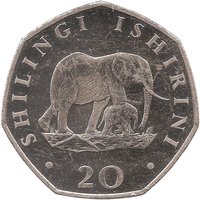
Reverse
Edge
Reeded
Categories
| Animal> Cow |
| Person> Politician |
Mints
| Name | Mark |
|---|---|
| Royal Mint | — |
Mintings
| Year | Mint Mark | Mintage | Quality | Collection |
|---|---|---|---|---|
| 1993 | — | — | ||
| 1994 | — | — | ||
| 2012 | — | — | ||
| 2015 | — | — |
Historical background
In 1993, Tanzania was in the early stages of implementing profound economic reforms under the guidance of the International Monetary Fund (IMF) and World Bank. The country was transitioning from the socialist-era policies of Ujamaa, which had left the economy heavily regulated, state-controlled, and in deep crisis by the 1980s. A key component of the reform program, the Economic Recovery Programme (launched in 1986), was the liberalization of the foreign exchange market. Prior to this, the Tanzanian shilling (TZS) had an official overvalued exchange rate set by the government, which fueled a vast and damaging black market for foreign currency.
The pivotal moment came in June 1993, when the government, under President Ali Hassan Mwinyi, took a decisive step by merging the official and "parallel" (black market) exchange rates. This was achieved through the creation of a wholesale foreign exchange auction system, known as the Interbank Foreign Exchange Market (IFEM), managed by the Bank of Tanzania. This move effectively devalued the shilling to a more realistic market-determined level, unifying the exchange rate and aiming to eliminate the currency premium that had plagued the formal economy for years.
The immediate effects were mixed but set a critical foundation. The shilling's value fell sharply, increasing the cost of imports and contributing to inflation, which posed hardships for the population. However, the reform successfully dismantled the black market, improved transparency, and boosted donor confidence, leading to increased aid inflows. It also signalled Tanzania's serious commitment to structural adjustment, paving the way for further liberalization, including the establishment of a retail interbank market in 1994, which ultimately integrated Tanzania more fully into the global economy.
The pivotal moment came in June 1993, when the government, under President Ali Hassan Mwinyi, took a decisive step by merging the official and "parallel" (black market) exchange rates. This was achieved through the creation of a wholesale foreign exchange auction system, known as the Interbank Foreign Exchange Market (IFEM), managed by the Bank of Tanzania. This move effectively devalued the shilling to a more realistic market-determined level, unifying the exchange rate and aiming to eliminate the currency premium that had plagued the formal economy for years.
The immediate effects were mixed but set a critical foundation. The shilling's value fell sharply, increasing the cost of imports and contributing to inflation, which posed hardships for the population. However, the reform successfully dismantled the black market, improved transparency, and boosted donor confidence, leading to increased aid inflows. It also signalled Tanzania's serious commitment to structural adjustment, paving the way for further liberalization, including the establishment of a retail interbank market in 1994, which ultimately integrated Tanzania more fully into the global economy.
🌱 Very Common