

1 farthing – United Kingdom
Add to wishlist
United Kingdom
Context
Years: 1821–1826
Issuer: United Kingdom
Ruler: George IV
Currency:
(1158—1970)
Demonetization: 31 December 1869
Total mintage: 21,944,700
Material
References
KM: #
Numista: #6879
Obverse
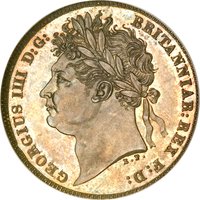
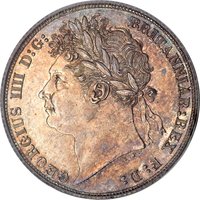
Description:
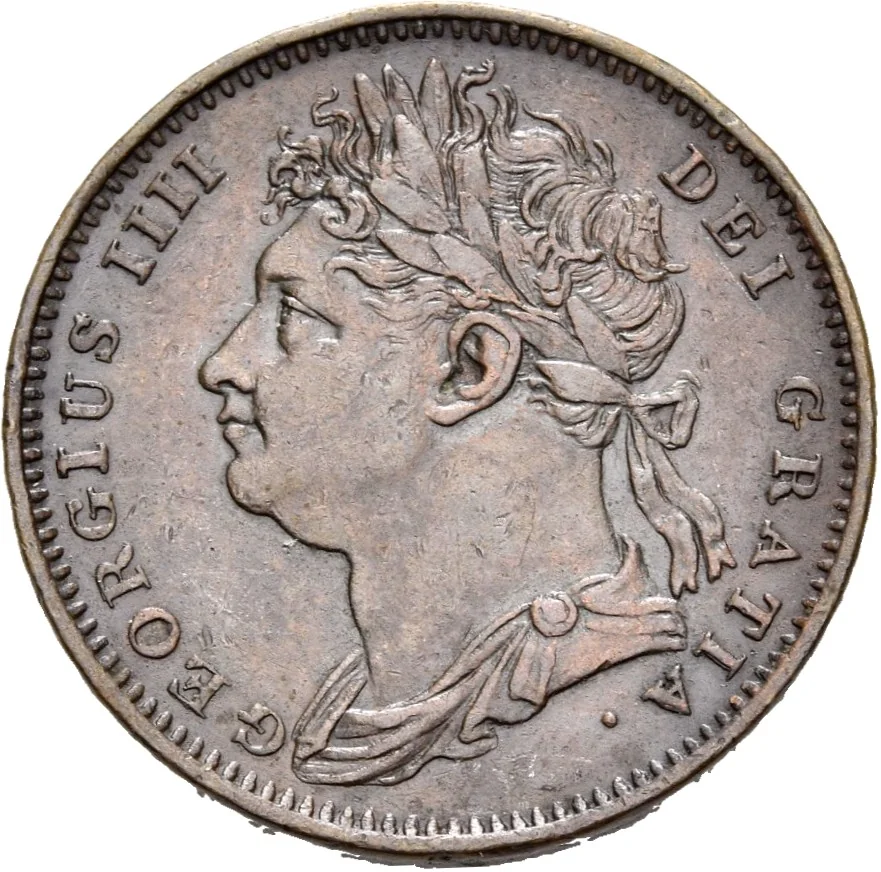
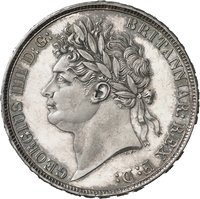
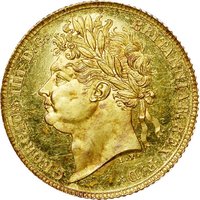
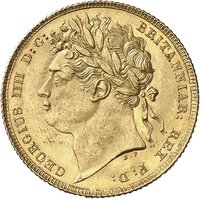
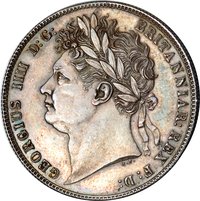
George IV laureate bust left, legend surrounding.
Inscription:
GEORGIUS IIII DEI GRATIA.
Translation:
George the Fourth, by the Grace of God.
Script: Latin
Language: Latin
Engraver: Benedetto Pistrucci
Reverse
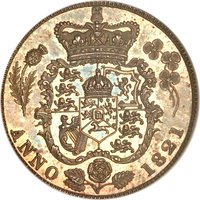
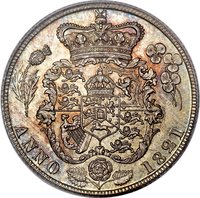
Description:
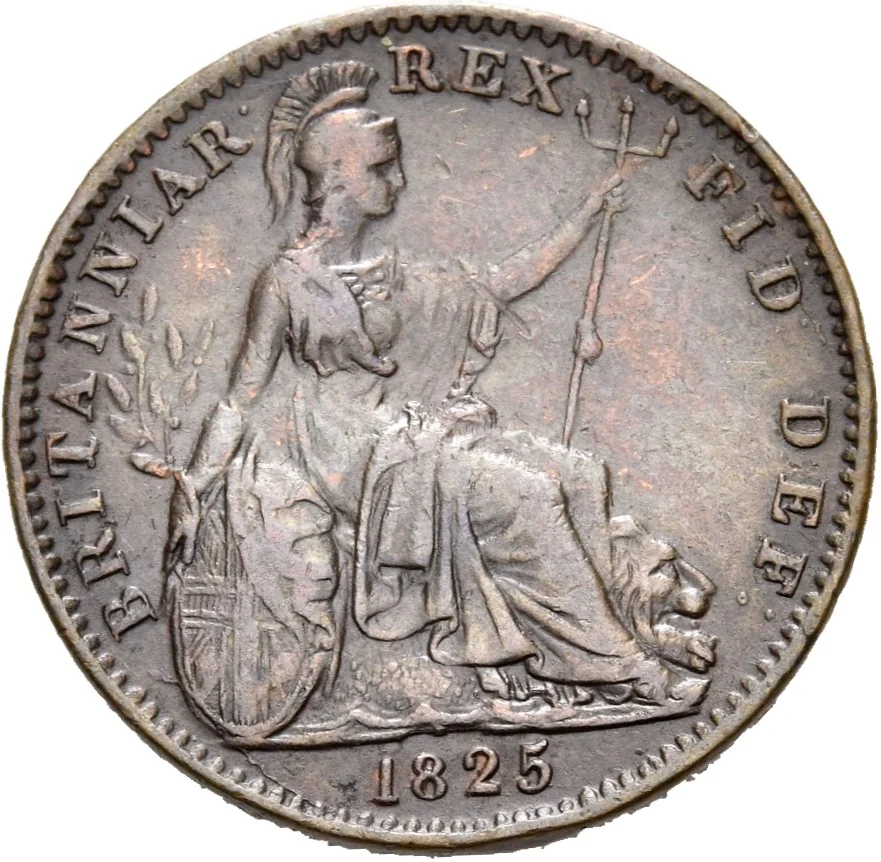
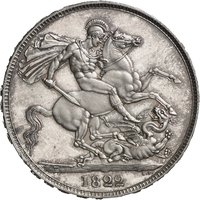
Britannia seated right with lion, holding trident and shield with Union flag, olive branch in right hand, legend around, date below.
Inscription:
BRITANNIAR: REX FID: DEF:
1821.
1821.
Translation:
King of the Britains, Defender of the Faith.
Script: Latin
Language: Latin
Engraver: Benedetto Pistrucci
Edge
Plain
Mints
| Name | Mark |
|---|---|
| Royal Mint (Tower Hill) | — |
Mintings
| Year | Mint Mark | Mintage | Quality | Collection |
|---|---|---|---|---|
| 1821 | — | 2,688,000 | ||
| 1821 | — | — | Proof | |
| 1821 | . | — | ||
| 1822 | — | — | Proof | |
| 1822 | — | 5,924,300 | ||
| 1823 | — | 2,365,400 | ||
| 1825 | — | 4,300,800 | ||
| 1826 | — | 6,666,200 |
Historical background
In 1821, the United Kingdom formally returned to the gold standard through the landmark Coinage Act, marking the culmination of a period of economic turbulence known as the Restriction Period (1797-1821). During the Napoleonic Wars, the government had suspended the convertibility of Bank of England notes into gold to prevent a run on its bullion reserves, leading to a purely paper currency. This period saw significant inflation and a decline in the value of the pound against gold, as the supply of banknotes was not constrained by the need for gold backing.
The return to gold was driven by a desire for monetary stability and international credibility, heavily influenced by the recommendations of the Bullion Committee of 1810. The 1821 act made Bank of England notes fully convertible into a fixed quantity of gold upon demand, legally defining the value of the pound sterling as £3 17s 10½d per troy ounce of gold. This firmly re-anchored the currency, aiming to curb inflation, restore confidence, and facilitate Britain's growing international trade by providing a stable and predictable exchange rate.
However, the resumption had significant consequences. It imposed strict monetary discipline, requiring the money supply to fluctuate with the nation's gold reserves. This often led to deflationary pressure and tight credit conditions, which could exacerbate economic downturns and burden debtors, including farmers and landowners. Nevertheless, the 1821 resumption established the framework for the classical gold standard that would underpin British financial dominance for the next century, making London the world's premier financial centre.
The return to gold was driven by a desire for monetary stability and international credibility, heavily influenced by the recommendations of the Bullion Committee of 1810. The 1821 act made Bank of England notes fully convertible into a fixed quantity of gold upon demand, legally defining the value of the pound sterling as £3 17s 10½d per troy ounce of gold. This firmly re-anchored the currency, aiming to curb inflation, restore confidence, and facilitate Britain's growing international trade by providing a stable and predictable exchange rate.
However, the resumption had significant consequences. It imposed strict monetary discipline, requiring the money supply to fluctuate with the nation's gold reserves. This often led to deflationary pressure and tight credit conditions, which could exacerbate economic downturns and burden debtors, including farmers and landowners. Nevertheless, the 1821 resumption established the framework for the classical gold standard that would underpin British financial dominance for the next century, making London the world's premier financial centre.
🌱 Very Common